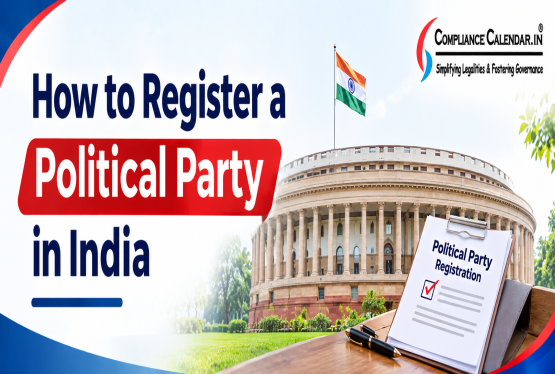



Yes, a registered political party can contest elections in India without first becoming a recognised National or State Party. Once the Election Commission of India (ECI) registers a political party under Section 29A of the Representation of the People Act, 1951, it can set up candidates for Lok Sabha and State Legislative Assembly elections, subject to the applicable election rules.
However, registration does not automatically give a party a reserved election symbol or recognised-party status. A newly registered party generally remains a Registered Unrecognised Political Party (RUPP) until it meets the conditions for recognition. It can still enter electoral politics, select candidates and participate in elections, but it must follow the rules for candidate nomination, election symbols and other election-related requirements.
This difference is important for people planning to start a political party. They should understand what registration allows them to do, what additional conditions apply during elections and how a party can become recognised after gaining public support.
Can a Registered Political Party Contest Elections in India?
Yes. A political party registered with the ECI can field candidates in Lok Sabha and State Legislative Assembly elections. It does not have to win an election or become a recognised party before contesting for the first time. The party can decide which constituencies it wants to contest and select suitable candidates for those seats.
For example, a newly registered party may decide to contest only five Assembly constituencies in its first election. It does not have to field candidates across the entire state. However, each candidate must meet the legal eligibility conditions, submit the required nomination papers and follow the election schedule. The party must also complete the required authorisation process if it wants its candidates to be treated as officially set up by it.
For municipal and Panchayat elections, the rules are different because these elections are generally conducted by the concerned State Election Commission under state laws. A political party planning to participate in local body elections should check the rules applicable to that state.
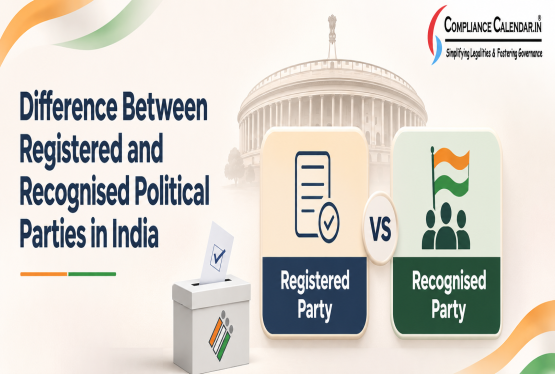
What Is the Difference Between a Registered and a Recognised Political Party?
Registration and recognition are two different things. Registration means that the ECI has registered the organisation under Section 29A of the Representation of the People Act, 1951. Recognition is a separate status given to a party when it meets the election performance conditions under the Election Symbols (Reservation and Allotment) Order, 1968.
The difference matters because a registered party can contest elections, but recognition provides additional benefits, particularly a reserved election symbol. The ECI considers factors such as vote share and seats won when deciding whether a party qualifies for State or National Party status.
|
Basis |
Registered Political Party |
Recognised Political Party |
|
Meaning |
Registered with the ECI under Section 29A |
Meets the ECI's conditions for recognition |
|
Election participation |
Can contest elections |
Can contest elections |
|
Election symbol |
Generally uses a free symbol, subject to ECI rules |
Has a reserved symbol |
|
Status |
May be a Registered Unrecognised Political Party |
Recognised as a State or National Party |
|
Recognition conditions |
Not required to begin contesting |
Must meet prescribed vote-share or seat conditions |
A party can begin its election journey as a registered unrecognised party. If it performs well in elections and meets the prescribed conditions, it may become eligible for recognition as a State or National Party. Registration alone does not guarantee this status.
For a detailed explanation of these differences, read our step by step related article on Difference between registered and recognised political parties
Which Elections Are Open to Registered Political Parties?
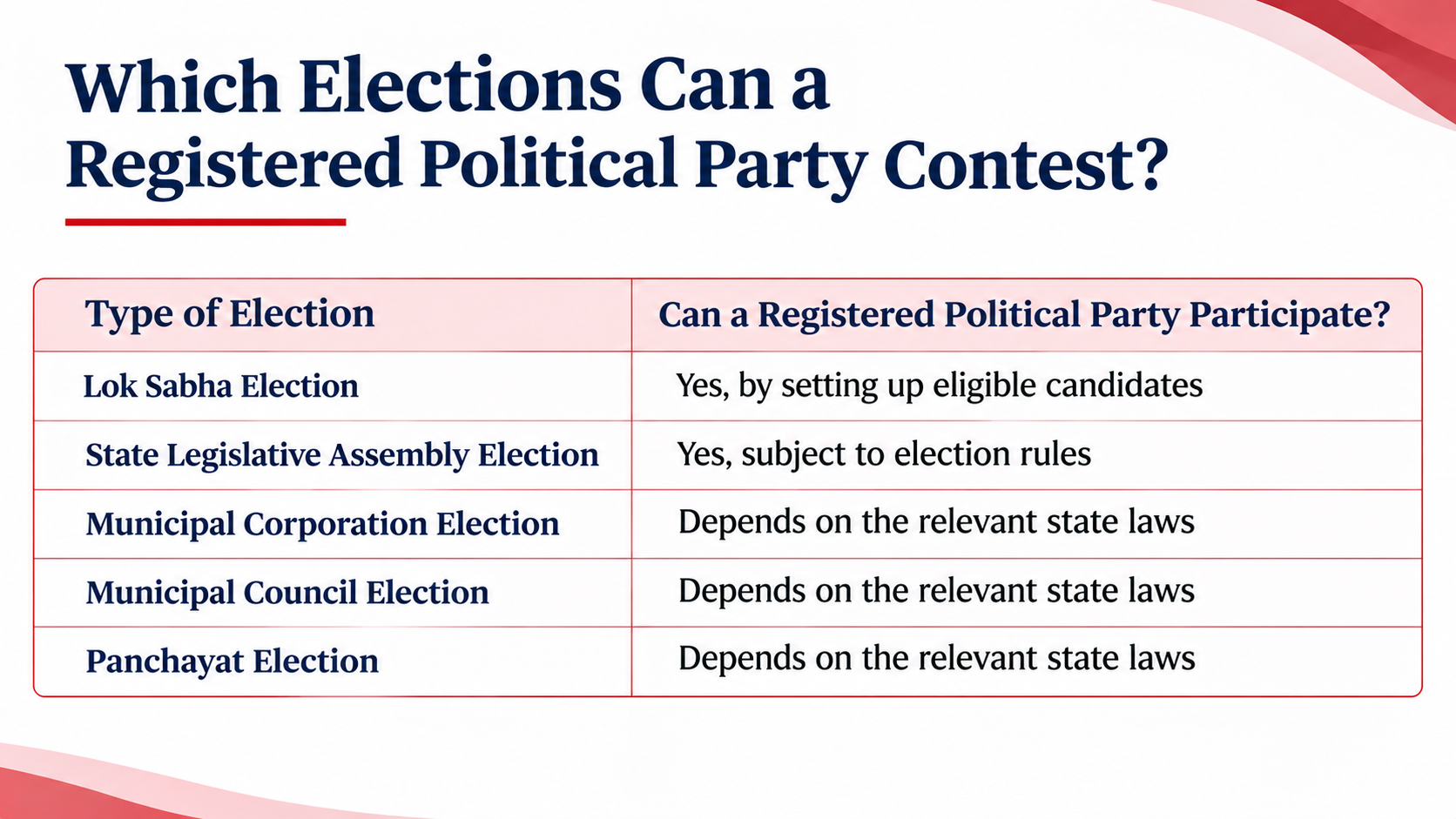
A registered political party can participate in Lok Sabha elections and State Legislative Assembly elections by setting up eligible candidates. It can contest in one constituency, several constituencies or across different states, depending on its election plans and the applicable rules. There is no requirement that a newly registered party must contest every seat.
The party may also participate in municipal and Panchayat elections where the relevant state election laws permit it. Since local elections are governed by State Election Commissions, the party should check the nomination, symbol and other requirements of the concerned state before entering the election.
The following table gives a simple overview:
|
Type of election |
Can a registered political party participate? |
|
Lok Sabha Election |
Yes, by setting up eligible candidates |
|
State Legislative Assembly Election |
Yes, subject to election rules |
|
Municipal Corporation Election |
Depends on the relevant state laws and election rules |
|
Municipal Council Election |
Depends on the relevant state laws and election rules |
|
Panchayat Election |
Depends on the relevant state laws and election rules |
It is also important to understand that a political party does not have to contest every election after registration. However, it should not ignore the participation and compliance requirements mentioned in the ECI's registration guidelines.
For more information visit : Political Party Registration Guide
Does a Registered Political Party Get an Election Symbol?
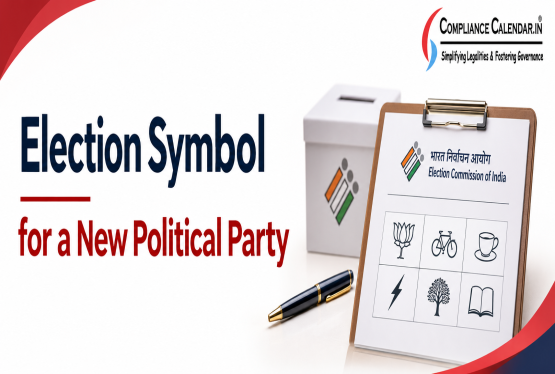
No. Registration does not automatically give a party a reserved election symbol. Under the Election Symbols (Reservation and Allotment) Order, 1968, reserved symbols are meant for recognised National and State Parties. Candidates set up by registered unrecognised parties generally choose from the free symbols available for that election.
However, a registered unrecognised party may apply for a common symbol under Paragraph 10B of the Symbols Order. This facility is subject to conditions set by the ECI. For example, the party must set up candidates in the required percentage of constituencies and submit information about the constituencies and preferred symbols within the prescribed time. The common-symbol facility under this paragraph is a one-time concession for a qualifying general election.
This is useful for a new party because a common symbol can help voters identify its candidates in different constituencies. However, the party should not assume that its preferred symbol will automatically be approved. The final allotment depends on the ECI's rules and decision.
How Can a Registered Political Party Set Up Candidates in an Election?
A registered political party must complete several formalities before its selected candidates can officially contest elections on its behalf. The main requirements are explained below:
|
Requirement |
What Does the Party or Candidate Need to Do? |
|
Candidate Selection |
The party selects suitable individuals to contest elections from different constituencies, considering their experience, public support and local presence. |
|
Checking Eligibility |
Candidates must meet the legal eligibility conditions. For example, a Lok Sabha candidate must be at least 25 years old. |
|
Filing Nomination Papers |
The candidate must submit the prescribed nomination form to the Returning Officer within the notified election schedule, along with the required documents and security deposit, wherever applicable. |
|
Form A Submission |
The party identifies the authorised office-bearer who can communicate its candidate selections to the election authorities. |
|
Form B Submission |
The party officially communicates the name of its selected candidate for a particular constituency. |
|
Election Symbol |
The candidate receives an election symbol according to the ECI's Election Symbols (Reservation and Allotment) Order, 1968, and the party's recognition status. |
Important: Announcing a person as the party's candidate does not complete the official process. The required nomination and authorisation documents must be submitted correctly and within the prescribed deadlines. Otherwise, the candidate may not receive the benefit of official party nomination for election symbol purposes.
Documents Required for Political Party Candidate Nomination
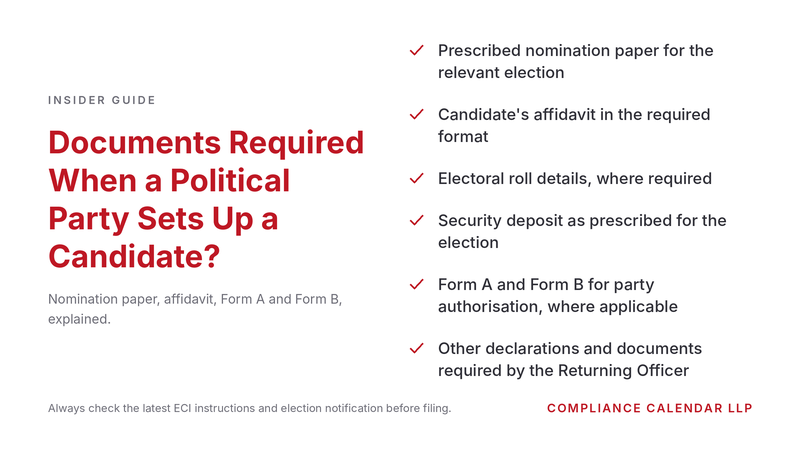
The documents required depend on the type of election and the candidate's circumstances. A candidate contesting a Lok Sabha or State Assembly election generally needs to submit the prescribed nomination paper, affidavit and other supporting documents required by the Returning Officer.
The party must separately arrange its authorisation documents. Form A and Form B are important because they help the election authorities identify the person authorised to communicate the party's decision and the candidate officially selected by the party.
Some common documents and details include:
- Prescribed nomination paper for the relevant election.
- Candidate's affidavit in the required format.
- Electoral roll details, where required.
- Security deposit as prescribed for the election.
- Form A and Form B for party authorisation, where applicable.
- Other declarations and documents required by the Returning Officer.
Candidates should always check the latest ECI instructions and election notification before filing. A document required for one type of election may not be the same for another, and missing information can create problems during scrutiny.
For detailed information kindly visit : Political Party Registration Fee Guide
What Are the Eligibility Conditions for a Candidate Set Up by a Political Party?
A registered political party cannot nominate just anyone to contest an election. Every candidate must meet the eligibility conditions under the Constitution of India and the applicable election laws.
For example, a person contesting a Lok Sabha election must generally be at least 25 years old. The minimum age for contesting a State Legislative Assembly election is also 25 years. For the Rajya Sabha and State Legislative Councils, the general minimum age is 30 years. Candidates must also meet the applicable citizenship, voter-registration and other legal conditions. A person may also be disqualified from contesting an election under the Representation of the People Act, 1951. Disqualification can arise in certain cases involving criminal convictions, corrupt practices, failure to lodge election expenses or other grounds mentioned in the law.
Therefore, a political party should check the background and eligibility of its candidates before announcing their names. Selecting a candidate without checking these conditions can create difficulties when the nomination papers are examined by the Returning Officer.
What Happens If a Registered Political Party Does Not Get Recognition?
A party that does not meet the recognition conditions can continue as a registered unrecognised political party, provided it follows the applicable registration requirements. It can still contest elections, but its candidates will not automatically receive the reserved symbol available to a recognised party.
The party must continue building its organisation, taking part in elections and meeting its legal and reporting responsibilities. If its election performance later satisfies the ECI's recognition conditions, it may qualify for State or National Party status. Recognition depends on election results and the rules in force, not simply on how long the party has been registered.
For this reason, a new party should focus on building its membership, reaching voters and developing its presence in the constituencies where it plans to contest. Recognition is generally a result of electoral performance rather than a separate status that a party can obtain simply by applying after registration.
What Compliance Requirements Apply After Political Party Registration?
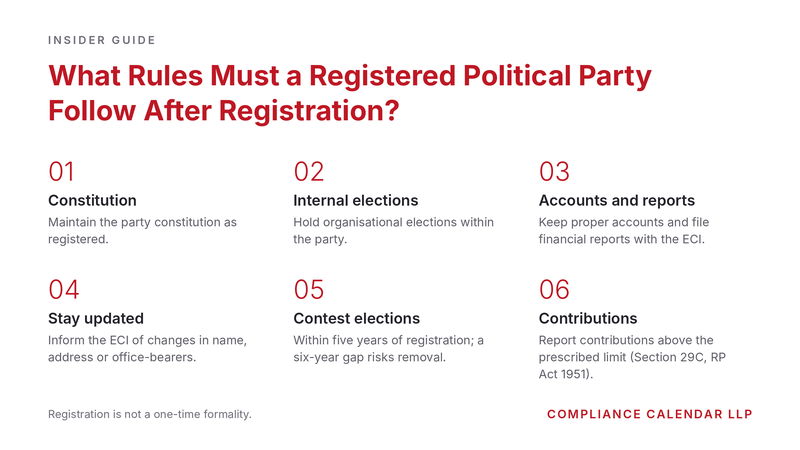
A political party must continue to follow the conditions under which it was registered. It should maintain its constitution, conduct internal organisational elections, keep proper accounts and submit the financial reports and other information required by the ECI. It must also inform the Commission without delay about important changes in its name, head office, address or office-bearers.
The party should also take part in elections within the period mentioned in the ECI registration guidelines. The guidelines require the party constitution to include a commitment to contest an election conducted by the ECI within five years of registration. They further state that a party that does not contest elections continuously for six years may be removed from the list of registered parties. Therefore, registration should not be treated as a one-time formality.
A registered party should also understand the rules relating to political contributions, election expenditure and financial reporting. For example, Section 29C of the Representation of the People Act, 1951 deals with reporting of contributions received by political parties above the prescribed amount. The party should maintain proper records and follow the applicable reporting requirements.
Can a Registered Political Party Contest Elections in Another State?
Yes. A political party registered with the ECI can contest elections in more than one state. It does not have to become a recognised State Party in every state before setting up candidates there. However, it must follow the nomination and symbol rules applicable to each election.
For example, a party formed in Haryana may decide to contest elections in Delhi or Uttar Pradesh as well. It can plan its participation according to its organisational strength and candidate availability. However, it should not assume that it will receive the same election symbol in every state or that its registration automatically makes it a recognised party everywhere.
If the party wants a common symbol for its candidates as a registered unrecognised party, it must meet the conditions under the Election Symbols Order for the relevant general election. The party should plan this well in advance because the ECI has specific deadlines for submitting constituency details and symbol preferences.
How Compliance Calendar LLP Can Help with Political Party Registration
Before entering an election, a political party should ensure that its registration details, constitution, membership records and office-bearer information are properly maintained. It should also understand the documentation and compliance requirements that apply to its registered status.
Compliance Calendar LLP can assist with political party registration, constitution preparation, document checking and filing support. We can also help founding members understand the requirements under Section 29A and prepare the supporting documents needed for an application to the Election Commission of India.
If you are planning to start a political party or need assistance with its registration, our team can guide you through the documentation and filing requirements.
For assistance, contact Compliance Calendar LLP on +91 9988424211 or info@ccoffice.in
Frequently Asked Questions (FAQs)
1. Can a registered political party contest elections in India?
Yes. A party registered with the ECI can contest Lok Sabha and State Legislative Assembly elections by setting up eligible candidates and following the applicable election rules. It does not need to become a recognised National or State Party first.
2. Can a newly registered political party contest Lok Sabha elections?
Yes. A newly registered party can contest Lok Sabha elections without first becoming a recognised National or State Party. Its candidates must meet the eligibility conditions and complete the nomination process within the prescribed time.
3. Can a registered political party contest State Assembly elections?
Yes. A registered political party can field candidates in State Legislative Assembly elections. It must follow the nomination requirements, candidate eligibility rules and symbol-allotment procedure applicable to that election.
4. Does a registered political party get a reserved election symbol?
No. A reserved symbol is generally available to recognised National and State Parties. Registered unrecognised parties usually use free symbols or may apply for a common symbol under the conditions mentioned in the Election Symbols Order.
5. What is a Registered Unrecognised Political Party?
A Registered Unrecognised Political Party (RUPP) is a party registered with the ECI under Section 29A but not recognised as a National or State Party. It can still contest elections by following the applicable rules.
6. Can a registered political party contest elections in multiple states?
Yes. A registered political party can field candidates in different states, subject to the election laws, nomination requirements and other applicable conditions. However, its recognition and symbol status must be understood separately for the relevant elections.
7. Can a political party contest elections without a common symbol?
Yes. Candidates set up by a registered unrecognised party can be allotted free symbols under the ECI's rules. A common symbol requires a separate application and approval under the applicable provisions.
8. Is recognition compulsory for contesting elections?
No. A political party does not need recognition as a National or State Party to contest elections. Registration with the ECI is sufficient for participating in elections, subject to the applicable election rules.
9. What happens if a registered political party does not contest elections?
The ECI registration guidelines require parties to include a commitment to contest an election within five years of registration. They also state that a party that does not contest elections continuously for six years may be removed from the list of registered parties.
10. Can Compliance Calendar LLP help with political party registration?
Yes. Compliance Calendar LLP can assist with preparing the party constitution, organising supporting documents and providing filing support for registration with the Election Commission of India. The final decision on registration rests with the ECI.
Article last updated on : 24 Nov 2026.














_learn_crop10_thumb.jpg)