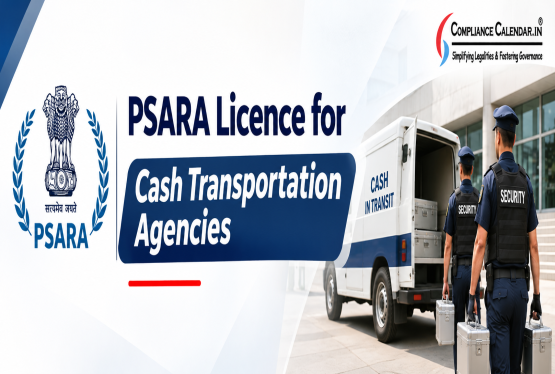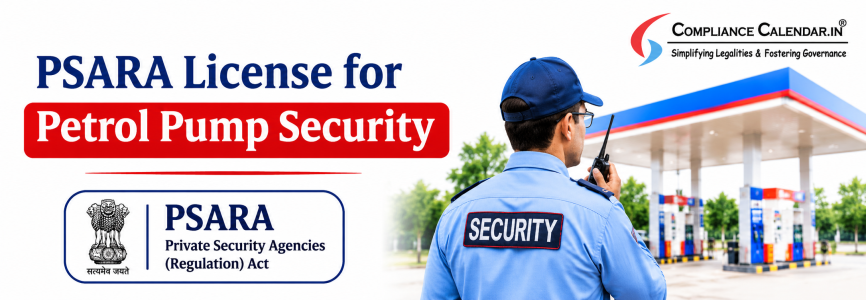



Petrol pumps handle fuel, cash, vehicles and customers throughout the day. They need proper security to protect their staff, customers, fuel storage areas and other property. For this reason, many petrol pump owners hire security guards to watch their premises and manage security-related work.
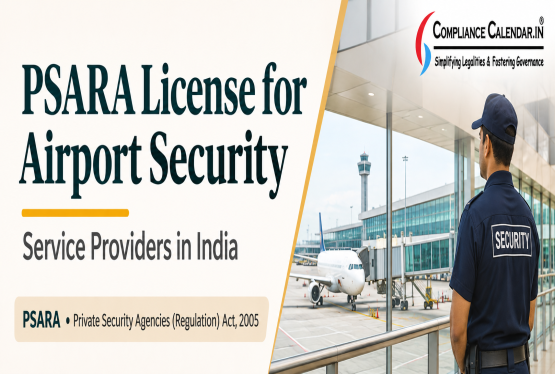
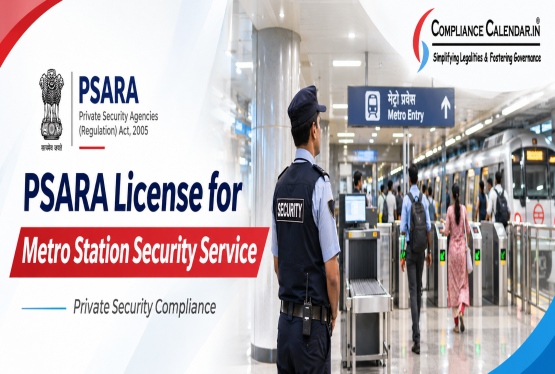
If a private security agency wants to provide guards to petrol pumps in India, it must understand the requirements of the Private Security Agencies (Regulation) Act, 2005 (PSARA). This law regulates private security agencies and requires them to obtain a licence before starting their security agency business.
There is an important difference between a petrol pump hiring guards for its own premises and an outside agency providing guards as a service. The PSARA licensing requirement generally applies to the business providing private security services. This article explains when a PSARA License is required, what security duties guards can perform, which documents are needed and how an agency can obtain the licence.
Is a PSARA License Required for Petrol Pump Security Services?
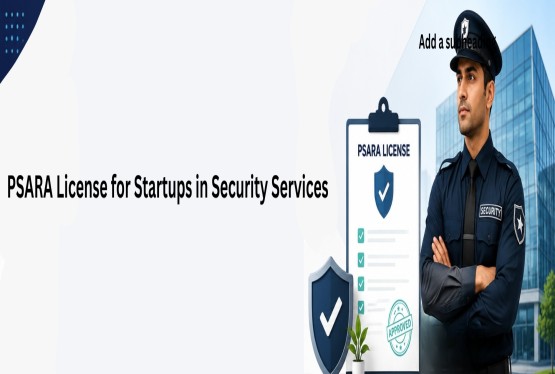
Yes. A private security agency that provides guards to petrol pumps generally needs a valid PSARA License. Section 4 of the PSARA Act, 2005 does not allow a person to start or carry on the business of a private security agency without a licence. This requirement also applies when an agency provides security guards to petrol pump owners or fuel companies.
However, a petrol pump owner who directly hires employees to protect their own premises is not automatically required to obtain a PSARA License. The position is different when a separate business provides guards to other petrol pumps or customers as a security service. The actual nature of the arrangement should be checked before deciding whether PSARA licensing applies.
You can also read the Complete Guide for Private Security Agencies to understand the wider licensing requirements.
Why Is Security Important at Petrol Pumps?
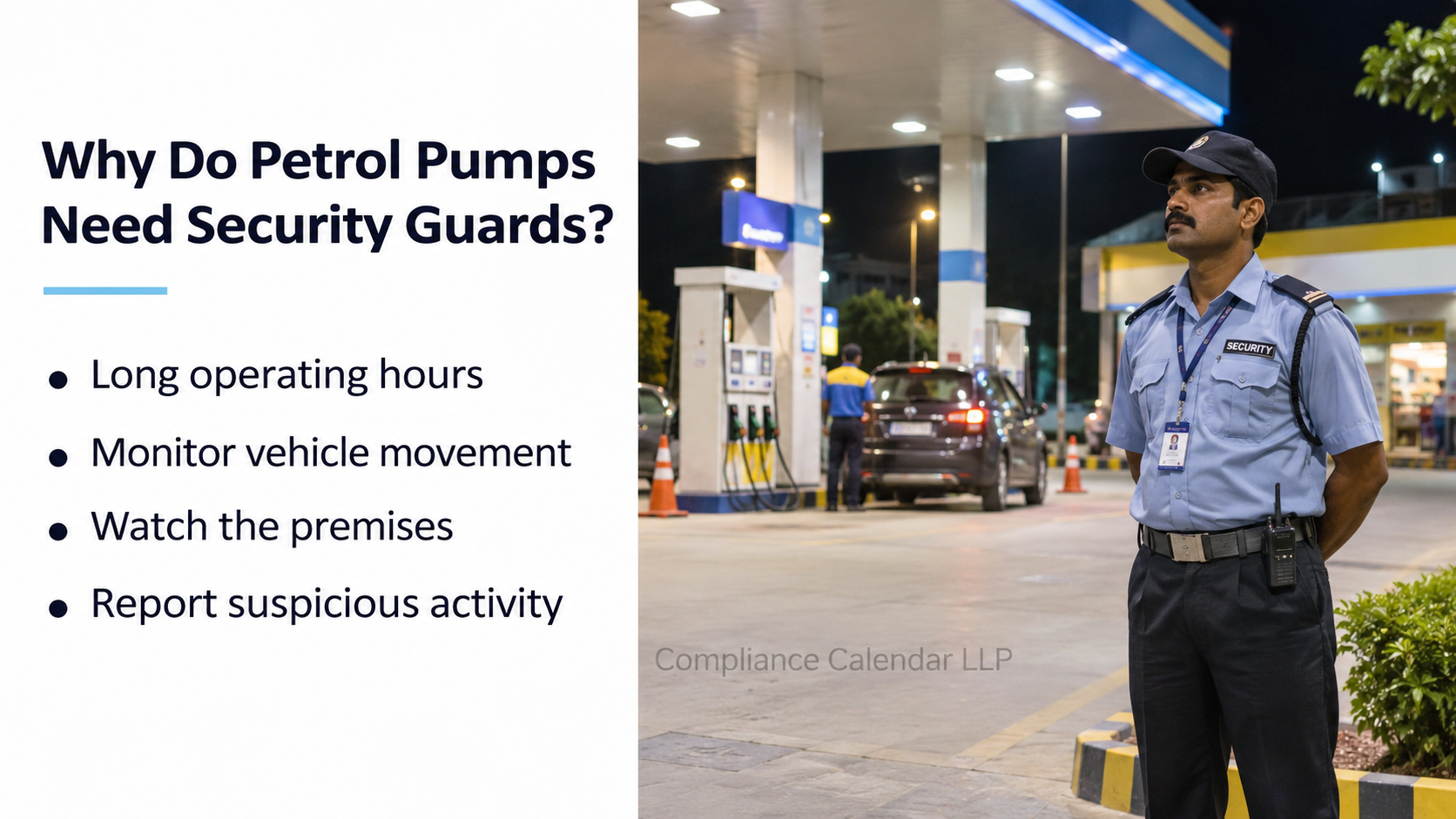
Petrol pumps often operate for long hours, and some remain open throughout the night. Customers, delivery vehicles and employees enter the premises regularly. Security guards help watch the premises, monitor vehicle movement, protect designated areas and report suspicious activities to the petrol pump manager.
For example, a petrol pump located on a busy highway may receive vehicles late at night. The owner may hire a security agency to provide guards who monitor the entry area, keep watch over the premises and report unusual activity. This is an illustrative example of how security guards can support a petrol pump's daily operations.
What Security Duties Can Guards Perform at a Petrol Pump?
The duties of security guards depend on the agreement between the petrol pump owner and the security agency. Guards may be assigned to watch different areas of the premises and provide support to staff and customers.
|
Security area |
Work of security guards |
|
Main entry and exit |
Watching vehicle and visitor movement |
|
Fuel dispensing area |
Keeping watch and reporting suspicious or unsafe activity |
|
Cash counter |
Providing security support to staff |
|
Parking area |
Monitoring parked vehicles and reporting suspicious activity |
|
Office premises |
Controlling access to authorised areas |
|
Fuel storage area |
Keeping watch from an authorised and safe location |
|
Night security |
Monitoring the premises during night shifts |
|
Staff and customer safety |
Reporting disputes, threats and unusual incidents |
Security guards should perform only the duties assigned to them. They should not operate fuel dispensing machines, repair equipment or handle fuel-related technical work unless they are separately trained and authorised to do so. If they notice a fire, fuel leak or other emergency, they should immediately inform the petrol pump manager and follow the site's emergency instructions.
What Conditions Must a Security Agency Meet Before Providing Guards to Petrol Pumps?
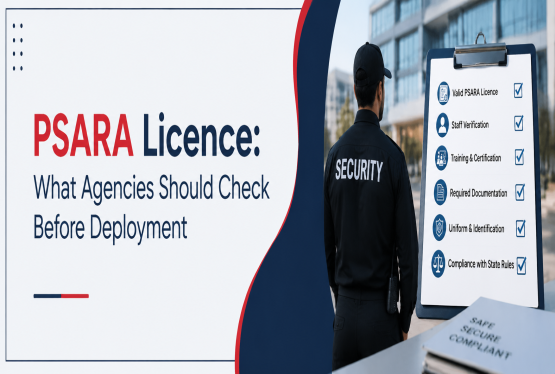
A security agency must meet the following requirements before providing guards to a petrol pump:
|
Requirement |
What the Agency Must Do |
|
Valid PSARA License |
Hold a valid licence for the State or area where it plans to provide security services. |
|
Applicant Eligibility |
Ensure that the applicant and the people managing the agency meet the eligibility conditions under the PSARA Act. |
|
Guard Training |
Provide the training required under the applicable State rules to security guards and supervisors. |
|
Background Verification |
Complete the required character and background checks before appointing security guards. |
|
Identity Cards |
Issue photo identity cards to guards and supervisors as required under PSARA. |
|
Employee Records |
Maintain the required details of guards, supervisors and other employees. |
|
Client Requirements |
Follow any additional document, safety or training requirements set by the petrol pump owner or fuel company. |
Important: A petrol pump owner or fuel company may also require guards to complete site-specific safety instructions before starting their duties.
What Paperwork Is Required for Petrol Pump Security Services?
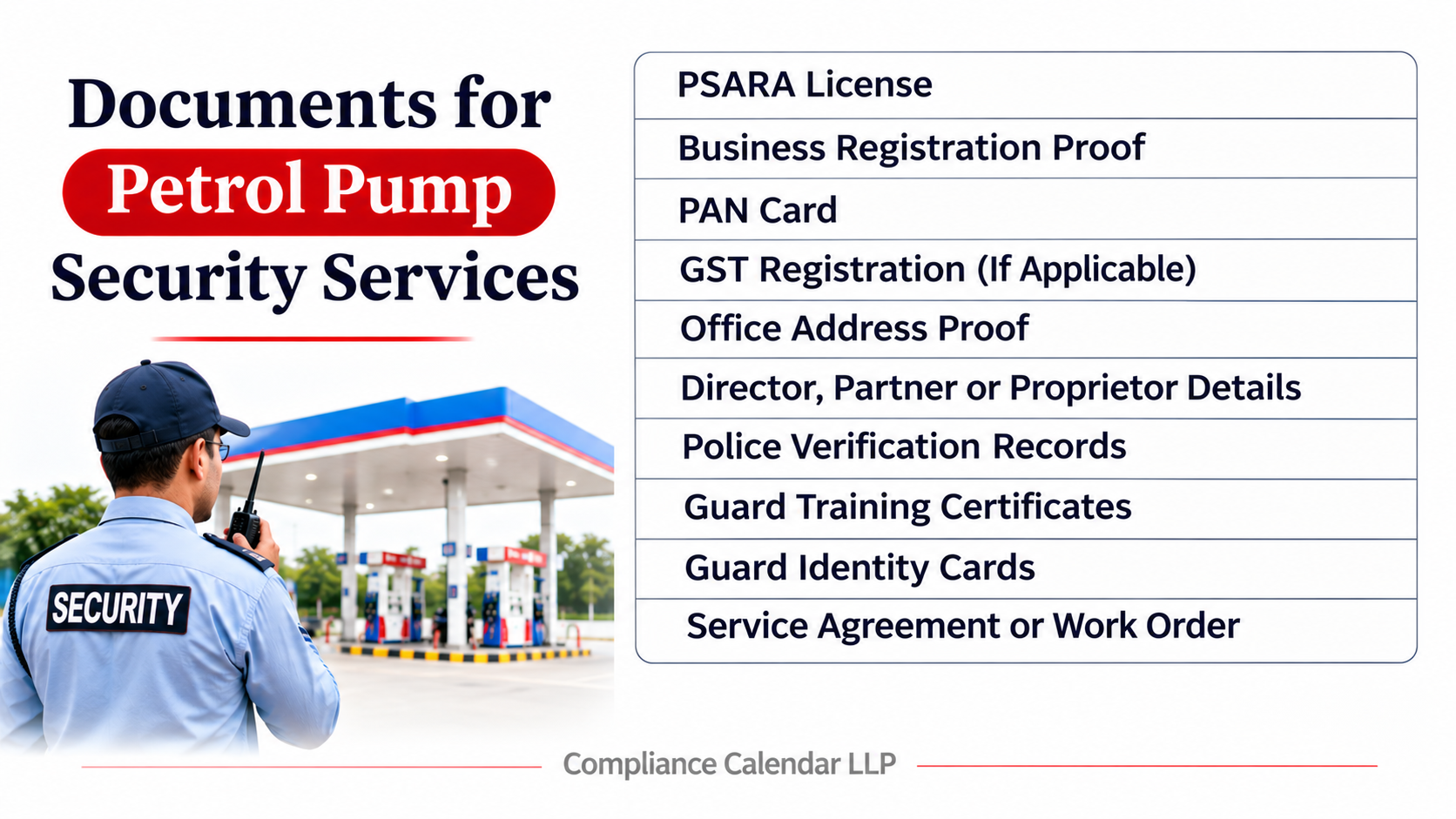
A security agency should prepare its business and licensing documents before applying for a petrol pump security contract. The documents required for a PSARA application may differ from those requested by a petrol pump owner or fuel company.
|
Document |
Purpose |
|
PSARA License |
Confirms that the agency is licensed to provide private security services in the permitted area |
|
Business registration proof |
Establishes the legal identity of the agency |
|
PAN card |
Provides the agency's tax identification |
|
GST registration, if applicable |
Supports tax and billing requirements |
|
Office address proof |
Confirms the agency's business address |
|
Director, partner or proprietor details |
Identifies the people managing the agency |
|
Police verification records |
Supports the required background checks |
|
Guard training certificates |
Shows that guards have completed the required training |
|
Guard identity cards |
Helps identify the guards deployed at the petrol pump |
|
Service agreement or work order |
Records the security services agreed with the petrol pump owner |
The petrol pump owner may also ask for guard photographs, duty schedules, supervisor details, replacement arrangements and other documents.
For a detailed explanation of the licensing documents, read Important Documents Required for PSARA License in India
How Can a Security Agency Obtain a PSARA License?
A security agency must apply to the Controlling Authority of the State or Union Territory where it wants to operate. The applicant should first set up the business, prepare the required documents and arrange the training facilities required under the applicable rules. It can then submit the prescribed application, affidavit and government fee to the concerned authority.
The authority examines the application and may carry out the required checks, including police verification. If the application meets the requirements, the authority may grant the PSARA License. Section 7 of the Act provides for a decision within 60 days after receiving an application with complete particulars and the prescribed fee. The actual process may depend on document completeness and verification.
|
Step |
What the agency needs to do |
|
1. Set up the business |
Choose a suitable structure, such as a proprietorship, partnership, LLP or company |
|
2. Prepare documents |
Collect business registration, PAN, address proof, identity documents and other required papers |
|
3. Arrange training |
Make the required training arrangements for guards and supervisors |
|
4. Submit the application |
File the prescribed application with the concerned Controlling Authority |
|
5. Complete verification |
Respond to document queries and complete the required verification |
|
6. Receive the licence |
Obtain the licence and follow its conditions before starting operations |
For a step-by-step explanation, read PSARA Licence Registration: Complete Process Guide.
Does a PSARA License Allow an Agency to Work at Any Petrol Pump?
No. A PSARA License allows an agency to carry on its private security business in the area covered by the licence. It does not automatically give the agency a contract or permission to start deploying guards at a petrol pump. The agency must separately obtain an agreement or work order from the petrol pump owner, fuel company or authorised contractor.
For example, an agency holding a valid licence for Delhi cannot simply send guards to a petrol pump and start working without the required agreement. It must first receive approval from the concerned owner or operator and complete the documents and deployment formalities mentioned in the contract.
What Should an Agency Know Before Providing Security at a Petrol Pump?
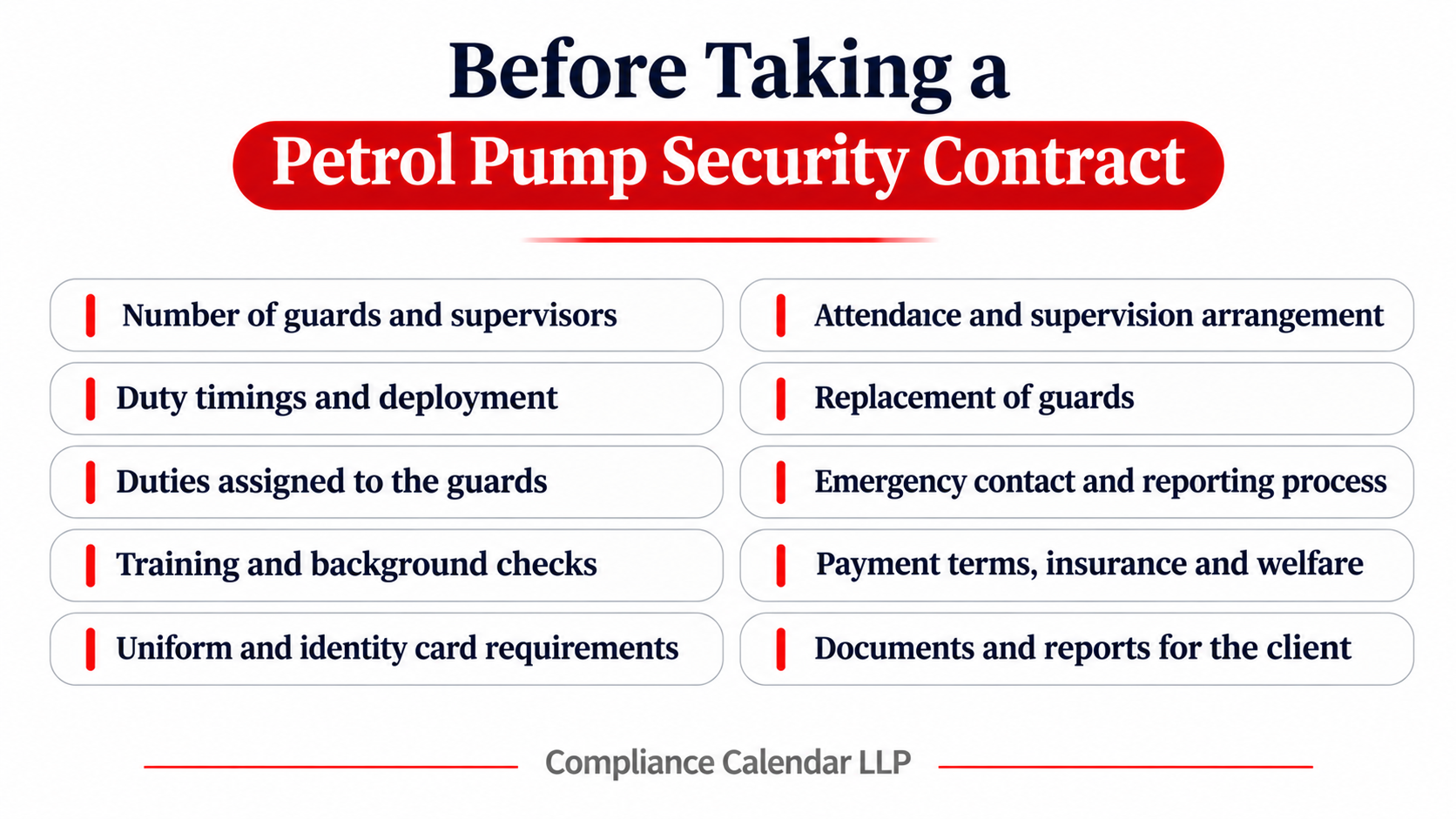
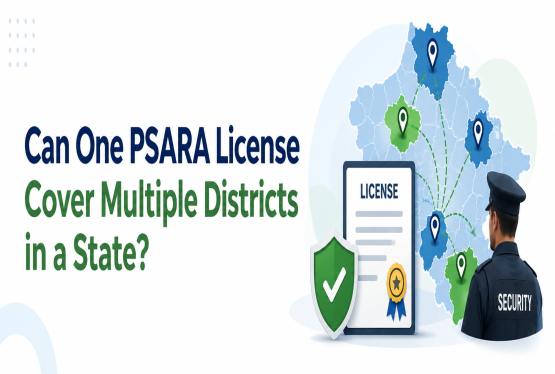
Before accepting a contract, the agency should understand the actual work, number of guards, duty timings and safety requirements. It should also check whether the contract covers one petrol pump or several locations and whether its PSARA License covers the required operating area.
The agency should review the following points before signing the agreement:
- Number of guards and supervisors required.
- Day-shift, night-shift or round-the-clock deployment.
- Duties assigned to the guards.
- Training and background verification requirements.
- Uniform and identity card requirements.
- Attendance and supervision arrangements.
- Replacement of guards during leave or absence.
- Emergency contact and reporting procedures.
- Payment terms, insurance and employee welfare conditions.
- Documents and reports to be submitted to the client.
The agency should make sure that guards are not expected to perform work for which they are not trained or authorised. This is especially important at petrol pumps because fuel is highly flammable and certain activities must be handled by trained personnel.
What Happens If an Agency Provides Security Services Without a PSARA License?
A private security agency cannot legally start or carry on its business without the required PSARA License. Under Section 20(1) of the PSARA Act, a person who contravenes Section 4 may face imprisonment for up to one year, a fine of up to Rs 25,000, or both.
Apart from the legal consequences, an agency working without a valid licence may fail to meet the petrol pump owner's contract conditions. The owner or fuel company may refuse to allow the guards to start work or may take action under the agreement. Therefore, an agency should obtain the required licence before providing private security services.
How Can Compliance Calendar LLP Help with PSARA License?
A security agency planning to provide guards to petrol pumps should complete its PSARA licensing requirements before starting operations. Compliance Calendar LLP assists businesses with PSARA License applications, document preparation and related registration requirements. The team can help applicants understand the application process, identify the documents required for their business structure and prepare the application for submission to the concerned authority.
For assistance, contact Compliance Calendar LLP on +91 9988424211 or info@ccoffice.in
Frequently Asked Questions (FAQs)
1. Is a PSARA License required to provide security guards at a petrol pump?
Yes. A private security agency providing guards to petrol pumps generally needs a valid PSARA License. It must obtain the licence before starting its private security agency business.
2. Does a petrol pump owner need a PSARA License to hire security guards?
A petrol pump owner hiring employees directly to protect their own premises is not automatically required to obtain a PSARA License. The requirement generally applies to a separate business providing private security services to others.
3. Can a security agency provide guards to multiple petrol pumps?
Yes. A licensed agency can provide guards to multiple petrol pumps if its licence covers the relevant operating area and it meets the conditions of each client contract.
4. What duties can security guards perform at a petrol pump?
Guards may watch entry and exit points, monitor vehicle movement, protect designated areas, provide security support to staff and report suspicious activities or emergencies.
5. Is police verification required for petrol pump security guards?
The agency must complete the character and background verification required under the applicable PSARA rules before employing or engaging guards.
6. Is training compulsory for petrol pump security guards?
Yes. Guards must complete the training required under the applicable PSARA rules. The petrol pump owner may also provide additional site-related safety instructions before deployment.
7. Can a security agency provide guards in another State using its existing PSARA License?
An agency should not assume that a licence issued in one State automatically allows it to operate in another State. It must check the licensing requirements for the additional operating area.
8. What documents can a petrol pump owner ask from a security agency?
A petrol pump owner may ask for the PSARA License, business registration documents, guard identity cards, training certificates, background verification records, employee details and service agreement.
9. Can a security agency start work after submitting its PSARA application?
No. Submitting an application does not mean that the licence has been granted. The agency must obtain the required PSARA License before starting its private security agency business.
10. What is the validity of a PSARA License?
Under Section 7 of the PSARA Act, a licence is generally valid for five years unless it is cancelled earlier. The agency must apply for renewal within the prescribed time.
11. Can security guards operate fuel dispensing machines at petrol pumps?
Security guards should perform the security duties assigned to them. Operating fuel dispensing machines is a separate petrol pump activity and should be handled by authorised and trained personnel.
12. What is the punishment for providing private security services without a PSARA License?
Under Section 20(1) of the PSARA Act, a person who carries on the business of a private security agency without the required licence may face imprisonment for up to one year, a fine of up to Rs 25,000, or both.
Article last updated on : 25 Nov 2026.














_learn_crop10_thumb.jpg)