



Starting a newspaper in India requires more than choosing a name, arranging a printing press and deciding what news to publish. Before printing and distributing the newspaper, the owner must complete the required registration process with the Press Registrar General of India (PRGI).
Many people still search for RNI Registration when they want to start a newspaper. This is because the authority was earlier known as the Registrar of Newspapers for India (RNI). However, the legal process has changed. The Press and Registration of Periodicals Act, 2023 replaced the earlier Press and Registration of Books Act, 1867, with effect from 1 March 2024. The authority is now known as PRGI, and new applications are submitted online through the Press Sewa Portal.Whether you want to start a Hindi newspaper, an English daily, a local weekly newspaper or another printed publication carrying public news, you should understand the PRGI Registration requirements before starting publication.
This guide explains who can apply, how to select a newspaper name, which documents are required, how to complete the online application and what to do after receiving the registration certificate.
What Is PRGI Registration and Why Is It Required?
PRGI Registration is the process of registering a newspaper or another eligible printed periodical with the Press Registrar General of India. It records important details about the publication, including its name, owner, publisher, editor, language, printing press and place of publication. A newspaper covered by the Press and Registration of Periodicals Act, 2023 cannot be printed and published in India without the required registration.
For example, a person planning to start a weekly newspaper that reports local news, government updates, public events and other current affairs must check the PRGI requirements before printing its first issue. Registration is not just a formality. It is the legal step that allows an eligible publication to begin publishing under its registered details.
Is RNI Registration the Same as PRGI Registration?
Yes. RNI Registration is the older name commonly used for the newspaper registration process. Earlier, the Registrar of Newspapers for India (RNI) handled newspaper registration under the Press and Registration of Books Act, 1867. After the new Press and Registration of Periodicals Act, 2023 came into force on 1 March 2024, the authority became the Press Registrar General of India (PRGI).
The registration process also changed. The earlier system of separate title verification and declaration formalities was replaced by an integrated online application through the Press Sewa Portal. Therefore, anyone applying for a new newspaper registration in 2027 should follow the current PRGI process, even if they are searching online using terms such as RNI Registration, RNI Certificate or RNI Newspaper Registration.
|
Particulars |
Earlier RNI System |
Current PRGI System |
|
Authority |
Registrar of Newspapers for India |
Press Registrar General of India |
|
Main law |
Press and Registration of Books Act, 1867 |
Press and Registration of Periodicals Act, 2023 |
|
Application process |
Earlier declaration-based process |
Online application through Press Sewa Portal |
|
Title and registration |
Separate earlier formalities |
Combined registration application |
|
Current status |
Previous framework |
Current framework for new applications |
Visit our Detailed Guide about the Difference between RNI & PRGI for more clear explanation
Who Can Register a Newspaper in India?
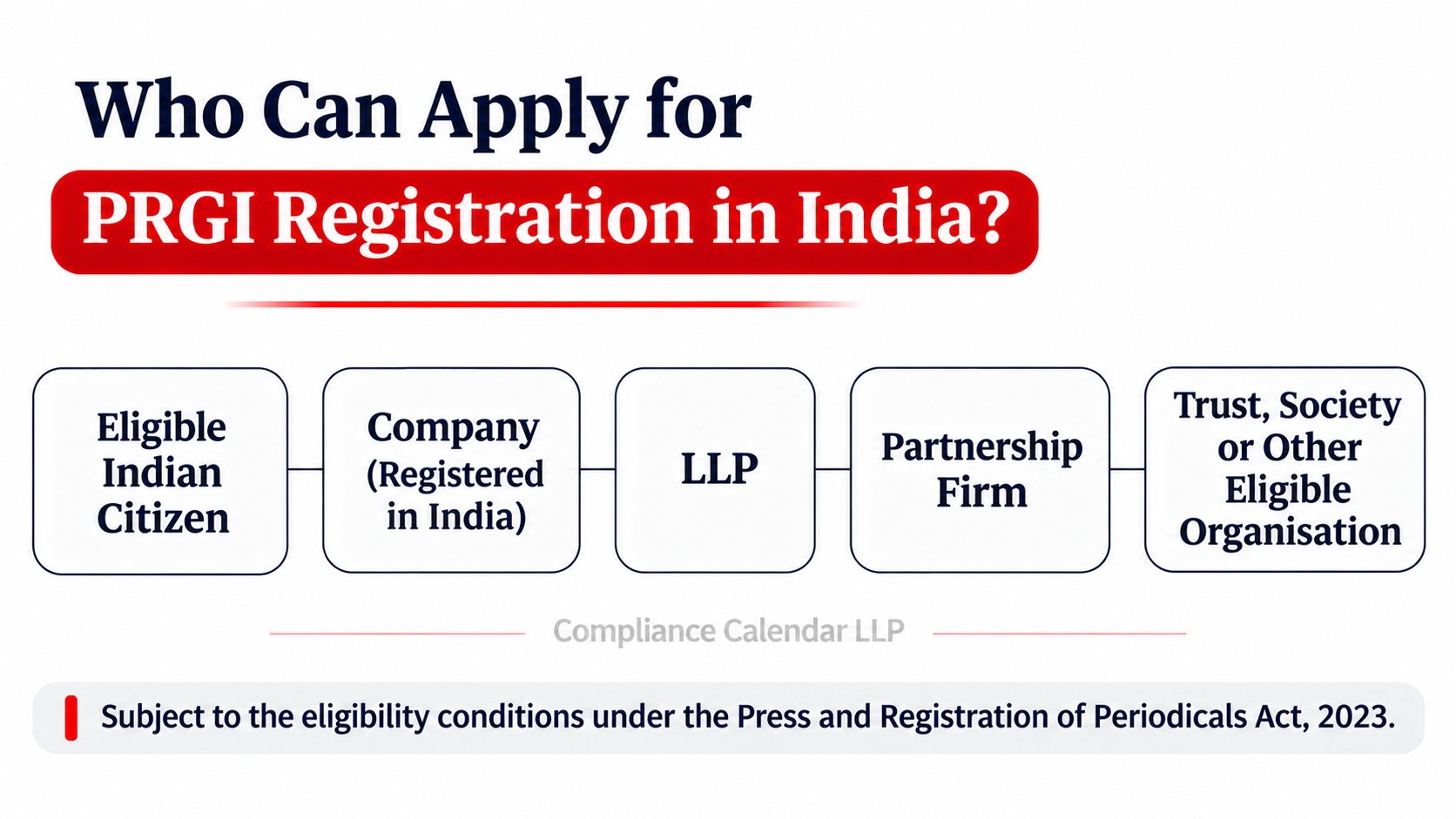
An Indian citizen or a person or organisation registered in India under the applicable law can apply to bring out a periodical, subject to the eligibility conditions under the Press and Registration of Periodicals Act, 2023. This means the application is not limited to people who want to start a newspaper in their personal name. Eligible organisations can also own a publication.
The applicant must meet the legal eligibility conditions. A person convicted by a court for an offence involving a terrorist act, unlawful activity or an offence against the security of the State is not eligible under the Act. The owner must also provide correct information about the publication and appoint the required publisher through the Press Sewa Portal.
Depending on the ownership structure, an application may be made by:
- An eligible individual Indian citizen.
- A company registered in India.
- A Limited Liability Partnership (LLP).
- A partnership firm.
- A registered trust, society or other eligible organisation.
The documents and information required will depend on who owns the proposed newspaper.
You can read our detailed article on RNI/PRGI Registration in India: Newspaper and Periodical Registration for more information about the change from RNI to PRGI.
Which Publications Need PRGI Registration?
PRGI Registration applies to a periodical covered by Section 2(g) of the Press and Registration of Periodicals Act, 2023. In simple words, a periodical is a publication, including a newspaper, that is printed and published at regular intervals and contains public news or comments on public news.
This may include daily newspapers, weekly newspapers, monthly news publications and other printed periodicals that meet the legal definition. However, books and journals of a scientific, technical or academic nature are excluded from the definition. News websites, digital-only publications and online news channels are also not registered as periodicals under this Act.
|
Publication |
PRGI Registration |
|
Printed daily newspaper containing public news |
Required |
|
Printed weekly newspaper |
Required |
|
Printed monthly news publication |
Required if covered by the Act |
|
Printed periodical carrying comments on public news |
Required if covered by the Act |
|
Digital-only news website |
Not covered as a periodical under this Act |
|
One-time book publication |
Generally not covered |
|
Scientific, technical or academic journal |
Excluded under the Act |
The nature and format of the publication matter. A person planning to start an online news website alone should not assume that the same registration process applies. The PRGI registration requirement is for eligible printed periodicals.
How to Select a Newspaper Title for PRGI Registration?
Choosing a newspaper name is one of the most important parts of PRGI Registration. The proposed name must follow the title guidelines issued by PRGI. It should be suitable for a publication that carries public news or comments on public news, and it should not be the same as or confusingly similar to an existing registered title.
For example, suppose Amit wants to start a Hindi weekly newspaper in Noida. He decides to use a common name that is already registered by another newspaper and adds the word "Weekly" at the end. This small change may not make the proposed title acceptable. PRGI checks not only the spelling but also how a title looks and sounds. Adding a city name, language or publication frequency to an existing title may not be enough to make it different.
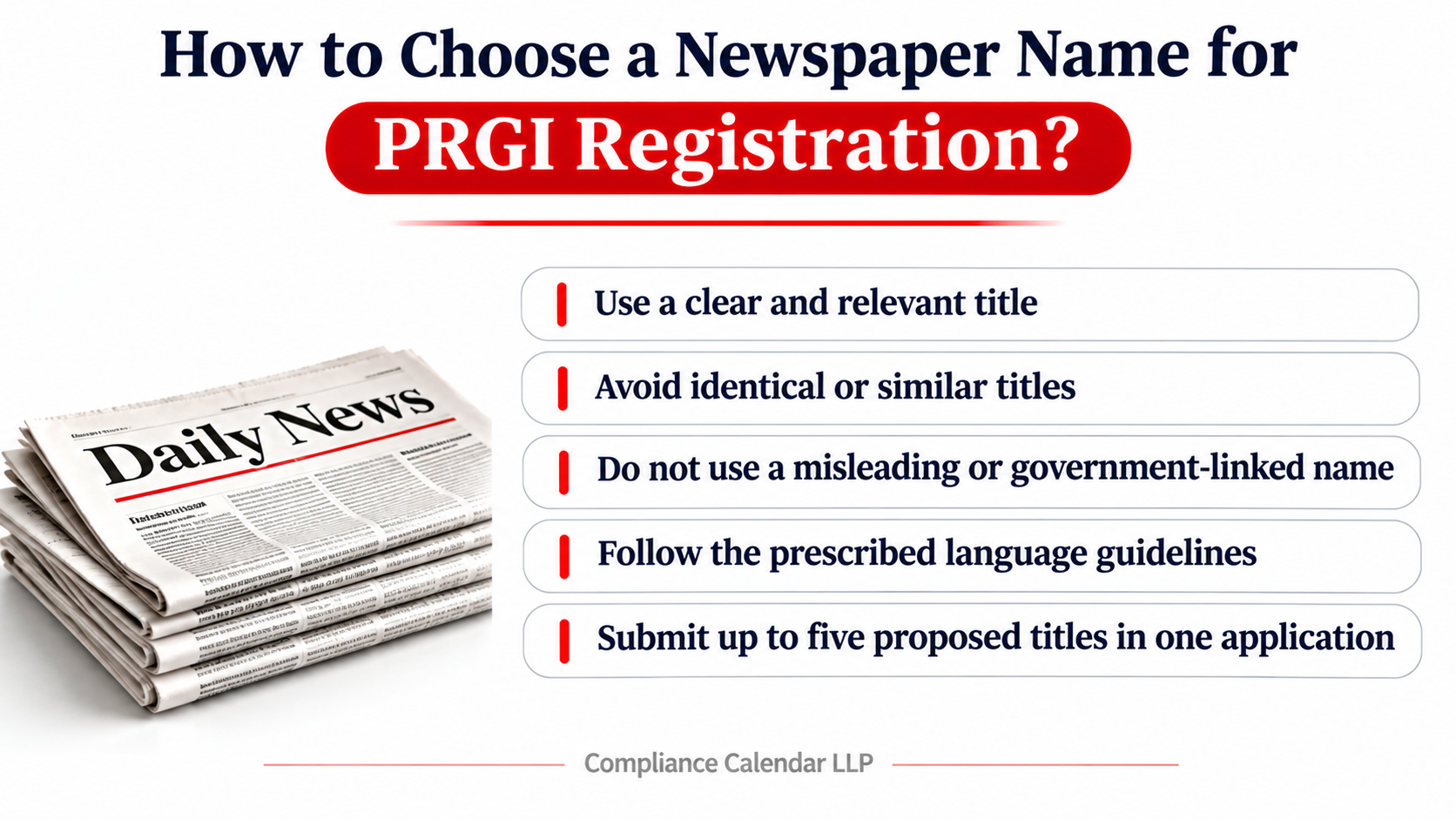
Some important points to remember while choosing a title are:
- The title should have a clear meaning and relate to the purpose of the publication.
- It should not be identical or confusingly similar to an existing title.
- A simple spelling change may not make a similar-sounding title acceptable.
- Generic or single root words may not be accepted under the title guidelines.
- The title should not suggest a false connection with a government department, public authority or another well-known publication.
- The words used in the title should follow the language requirements under the guidelines.
The owner can submit up to five proposed titles in one application, arranged in order of preference. The application also requires the title in English and Hindi, its meaning, the proposed language and frequency of publication, and a short description of the content.
Note:Applicants can check the existing verified titles through the Press Sewa Portal before applying. However, a title not appearing in the search results is not automatically available. PRGI makes the final decision on whether a proposed title can be accepted.
What Documents Are Required for PRGI Registration?
The documents required for PRGI Registration depend on whether the newspaper is owned by an individual or an organisation. The owner should collect the relevant identity, registration and authorisation documents before starting the online application. The details entered on the portal should match the supporting documents to avoid unnecessary corrections.
|
Individual Ownership |
Company, LLP, Trust, Society or Other Organisation |
|
Proof of date of birth of the relevant persons |
Certificate or document showing the date of incorporation or registration |
|
Photo identity proof of the owner, publisher, editor and printer or keeper, as applicable |
PAN card of the organisation or company |
|
Owner/applicant photograph for the portal profile |
Authorisation letter from the owner of the periodical |
|
Eligibility and Content Affidavit on stamp paper |
Shareholding pattern, if the owner is a company |
|
FDI-related documents, if applicable |
Proof of date of birth and photo identity of relevant persons |
|
Eligibility and Content Affidavit on stamp paper |
|
|
GST certificate, if available |
|
|
FDI-related documents, if applicable |
The Eligibility and Content Affidavit is an important part of the application. It contains declarations about the applicant's eligibility and the proposed publication. Applicants should use the prescribed affidavit format and follow the execution requirements before uploading it.
The exact checklist should be checked on the Press Sewa Portal for the selected ownership category. Additional information may also be required depending on the application.
For more information about documentation and process , read our article : PRGI Registration Documents & Process
Who Are the Owner, Publisher and Printer in Newspaper Registration?
The owner, publisher and printer have different roles in the PRGI registration process. Understanding these roles is important because the online application moves between their accounts before it reaches PRGI.
|
Person |
Role in the Registration Process |
|
Owner |
Owns the proposed newspaper or periodical and starts Part A of the application. |
|
Publisher |
Handles the publication and completes Part B of the application. |
|
Printer/Keeper |
Owns or manages the printing press and confirms the printing arrangement through the portal. |
|
Editor |
Is responsible for the editorial content of the publication and provides the required details. |
For example, Suraj may own a newspaper called "Jaipur Public Voice", appoint Neha as its publisher and select a local printing press to print the newspaper. Suraj will provide the owner and proposed publication details. Neha will complete the publisher's part of the application, while the printing press will confirm its role through its own portal account.
If the owner and publisher are the same person, that person must complete both parts of the application as required by the portal. In the case of non-individual ownership, the owner and publisher will be separate for the application process.
What Is the Process for PRGI Registration?
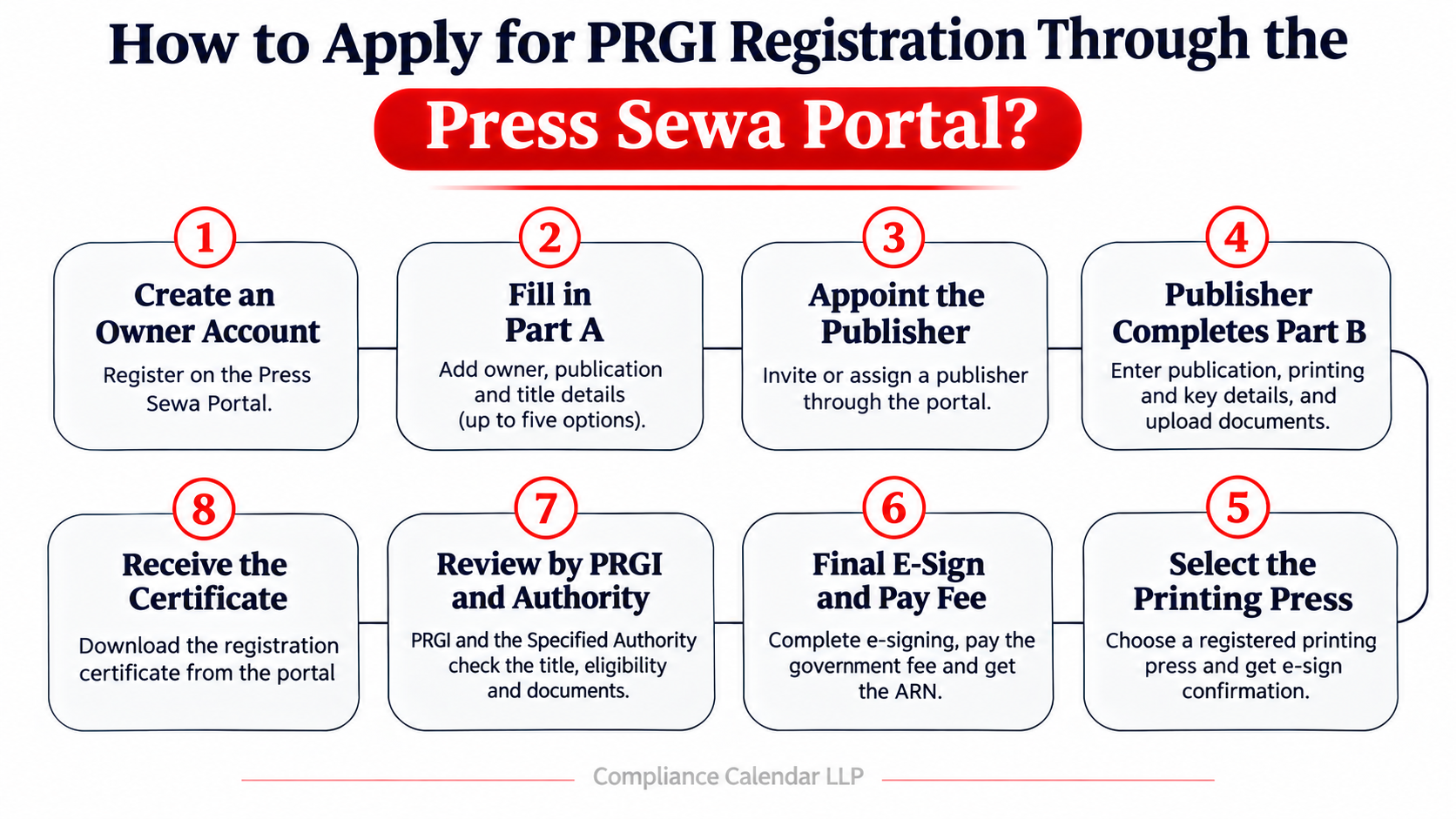
Newspaper registration is now completed online through the official Press Sewa Portal. The owner starts the application, the publisher provides the publication details, and the selected printing press confirms the printing arrangement. The application then goes to PRGI and the concerned Specified Authority for review.
Step 1: Create an Owner Account on the Press Sewa Portal
The owner or applicant must first visit the Press Sewa Portal and create an account under the correct user category. The applicant provides the required details, such as name, date of birth or date of incorporation, email address and mobile number.
After creating the account, the owner can log in and start a new registration application.
Step 2: Fill in New Registration Part A
The owner starts New Registration Part A and enters the required information. This includes the owner's details, publisher details, proposed place of publication and other information asked for on the portal.
The owner must also provide the proposed newspaper titles, their language, publication frequency and meaning. Up to five title options can be submitted in order of preference. The owner should check the title guidelines before entering these details.
Step 3: Appoint the Publisher
The owner must appoint or invite the publisher through the Press Sewa Portal. The publisher's contact details are provided so that the publisher can create or use an existing portal account and complete the next part of the application.
The publisher should check that the details received from the owner are correct before proceeding.
Step 4: Publisher Completes New Registration Part B
The publisher logs in to the portal and completes Part B of the application. This section includes details about the title, price, publisher, editor, printing press, place of publication and owner. The required documents and affidavit must also be uploaded.
The publisher should carefully check the information before submitting it because incorrect details may lead to a query or correction requirement.
Step 5: Select the Printing Press
The publisher must select the printing press that will print the newspaper. The printer or keeper must have an account and the required profile on the Press Sewa Portal.
After the publisher sends the request, it reaches the printer's account. The printer checks the details and accepts or rejects the request. If accepted, the printer completes the required e-signing step.
Step 6: Complete Final E-Sign and Pay the Fee
After the printer accepts the request, the application returns to the publisher. The publisher completes the final e-signing and pays the prescribed government processing fee through the portal.
Once the application is successfully submitted, the portal generates an acknowledgement and a unique Application Reference Number (ARN). The publisher should save the ARN because it is used for future tracking and communication.
Step 7: Application Review by PRGI and the Specified Authority
After submission, the application is forwarded to PRGI and the concerned Specified Authority in the State or Union Territory. The authority may be the District Magistrate, Collector or another officer notified by the State or Union Territory.
The application is checked for title admissibility, eligibility, documents and other required details. If any clarification or correction is required, the applicant should respond through the portal within the time provided.
Step 8: Receive the Certificate of Registration
If the application meets the requirements and the review is completed successfully, PRGI issues the Certificate of Registration digitally through the Press Sewa Portal. The publisher can log in and download the certificate.
The owner should not start printing and publishing the newspaper merely because the application has been submitted or an ARN has been generated. The required Certificate of Registration must be issued first.
What Is the Government Fee for PRGI Registration?
The current government processing fee for a new PRGI Registration application is Rs 1,000. The payment is made online through the prescribed payment facility on the Press Sewa Portal as part of the final application process.
|
Particulars |
Government Fee |
|
New PRGI Registration application |
Rs 1,000 |
Important: This is only the government processing fee. It does not include professional charges, printing costs, newspaper design, staff expenses, distribution or other business costs. If you are taking professional assistance, the service fee will depend on the work involved.
Applicants should check the amount displayed on the official portal before making payment, as government fees and procedures may change.
How Much Time Does PRGI Registration Take?
There is no guaranteed overall approval period that applies to every PRGI Registration application. The time depends on whether the proposed title is acceptable, whether the documents are complete, how quickly the printing press responds and whether the concerned authority or PRGI raises any query.
Under the Act, the Specified Authority has a period of 60 days from receiving the application to provide its no-objection or comments. However, this does not mean that every applicant will receive the final certificate within 60 days. The complete process may take longer if a clarification, correction or further review is required.
The publisher should regularly check the application status using the ARN and respond to portal communications within the prescribed time. Correct details and complete documents can help avoid delays that arise from mistakes in the application.
What Should You Do After Getting PRGI Registration?
Receiving the Certificate of Registration is an important step, but the owner and publisher must also follow the requirements that apply after registration. The newspaper should start publication within the prescribed period and continue to follow the reporting and record-keeping rules.
|
Requirement |
What the Publisher Must Do |
|
Start publication |
Begin publishing within 12 months from the end of the month in which the certificate was issued. |
|
Upload e-copies |
Upload a scanned copy of every published issue on the Press Sewa Portal within 48 hours of publication. |
|
Annual statement |
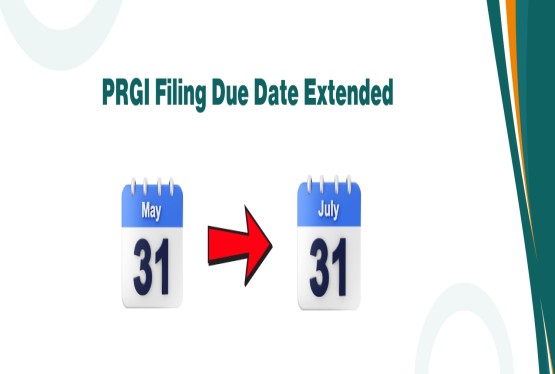
Submit the annual statement by 31 May for the preceding financial year, subject to any official extension or direction. |
|
Physical copies |
Deliver copies of the previous month's issues to the concerned PIB office by the fifth day of the following month. Newspapers published in NCT Delhi submit copies to PRGI, New Delhi. |
|
Change in details |
Apply through the relevant portal service when registered details such as publisher, editor, printing press or place of publication change. |
|
Discontinuation |
Submit the required online intimation within six months if publication is discontinued. |
For example, if a publisher receives a registration certificate but does not start publishing within the prescribed 12-month period, PRGI may cancel the certificate and withdraw the allotted title. Similarly, missing annual statements or failing to upload publication copies can create compliance problems.
You can read our related article on PRGI Registration: How to Maintain Accurate Periodical Records to understand the responsibilities that continue after registration.
What Mistakes Can Delay or Affect PRGI Registration?
Many application problems arise because the owner, publisher and printer do not check their details before submitting the application. A title may also be rejected if it is too similar to an existing publication or does not follow the PRGI title guidelines.
Applicants should avoid choosing a name without checking the existing titles, entering different information in the portal and supporting documents, uploading an incomplete affidavit or selecting a printing press that has not completed its portal profile. They should also check the application carefully before final submission and use the available five-day correction window if any mistake or omission needs to be fixed. Once this window closes, corrections cannot be made through that initial correction facility.
Another common mistake is assuming that the ARN is the registration certificate. The ARN only confirms that the application has been submitted. Publication should begin only after PRGI issues the Certificate of Registration.
How Can Compliance Calendar LLP Help with PRGI Registration?
PRGI Registration involves title selection, ownership details, publisher appointment, document preparation, printing press coordination and online filing. A mistake in any of these stages can lead to a query or delay. Applicants who are unfamiliar with the Press Sewa Portal may need guidance to complete the process correctly.
Compliance Calendar LLP can assist with checking the proposed newspaper title, understanding the applicable document requirements, preparing the application details, coordinating with the printing press and guiding the applicant through the Press Sewa Portal process. Our team can also help with responses to queries raised during the registration process.
We provide PRGI Registration assistance for applicants across India. For example, if you plan to publish from Noida or Gurugram, you can also explore our local service pages for PRGI Registration in Noida and PRGI Registration in Gurugram.
For assistance with newspaper registration in India, contact Compliance Calendar LLP by Phone/WhatsApp: +91 9988424211 or Email: info@ccoffice.in
Frequently Asked Questions
1. Is RNI Registration still available in India in 2027?
The authority is now known as the Press Registrar General of India (PRGI). New newspaper and periodical registration applications are handled under the Press and Registration of Periodicals Act, 2023, through the Press Sewa Portal. People still commonly search for this process using the older term RNI Registration.
2. Is PRGI Registration compulsory for a newspaper?
Yes. A newspaper that falls within the definition of a periodical under the Press and Registration of Periodicals Act, 2023 must obtain the required Certificate of Registration before it is printed and published in India.
3. Can an individual register a newspaper in India?
Yes. An eligible Indian citizen can apply to bring out a newspaper or another qualifying periodical. The applicant must meet the legal eligibility conditions and submit the required information and documents through the Press Sewa Portal.
4. Can a company or LLP apply for PRGI Registration?
Yes. An eligible company, LLP, partnership firm, trust, society or other organisation registered in India can apply, subject to the applicable conditions. The organisation must provide its registration documents, PAN and other required information.
5. How many newspaper names can I submit for PRGI Registration?
An applicant can submit up to five proposed titles in one application, arranged in order of preference. Each proposed title must follow the PRGI guidelines.
6. What is the government fee for PRGI Registration?
The current government processing fee for a new registration application is Rs 1,000. The amount should be confirmed on the Press Sewa Portal before payment.
7. Can I publish my newspaper after receiving the ARN?
No. The Application Reference Number confirms that the application has been submitted. It is not a Certificate of Registration. You must wait for PRGI to issue the certificate before starting publication.
8. Is PRGI Registration required for an online news website?
A digital-only news website is not covered as a periodical under the Press and Registration of Periodicals Act, 2023. PRGI Registration applies to qualifying printed periodicals. Other laws and rules may apply to digital news publishers.
9. Does a newspaper need a printing press for PRGI Registration?
Yes. The publisher must select a printing press in the application. The printer or keeper must have the required profile on the Press Sewa Portal and accept the printing request through the portal.
10. How long does PRGI Registration take?
The total processing time depends on the title, documents, printing press acceptance, authority comments and any queries raised during review. The 60-day period for the Specified Authority to provide its comments should not be treated as a guaranteed overall approval timeline.
11. When should a newspaper start publication after receiving registration?
The publisher must commence publication within 12 months from the end of the month in which the Certificate of Registration was issued. If publication does not start within this period, PRGI may cancel the certificate and withdraw the allotted title.
12. Is an annual statement required after PRGI Registration?
Yes. The publisher must submit the annual statement through the Press Sewa Portal by 31 May for the preceding financial year, subject to any official extension or direction.
13. Can I change the newspaper name after registration?
A registered title cannot be changed freely. PRGI permits title modification only in limited circumstances under its guidelines, such as certain changes arising from an officially notified change in the name of the place of publication. The publisher should check the applicable rules before requesting a change.
14. Can Compliance Calendar LLP help with RNI or PRGI Registration?
Yes. Compliance Calendar LLP can assist with the current PRGI Registration process, including title selection, document preparation, Press Sewa Portal filing, printing press coordination and responses to queries raised by the authority.
Article last updated on : 26 Nov 2026.












_learn_crop10_thumb.jpg)