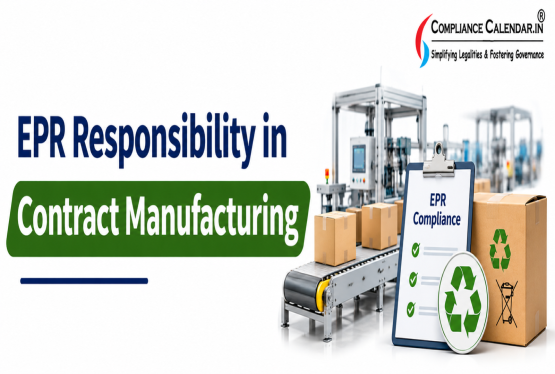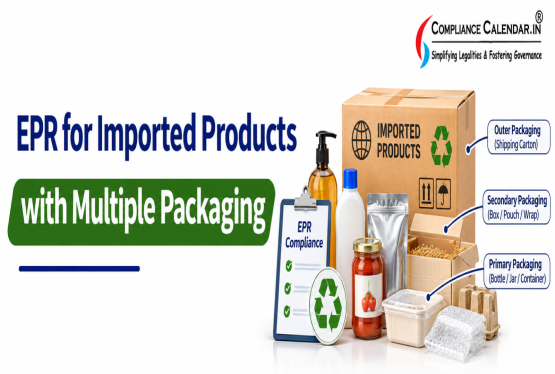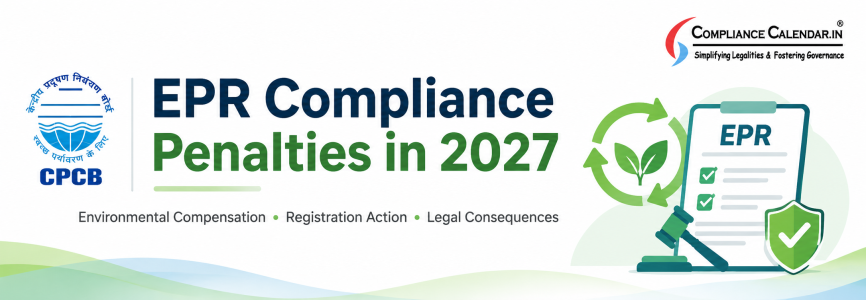



EPR compliance is an important responsibility for businesses that manufacture, import or sell products covered by India's waste management rules. Under Extended Producer Responsibility (EPR), businesses must take responsibility for the waste generated by their products or packaging. Depending on the type of product, they may need to obtain EPR Registration, meet recycling targets, purchase valid EPR certificates and file returns with the Central Pollution Control Board (CPCB).
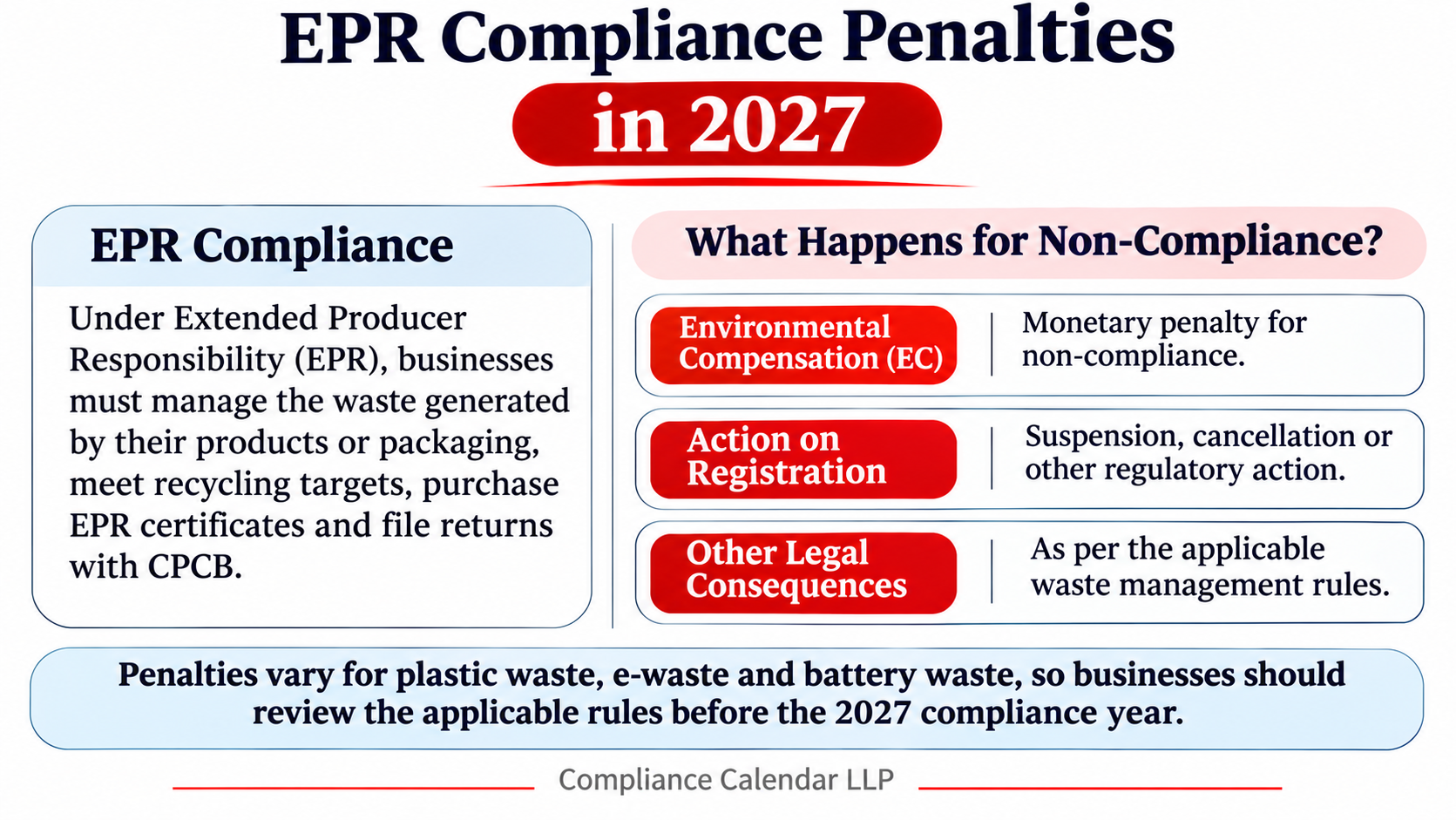
What happens if a business does not follow these requirements? It may have to pay Environmental Compensation (EC), face action against its EPR Registration or deal with other legal consequences. The penalty depends on the type of waste, the violation and the applicable rules. Plastic waste, e-waste and battery waste have different penalty systems, so businesses should understand the rules that apply to their products before the 2027 compliance year.
What Are the Penalties for EPR Non-Compliance in 2027?
EPR non-compliance means failing to meet the responsibilities given to a business under the applicable waste management rules. This may include operating without the required registration, missing recycling targets, failing to file returns, submitting incorrect information or using invalid EPR certificates. CPCB and the relevant State Pollution Control Boards (SPCBs) can take action depending on the type of violation and the authority given to them under the rules.
One of the main consequences is Environmental Compensation. It is an amount imposed on a business for certain environmental violations or failure to meet its EPR responsibilities. There is no single fixed penalty amount for every EPR violation in India. CPCB has separate guidelines for plastic waste, e-waste and battery waste, and the amount is calculated according to the relevant violation and its impact.
Which Businesses Must Follow EPR Rules in 2027?
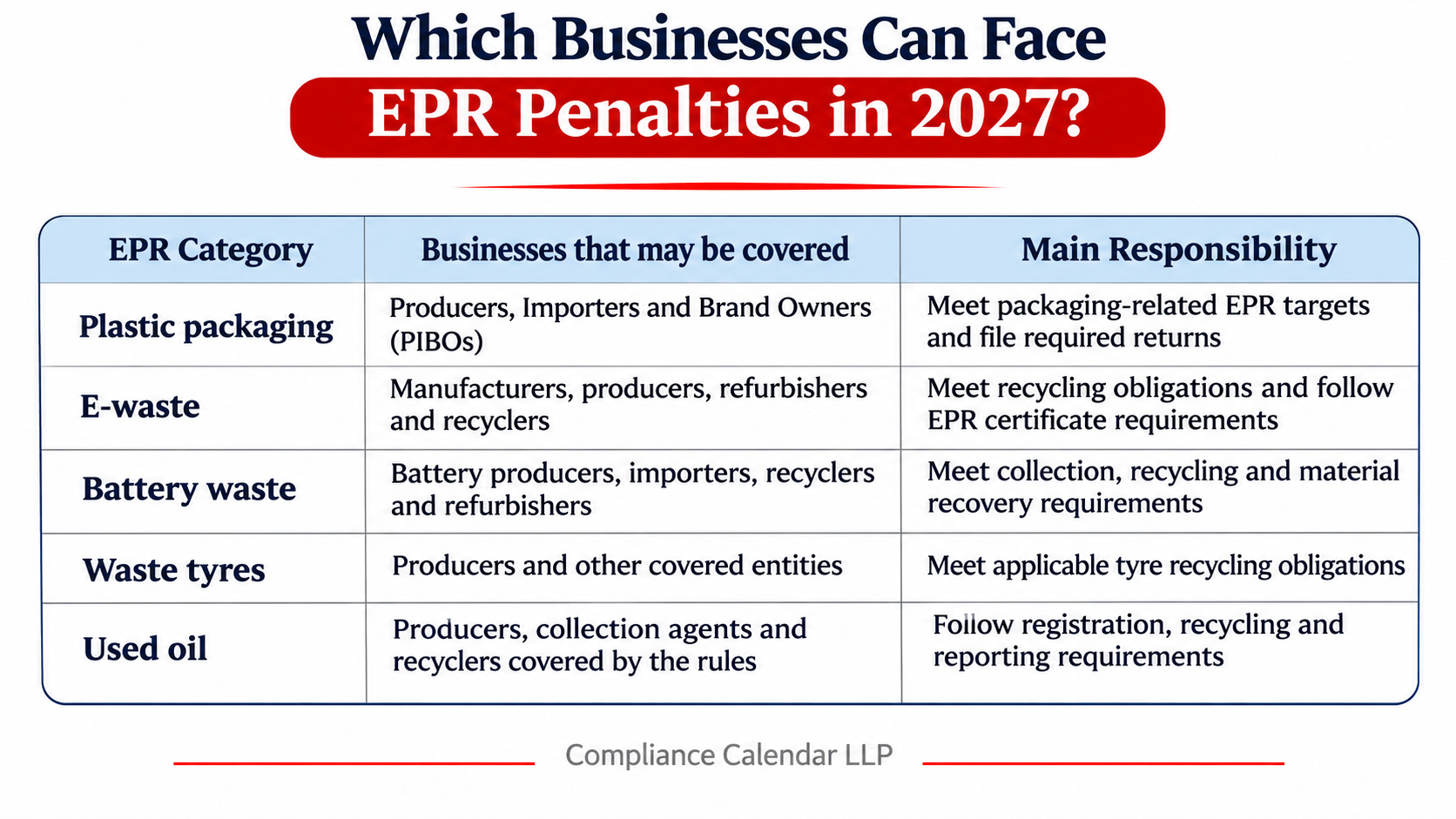
EPR penalties can apply to businesses that are legally responsible for managing the waste generated by their products or packaging. This includes certain manufacturers, producers, importers, brand owners, recyclers and refurbishers. A business does not become exempt simply because it uses a third-party agency to collect or recycle its waste. Its legal responsibility depends on the applicable rules and the role it performs.
|
EPR category |
Businesses that may be covered |
Main responsibility |
|
Plastic packaging |
Producers, Importers and Brand Owners (PIBOs) |
Meet packaging-related EPR targets and file required returns |
|
E-waste |
Manufacturers, producers, refurbishers and recyclers |
Meet recycling obligations and follow EPR certificate requirements |
|
Battery waste |
Battery producers, importers, recyclers and refurbishers |
Meet collection, recycling and material recovery requirements |
|
Waste tyres |
Producers and other covered entities |
Meet applicable tyre recycling obligations |
|
Producers, collection agents and recyclers covered by the rules |
Follow registration, recycling and reporting requirements |
A company may also have responsibilities under more than one EPR category. For example, a business importing electronic products packed in plastic may need to check both e-waste and plastic packaging requirements.
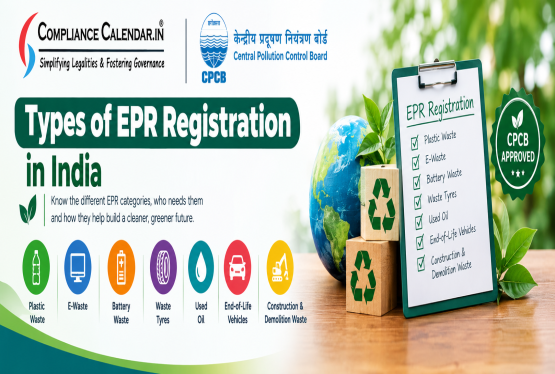
Our guide on EPR Registration 2026: Process and Documents explains the main EPR categories and the businesses covered by them.
What Are the Penalties for Plastic Waste EPR Violations?
Businesses covered by the Plastic Waste Management Rules, 2016 must follow the applicable requirements for plastic packaging. Producers, Importers and Brand Owners must obtain the required registration, report packaging quantities, meet recycling targets and fulfil recycled plastic content requirements wherever applicable. They must also file the required returns and maintain records to support the information submitted on the CPCB portal.
If a business fails to meet these requirements, it may face Environmental Compensation under the CPCB guidelines. Violations can include missing recycling targets, incorrect reporting, operating without registration, using unsupported recycling claims or failing to follow other requirements under the Plastic Waste Management Rules. The Plastic Waste Management (Amendment) Rules, 2025 also added a provision for action against violations under Section 15 of the Environment (Protection) Act, 1986. Therefore, businesses should not assume that paying compensation is the only possible consequence.
Example: A company sells packaged food in plastic pouches and has a recycling obligation for the plastic packaging it introduces into the market. However, it fails to arrange processing for the full required quantity and reports incorrect figures in its annual return. If the shortfall or incorrect information is identified, the company may face Environmental Compensation and further action under the applicable rules.
You can read our article on Plastic Waste Recycling Targets for FY 2027–28 to understand the recycling requirements businesses need to meet.
What Are the Penalties for E-Waste EPR Violations?
The E-Waste (Management) Rules, 2022 apply to covered manufacturers, producers, refurbishers and recyclers dealing with electrical and electronic equipment listed under the rules. Producers must obtain registration, meet their recycling targets and use valid EPR certificates generated by registered recyclers. They must also submit the required returns and maintain correct sales and recycling records.
CPCB's approved environmental compensation guidelines cover different violations, including failure to meet recycling targets, operating without registration, using false EPR certificates and submitting incorrect information. The compensation for a recycling shortfall is calculated using factors such as the cost of collecting, transporting and processing the waste. Other violations are assessed under the relevant parts of the guidelines. In serious cases, registration may also be suspended or cancelled.
Example: An electronics importer sells computers and other electronic products in India. It has a recycling obligation but does not obtain enough valid EPR certificates from registered recyclers to meet its target. If the shortfall is identified by CPCB, the importer may have to pay Environmental Compensation and still fulfil its outstanding recycling obligation.
Our detailed article on EPR E-Waste Registration Requirements explains the registration, recycling and reporting responsibilities of producers.
What Are the Penalties for Battery Waste EPR Violations?
The Battery Waste Management Rules, 2022 cover different types of batteries, including portable, automotive, industrial and electric vehicle batteries. Producers, including manufacturers and importers covered by the rules, must obtain registration and meet their applicable EPR targets. They must also follow the collection, recycling, material recovery and annual return requirements.
Rule 13 provides for Environmental Compensation for specified violations. These include carrying out activities without required registration, giving false information, hiding important facts, submitting forged or manipulated documents and failing to follow proper waste battery handling requirements. CPCB's approved guidelines also explain how compensation is assessed for EPR target shortfalls and other violations. Depending on the case, the authority may also suspend or cancel registration.
Example: An importer brings lithium-ion batteries into India but does not meet its required recycling or recovery target. If the importer cannot show that the required obligation has been fulfilled, CPCB may impose Environmental Compensation under the battery waste rules. The importer will also need to address the outstanding EPR obligation as required by the rules.
To understand the registration requirements and supporting documents, read our article on EPR Battery Registration Documents.
Can CPCB Suspend or Cancel EPR Registration?
Yes. A business can face action against its EPR Registration if it violates the applicable waste management rules or registration conditions. Depending on the category and seriousness of the violation, CPCB may suspend or cancel registration. For certain violations involving recyclers, false information that leads to the generation of excess EPR certificates can also result in cancellation and other action under the relevant rules.
For example, an e-waste recycler that submits false information to generate extra EPR certificates may face serious consequences, including revocation of registration. Similarly, a business that provides incorrect information or deliberately hides important facts may face action under the applicable battery waste rules. Before taking such action, the authority must follow the relevant procedure, including giving an opportunity to the concerned entity where required.
A business that receives a notice from CPCB or an SPCB should not ignore it. It should read the notice, check the violation mentioned and submit the required explanation or documents within the given time.
Does Paying Environmental Compensation Remove the EPR Obligation?
No. Paying Environmental Compensation does not automatically remove the original EPR responsibility. If a business fails to meet its recycling or recovery target, it may still have to fulfil the outstanding quantity within the period allowed under the relevant rules.
For example, the Battery Waste Management Rules, 2022 allow an unfulfilled EPR obligation to be carried forward for up to three years. If the business meets the shortfall within the permitted period, a part of the Environmental Compensation may be returned according to the rules. The e-waste rules also provide for carrying forward certain shortfalls and returning part of the compensation when the obligation is fulfilled within the permitted period. The conditions and refund percentages are different under these two frameworks.
This means a business should not treat Environmental Compensation as a payment that allows it to skip recycling. It must also address the original shortfall and follow the conditions applicable to its EPR category.
For Plastic waste registration-related requirements, see EPR Plastic Waste Registration in India
How Can a Business Stay Compliant with EPR Rules?
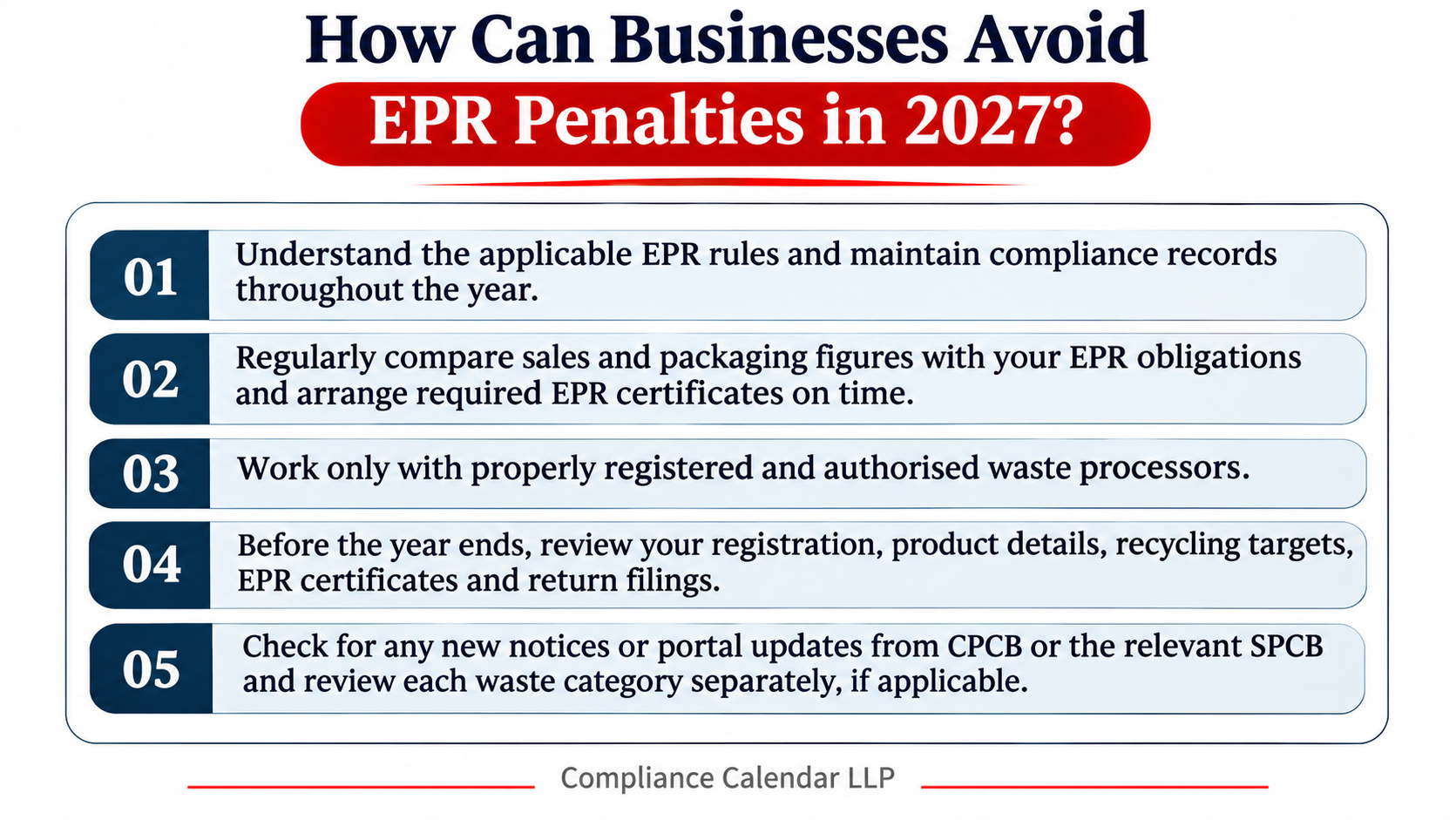
The best way to avoid EPR penalties is to understand the applicable rules and maintain proper compliance records throughout the year. Businesses should not wait until the annual return deadline to check their recycling targets or arrange EPR certificates. They should regularly compare their sales and packaging figures with their EPR obligations and ensure that the waste processors they work with are properly registered.
Before the end of the financial year, businesses should review their registration, product details, recycling targets, EPR certificates and return filings. They should also check whether CPCB or the relevant SPCB has issued any new notice or changed the portal requirements. If a business deals with more than one waste category, it should review each category separately because one EPR registration or certificate cannot automatically cover all types of waste.
How Can Compliance Calendar LLP Help with EPR Compliance?
An EPR problem often starts when a business is unsure about its actual responsibility. For example, an importer may have EPR registration but may not know how to calculate its recycling target or which certificates are needed to meet it. A plastic packaging business may have completed its sales but still have pending EPR obligations or returns. Compliance Calendar LLP helps businesses understand these requirements and take the necessary compliance steps. Our team can assist with checking the applicable EPR category, preparing documents, filing registration applications and addressing application-related queries.
If your business has already received an EPR notice or found a gap in its compliance records, it is important to check the reason before taking action. We can help review the relevant registration and compliance requirements, understand the pending obligations and guide you on the steps that may be required. We also assist with EPR annual return filing and registration-related work for plastic waste, e-waste and battery waste. The support required depends on your business activity and the nature of the issue.
If you need assistance with EPR Registration or ongoing EPR compliance for 2027, contact Compliance Calendar LLP on Phone/WhatsApp: +91 9988424211 or Email: info@ccoffice.in
FAQs on EPR Compliance Penalties in 2027
1. What is the penalty for EPR non-compliance in India?
There is no single penalty amount for all EPR violations. The amount depends on the waste category, type of violation and applicable CPCB environmental compensation guidelines. Other legal action may also apply.
2. Can CPCB impose Environmental Compensation for EPR violations?
Yes. CPCB can impose Environmental Compensation for specified violations under the applicable waste management rules. The relevant SPCB may also have authority to take action against entities under its jurisdiction.
3. What happens if a company fails to meet its EPR recycling target?
The company may have to pay Environmental Compensation for the shortfall. It may also need to fulfil the outstanding recycling obligation within the period allowed under the applicable rules.
4. Can a business operate without EPR Registration?
A business that is required to obtain EPR Registration cannot legally avoid that requirement. Operating without the required registration may lead to Environmental Compensation and further action under the applicable rules.
5. Can EPR Registration be cancelled for non-compliance?
Yes. Depending on the violation and the applicable rules, CPCB may suspend or cancel registration. Submitting false information or using invalid EPR certificates can lead to serious consequences.
6. Are plastic waste and e-waste EPR penalties the same?
No. Plastic waste and e-waste are governed by separate rules and CPCB guidelines. Their violations and Environmental Compensation calculations are different.
7. What happens if a business files an incorrect EPR return?
Incorrect information may lead to verification, a request for clarification, Environmental Compensation or other action. Deliberately submitting false information can lead to more serious consequences.
8. Does paying Environmental Compensation remove the recycling obligation?
No. Paying compensation does not automatically remove the outstanding EPR responsibility. The business may still have to fulfil the shortfall within the time allowed under the relevant rules.
9. Can a small business face EPR penalties?
Yes, if the business falls within an obligated category under the applicable waste management rules. EPR responsibility depends on the business's activities and the legal requirements, not simply on its size.
10. What happens if a battery importer fails to meet its EPR target?
The importer may face Environmental Compensation under the Battery Waste Management Rules, 2022. It may also have to fulfil the outstanding EPR obligation and could face further action for other violations.
11. Can a company face penalties for using invalid EPR certificates?
Yes. Using false or invalid EPR certificates can lead to action under the relevant waste management rules. Businesses should check that certificates are generated by registered recyclers and are valid for the applicable category and obligation.
12. How can a business avoid EPR penalties in 2027?
A business should obtain the required registration, maintain accurate records, meet its recycling targets, use valid EPR certificates, file returns on time and follow the latest CPCB and SPCB instructions.
Article last updated on : 27 Nov 2026.











_learn_crop10_thumb.jpg)