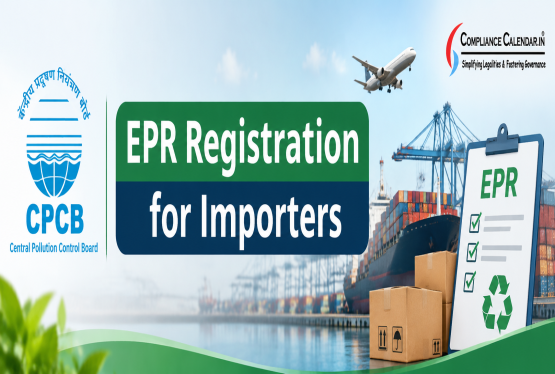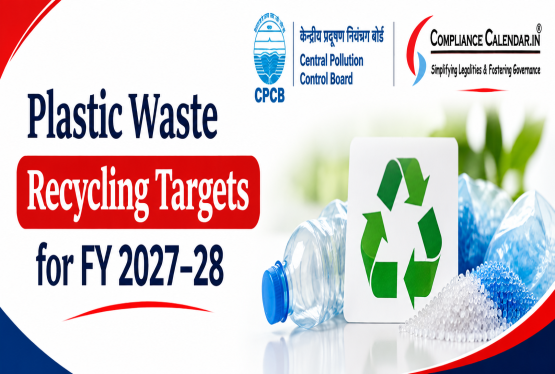



Selling products through Amazon FBA has become a popular way for Indian businesses to reach customers across the country. Sellers can store their products in Amazon fulfilment centres while Amazon manages eligible orders, packaging, shipping and customer deliveries. However, many sellers overlook an important environmental compliance requirement: Extended Producer Responsibility (EPR) for plastic packaging.
Consider a seller who purchases cosmetics from a manufacturer, sells them under a private brand and sends the products to an Amazon fulfilment centre. The cosmetics arrive in plastic bottles, protective wraps and sealed pouches. Amazon may also use additional packaging when dispatching the order. This raises an important question: Who is responsible for managing the plastic packaging waste generated from these products?
Under the Plastic Waste Management Rules, 2016, as amended, certain producers, importers and brand owners must register and fulfil EPR obligations. The rules also recognise online platforms and marketplaces within the relevant brand-owner provisions. Therefore, an Amazon FBA seller should not assume that using Amazon's fulfilment services automatically removes its own environmental responsibilities.Businesses selling packaged products online should understand their environmental responsibilities.
Read EPR Compliance in India for an overview of registration and waste-management obligations.
What Is EPR for Plastic Packaging Used by Amazon FBA Sellers?
Extended Producer Responsibility is a legal requirement under which specified businesses remain responsible for the environmentally sound management of plastic packaging introduced into the market. It encourages businesses to account for the packaging they use and support its collection, recycling, reuse or other permitted processing.
The principal legislation is the Plastic Waste Management Rules, 2016, issued under the Environment (Protection) Act, 1986. Rule 9, Rule 13 and Schedule II contain important provisions relating to registration and EPR compliance for covered businesses.
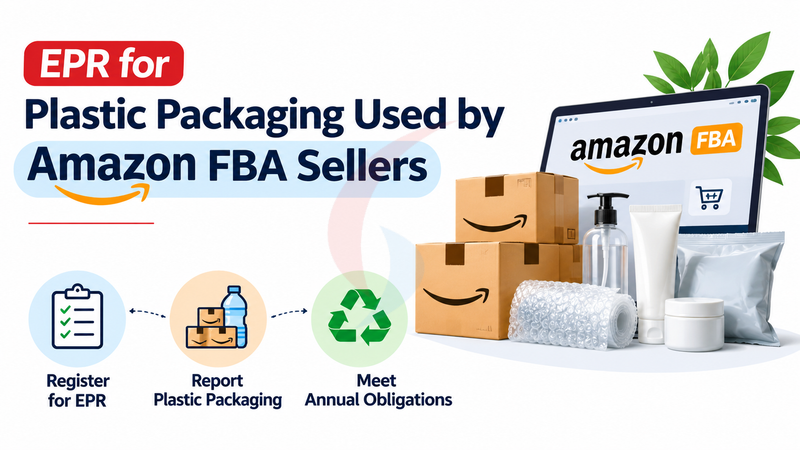
Amazon FBA, or Fulfilment by Amazon, is a logistics service through which eligible sellers store inventory in Amazon's fulfilment network. Although Amazon manages several operational activities, responsibility under plastic EPR law depends on the legal role of each business, including who introduces covered plastic packaging into the market.
Is EPR Registration Mandatory for Amazon FBA Sellers?
EPR Registration may be mandatory for Amazon FBA sellers who qualify as producers, importers or brand owners under the applicable Plastic Waste Management Rules. However, every seller does not automatically require a separate registration merely because products are sold through Amazon. Schedule II identifies obligated entities, including producers, importers and brand owners. The provisions also address online marketplaces and retail chains and contain relevant exclusions and differentiated requirements for micro and small enterprises.
For example, a business importing plastic-packed products from China and selling them through Amazon India may fall within the importer category. Similarly, an Indian company sourcing products from another manufacturer and selling them under its registered brand must examine its brand-owner obligations.
A seller who only resells already packaged products belonging to another brand may have a different compliance position. The correct determination depends on packaging ownership, import activities, brand identity, business classification and the applicable amended rules.
A Practical Example: When an Amazon Seller Discovers Its EPR Responsibility
For example, ABC Company sells skincare products through Amazon FBA. The company purchases face creams from another manufacturer and sells them under its own brand. Each product comes in plastic packaging, and the company sends 15,000 units to an Amazon fulfilment centre.
Initially, ABC Company assumes that Amazon handles all packaging-related compliance. However, it later discovers that selling products under its own brand may create EPR obligations. The company reviews its plastic packaging quantities and applicable registration requirements. This shows that using Amazon FBA does not automatically remove a seller's EPR responsibilities.
Legal Provisions Applicable to Amazon FBA Plastic Packaging
EPR compliance for Amazon FBA sellers is governed by the Environment (Protection) Act, 1986 and the Plastic Waste Management Rules, 2016, as amended. The following provisions are particularly relevant to plastic packaging registration, labelling and waste-management obligations.
|
Act / Rules and Legal Provision |
Key Requirement |
|---|---|
|
Provides the legal basis for environmental protection and enforcement. |
|
|
Regulates plastic packaging and waste management. |
|
|
Extended Producer Responsibility (EPR) obligations. |
|
|
Marking and labelling requirements. |
|
|
Registration requirements for covered businesses. |
|
|
Schedule II of the Plastic Waste Management Rules, 2016, as amended |
EPR registration, packaging categories, recycling targets and reporting requirements. |
|
Updates applicable recycling, packaging and compliance requirements. |
The government further amended the Plastic Waste Management Rules through G.S.R. 237(E), dated 31 March 2026. Amazon FBA sellers should review the updated provisions to determine their EPR registration and compliance obligations.
Who Is Responsible for Plastic Packaging in Amazon FBA?
An Amazon order may involve packaging supplied by multiple businesses. The product manufacturer may provide the original container, the brand owner may add promotional packaging, and Amazon's fulfilment operations may use additional delivery packaging.
Responsibility must be determined according to the actual business arrangements and statutory definitions.
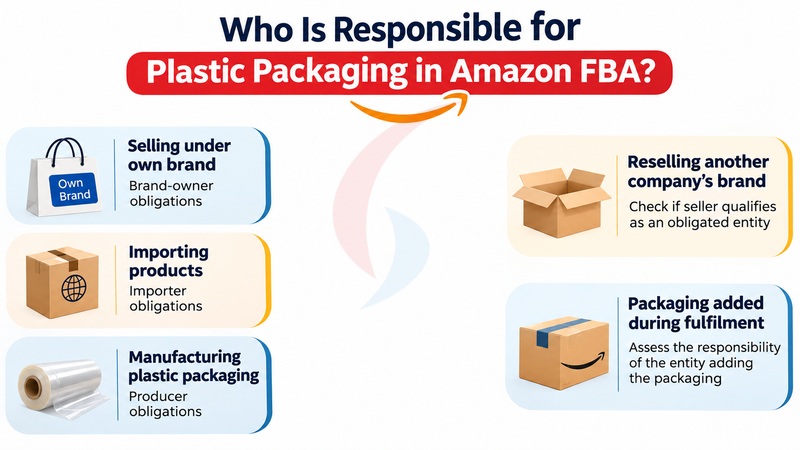
|
Business Activity |
EPR Position to Examine |
|
Selling products under the seller's own brand |
Brand-owner obligations |
|
Importing products with plastic packaging |
Importer obligations |
|
Manufacturing plastic packaging |
Producer obligations |
|
Reselling products under another company's brand |
Whether the seller independently qualifies as an obligated entity |
|
Packaging added during Amazon fulfilment |
Applicable responsibilities of the entity introducing that packaging |
For example, if a seller imports 5,000 packaged kitchen products and Amazon adds shipping envelopes to dispatch orders, the seller should review its imported product packaging while the additional fulfilment packaging requires a separate responsibility assessment. Businesses should maintain records to prevent unsupported exclusions or duplication of the same packaging quantities.
For additional guidance, read EPR Responsibility in Contract Manufacturing, which explains how packaging responsibility can arise when production and branding are handled by different businesses.
Types of Plastic Packaging Covered Under EPR
Amazon sellers commonly use plastic containers, protective films, bubble wraps, delivery pouches and laminated packaging. Schedule II classifies covered plastic packaging according to its material and structure.
|
EPR Category |
Packaging Type |
Amazon Seller Example |
|
Category I |
Rigid plastic packaging |
Cosmetic jars, bottles and plastic containers |
|
Category II |
Flexible plastic packaging |
Polybags, stretch films, bubble wraps and plastic pouches |
|
Category III |
Multilayered packaging containing plastic and non-plastic materials |
Certain paper-plastic or aluminium-plastic laminates |
|
Category IV |
Specified compostable plastic packaging |
Qualifying certified compostable bags |
|
Category V |
Specified biodegradable plastic packaging |
Qualifying biodegradable materials under amended provisions |
One important distinction is that packaging made from several different plastic layers does not automatically become Category III. The actual combination of materials determines the appropriate classification. A cardboard box without a plastic component is not automatically covered as plastic packaging, while plastic wrapping around that box may be covered.
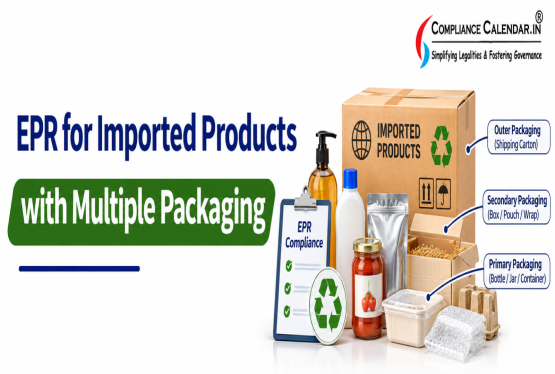
Sellers handling imported products can also read EPR for Imported Products with Multiple Packaging for a more detailed explanation of packaging classification.
Documents Required for EPR Registration by Amazon FBA Sellers
The documents required depend on whether the seller is applying as a producer, importer or brand owner. The application information should match the seller's legal identity and the quantities of plastic packaging introduced into the market.
|
Document |
Purpose |
|
PAN and GST Certificate |
Establishes business identity |
|
Confirms legal constitution |
|
|
Registered Office Address Proof |
Identifies business location |
|
Authorised Signatory Details |
Identifies the applicant |
|
Product and Brand Details |
Establishes relevant business activities |
|
Plastic Packaging Details |
Identifies categories, quantities and materials |
|
Purchase and Sales Invoices |
Supports packaging calculations |
|
IEC, where applicable |
Supports importer identification |
|
Amazon FBA and Packaging Records |
Helps reconcile fulfilment-related packaging information |
|
Previous EPR Records, if applicable |
Supports historical reporting |
An Amazon FBA seller should also maintain supporting information from its packaging suppliers and contract manufacturers. Where plastic packaging is supplied separately by the seller, manufacturer and fulfilment provider, the records should clearly identify each party's contribution.
For detailed documentation guidance, read EPR Plastic Registration for Importers and Brands.
EPR Registration Process for Amazon FBA Sellers in 2026
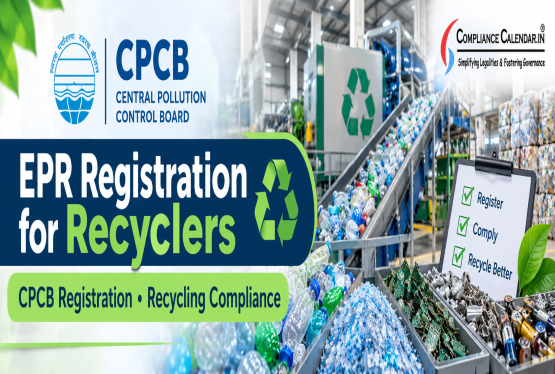
Plastic packaging EPR Registration is completed through the CPCB Common EPR Portal. The registration process generally involves the following steps:
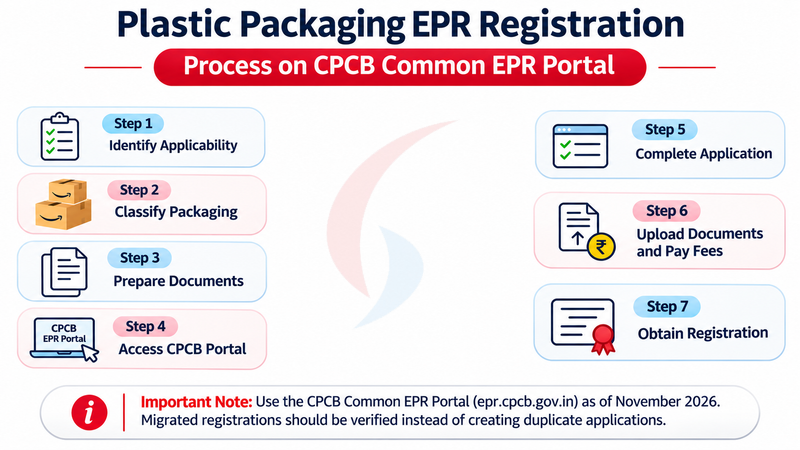
|
Step |
Registration Process |
Details |
|---|---|---|
|
Step 1 |
Identify Applicability |
Check whether the seller qualifies as a producer, importer or brand owner. |
|
Step 2 |
Classify Packaging |
Identify Schedule II packaging categories and calculate plastic quantities. |
|
Step 3 |
Prepare Documents |
Collect PAN, GST, business registration and packaging records. |
|
Step 4 |
Access CPCB Portal |
Visit the Common EPR Portal. |
|
Step 5 |
Complete Application |
Enter business details and category-wise packaging information. |
|
Step 6 |
Upload Documents and Pay Fees |
Submit required documents and pay applicable government fees. |
|
Step 7 |
Obtain Registration |
Respond to CPCB queries and download the certificate after approval. |
Important Note: As of November 2026, applicants must use the CPCB Common EPR Portal. Businesses with migrated registrations should verify their existing records instead of creating duplicate applications.
How Are EPR Targets Calculated for Amazon FBA Sellers?
EPR compliance does not end after registration. Covered businesses must calculate and meet their applicable plastic packaging waste-management obligations under Schedule II. The calculation generally considers category-wise packaging quantities and the applicable historical data, adjustments and targets prescribed for the relevant type of obligated entity.
For example, assume an Amazon brand owner sells 20,000 plastic-packed products during a financial year. If each unit contains 40 grams of plastic packaging attributable to the business, the total packaging quantity would be:
20,000 × 40 grams = 800,000 grams, or 800 kg of plastic packaging.
This is an illustration of packaging quantity, not the final statutory EPR target. The actual obligation depends on the applicable category, previous financial-year information, adjustments, and current Schedule II calculations. Businesses must also distinguish between packaging they introduce themselves and packaging separately attributable to other entities. Eligible processing certificates from registered plastic waste processors are used through the prescribed system to demonstrate fulfilment of applicable obligations.
Latest Government Updates for Plastic Packaging EPR in 2026
The Plastic Waste Management (Amendment) Rules, 2026 were notified through G.S.R. 237(E), dated 31 March 2026. The amendment introduces important changes relating to recycling, recycled content, reporting and enforcement.
|
Regulatory Update |
Importance for Amazon Sellers |
|
Plastic Waste Management Amendment Rules, 2026 |
Updates applicable packaging and recycling requirements |
|
Recycled Plastic Content |
Category-wise recycled-content requirements apply according to the relevant year and prescribed conditions |
|
Recycled Plastic Labelling |
Applicable recycled plastic packaging must comply with IS 14534:2023 and relevant marking requirements |
|
Common EPR Portal |
Replaces the former standalone plastic EPR portal |
|
Compliance Verification |
Strengthens the importance of accurate packaging and processing records |
Under the amended provisions, the mandatory recycled-content percentage for Category I rigid plastic packaging is 40% for FY 2026–27, subject to applicable exclusions, adjustments and statutory conditions. The corresponding percentages and treatment differ for other packaging categories.
Importantly, a seller should not assume that every plastic package can contain recycled material. Product-specific legal restrictions, including applicable food-contact and safety requirements, must also be considered. The official rules can be accessed through the CPCB Plastic Waste Management Amendment Rules, 2026.
Penalties for Non-Compliance with EPR Requirements
Failure to comply with plastic packaging EPR obligations can expose the responsible business to regulatory action. The consequences depend on the nature of the violation and the applicable statutory provisions. Potential consequences include environmental compensation, directions to correct non-compliance, action against registration and other proceedings permitted under environmental law.
Providing incorrect packaging quantities or unsupported claims regarding recycling can create additional compliance concerns. Sellers should therefore maintain accurate records of their packaging materials, quantities, supporting invoices and eligible EPR certificates.
For more information on EPR compliance, see EPR Registration 2026: Process and Documents
Why Choose Compliance Calendar LLP ?
Compliance Calendar LLP provides professional assistance to businesses dealing with plastic packaging compliance, including online sellers, manufacturers, importers and brand owners. Our services include applicability assessment, packaging classification, preparation of application documents, CPCB portal filing, handling registration observations and ongoing compliance support. Amazon FBA sellers can explore our EPR Plastic Waste Registration Service for assistance with registration and related compliance requirements.
Contact Compliance Calendar LLP: +91 9988424211 or info@ccoffice.in
Frequently Asked Questions (FAQs)
Q1. Is EPR Registration mandatory for Amazon FBA sellers?
Ans: EPR Registration applies when an Amazon FBA seller qualifies as a producer, importer or brand owner under the applicable rules. Merely selling through Amazon does not automatically require every seller to obtain separate registration.
Q2. Does Amazon handle EPR compliance for sellers?
Ans: Amazon may have its own environmental compliance responsibilities for relevant packaging. However, this does not automatically replace the independent EPR obligations of sellers who qualify as obligated entities.
Q3. Do private-label Amazon sellers need plastic EPR Registration?
Ans: Private-label sellers should examine their brand-owner obligations, particularly where they introduce covered plastic packaging into the Indian market. Applicability depends on the statutory definitions, business classification and current rules.
Q4. Is plastic packaging EPR required for imported Amazon products?
Ans: Importers bringing products into India with covered plastic packaging may fall within the importer category. The importer should assess the packaging materials, quantities and applicable registration requirements.
Q5. Are cardboard boxes covered under Plastic Waste EPR?
Ans: A cardboard box without plastic material is not automatically plastic packaging. However, plastic films, laminated layers, wraps or other plastic components used with the box may require separate assessment.
Q6. Which CPCB portal is used for plastic EPR in 2026?
Ans: The CPCB Common EPR Portal is the designated platform for applicable plastic packaging EPR activities. The former standalone plastic EPR portal was discontinued on 28 June 2026.
Q7. Can Amazon sellers use one EPR Registration for plastic, batteries and e-waste?
Ans: No single registration should be assumed to cover all three waste streams. Plastic packaging, batteries and electrical or electronic equipment are governed by separate regulations and registration systems.
Q8. What happens if an Amazon seller fails to meet EPR targets?
Ans: Non-compliance may result in environmental compensation or other regulatory action under applicable environmental laws. The consequences depend on the nature of the violation and the current statutory provisions.
9. Does using recyclable plastic remove the EPR requirement?
Ans: Using recyclable material does not automatically exempt an obligated business from registration or EPR obligations. The seller must still examine the applicable rules, packaging classification and reporting requirements.
Q10. Can Compliance Calendar LLP help Amazon FBA sellers with EPR Registration?
Ans: Yes. Compliance Calendar LLP assists eligible sellers with registration assessment, document preparation, plastic packaging classification and CPCB application filing. It also provides support for applicable EPR reporting and compliance requirements.
Article last updated on : 25 Nov 2026.










_learn_crop10_thumb.jpg)