


Choosing a name is one of the first decisions a group makes when starting a political party in India. The name becomes the party's identity. People use it to recognise the party, understand its public image and distinguish it from other political parties.
However, a group cannot select any name and expect the Election Commission of India (ECI) to accept it. The proposed name must follow the Commission's registration guidelines. It should be clearly different from existing political parties and should not contain religious, communal or caste connotations under the ECI's amended registration checklist.
A name that looks suitable to the founding members may still create problems during registration. Therefore, it is better to understand the rules before printing the name on documents, preparing the party constitution or submitting the registration application.
Which Rules Apply to Political Party Names in India?
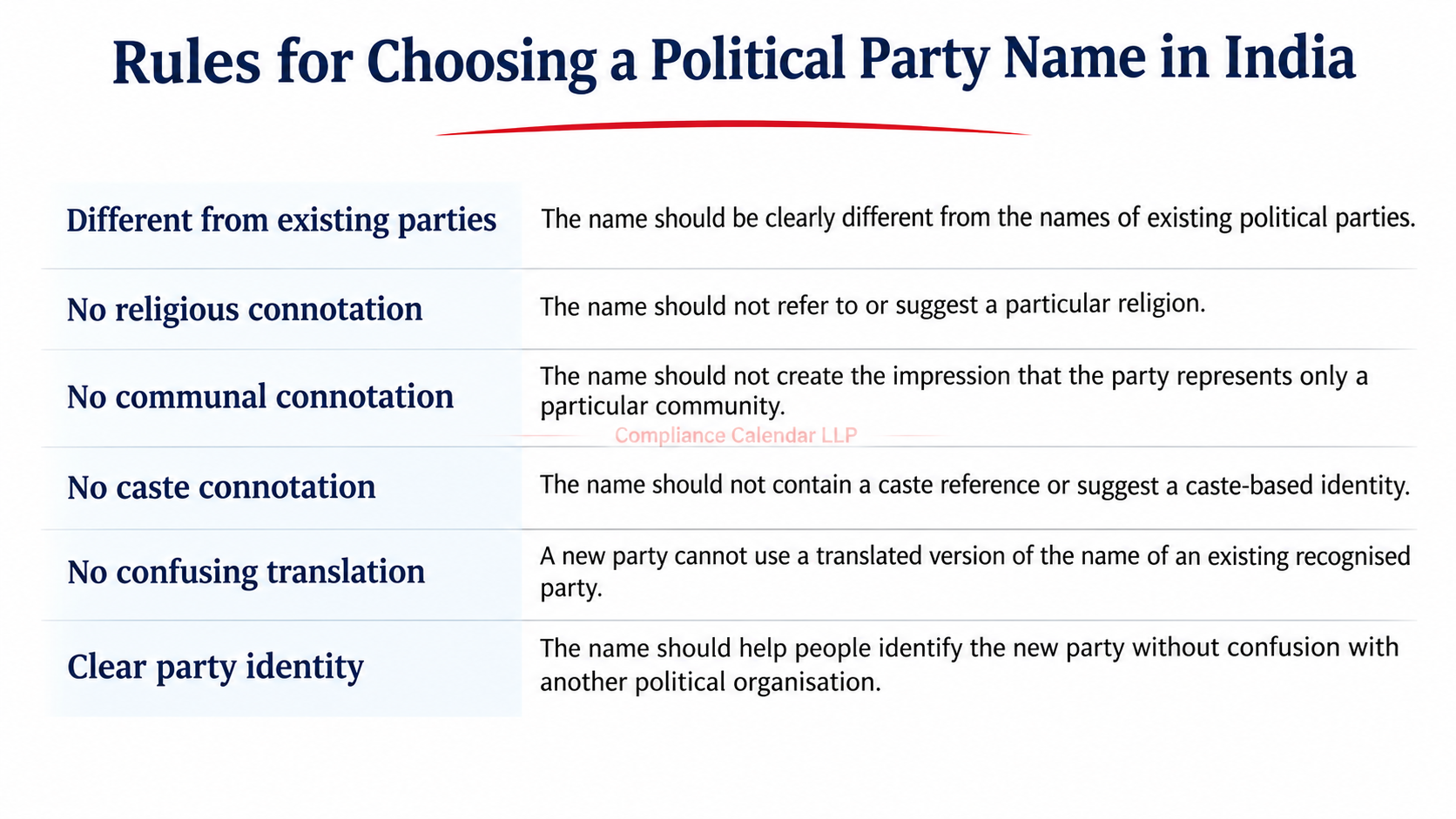
The Election Commission of India checks the proposed name as part of the registration process under Section 29A of the Representation of the People Act, 1951. The ECI's amended registration guidelines and its order on the choice of party names explain the main conditions that applicants should follow.
The important rules are given below.
|
Rule |
What the proposed party should follow |
|
Different from existing parties |
The name should be clearly different from the names of existing political parties. |
|
No religious connotation |
The name should not refer to or suggest a particular religion. |
|
No communal connotation |
The name should not create the impression that the party represents only a particular community. |
|
No caste connotation |
The name should not contain a caste reference or suggest a caste-based identity. |
|
No confusing translation |
A new party cannot use a translated version of the name of an existing recognised National or State Political Party. |
|
Clear party identity |
The name should help people identify the new party without confusion with another political organisation. |
These conditions are important because the ECI wants a new party to have its own identity. A small spelling change or a translation into another language does not automatically make a name acceptable.
Read our article on Documents Required for Political Party Registration in India – that explains the documents, affidavits and records needed for the application
Can Two Political Parties Have Similar Names?
A new political party should not select a name that is identical or confusingly similar to an existing political party. The ECI's order dated 19 May 2014 specifically addresses names that may create confusion with recognised National and State Political Parties.
For example, imagine that an existing recognised party is called the National People's Party. A newly formed group decides to use the name National People's Political Party. The founding members may believe that adding one word makes the name different. However, the overall names may still create confusion among the public.
The ECI may examine the complete proposed name rather than looking only at one changed word. Applicants should therefore compare the full name with existing party names before finalising it.
Can a New Political Party Use the Name of an Existing Party in Another Language?
No. The Election Commission issued an order on 19 May 2014 to prevent new political parties from using translated versions of the names of existing recognised National or State Political Parties. The restriction covers translations into Hindi, English and regional languages. A group cannot simply translate an established party's name and claim that it has selected a different name.
For example, suppose an existing recognised party has a name in English. A newly formed group cannot use the same name translated into Hindi or a regional language to avoid the restriction. The ECI's order requires such applicants to suitably change or modify their proposed names. The purpose is to protect the identity of existing parties and prevent new groups from gaining an unfair advantage from their established names and public recognition.
Can a Political Party Have a Religious, Communal or Caste-Based Name?
The ECI's amended registration checklist clearly states that no part of the proposed party name should have a religious, communal or caste connotation. This is an important condition for groups applying for registration today.
For example, a newly formed group should avoid a name that directly identifies the party with a particular religion, caste or community. It should instead select a name that reflects its wider political goals, public work or development plans.
There is one point that applicants should not misunderstand. Some older political parties in India have names that appear to contain religious or community references. Their existence does not mean that every new applicant can use a similar name. Some existing parties were registered before the relevant policy directions. New applicants should follow the current ECI guidelines rather than treating older party names as examples to copy.
Which Political Party Names May the ECI Reject?
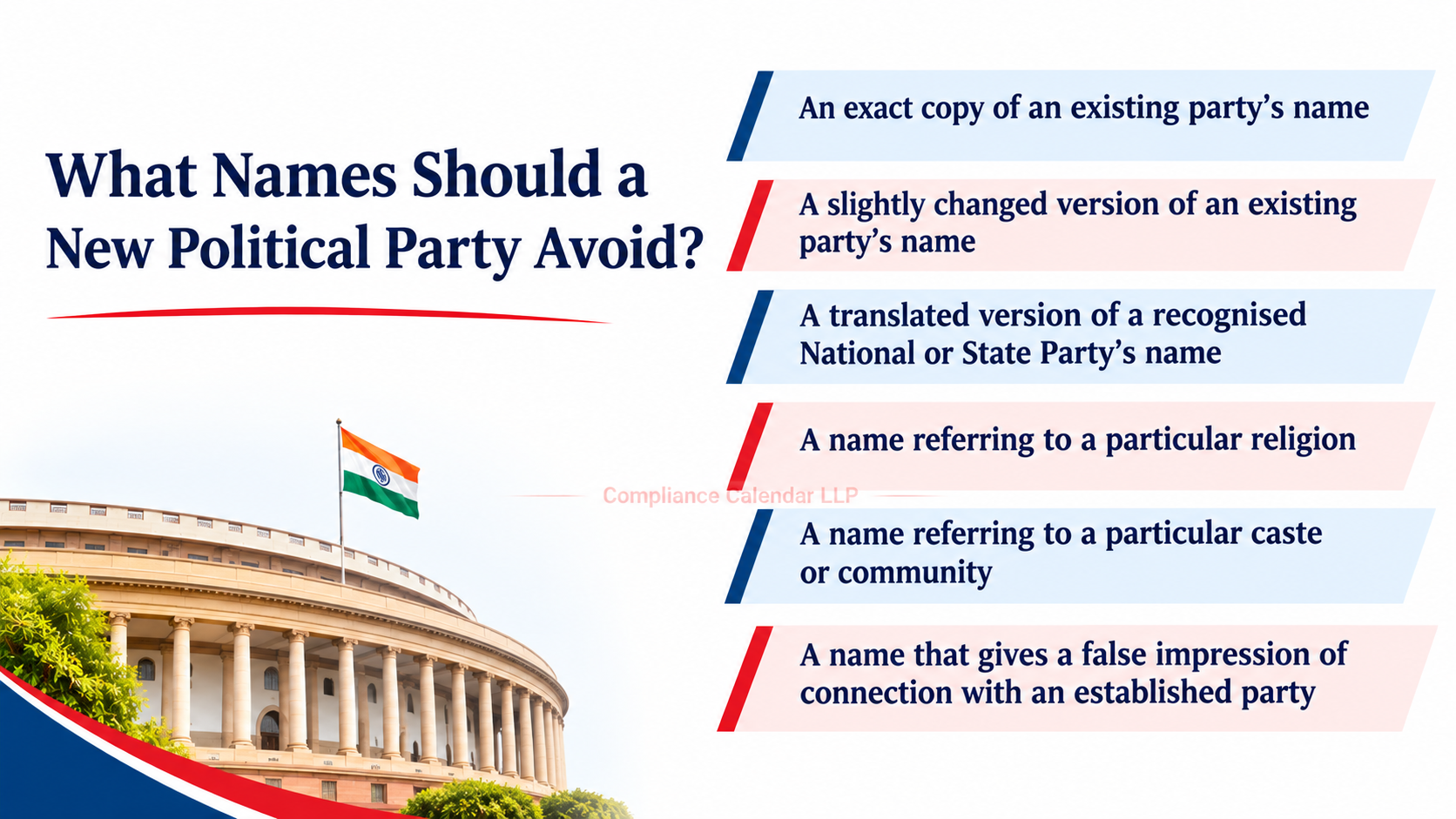
Before selecting a name, founding members should check whether it falls into any of these categories.
|
Proposed name or naming approach |
Why it may create a problem |
|
An exact copy of an existing party's name |
It does not give the new party a separate identity. |
|
A slightly changed version of an existing party's name |
It may still create confusion among voters. |
|
A translated version of a recognised National or State Party's name |
The ECI's 2014 order specifically restricts such names. |
|
A name referring to a particular religion |
It may not meet the ECI's registration checklist. |
|
A name referring to a particular caste or community |
It may suggest that the party represents only a specific group. |
|
A name that gives a false impression of connection with an established party |
It may mislead the public about the party's identity. |
These are common warning signs, not a complete list of every possible objection. The Election Commission examines the proposed name and the facts of each application before taking a decision.
Read our article about Political Party Constitution: Rules, Format and Requirements – that explains what to include in the party constitution.
How to Choose a Suitable Name for a New Political Party
Before finalising a name, founding members should check more than just whether they like it. The name must also meet the Election Commission's requirements and give the new party a separate identity. A few simple checks can help avoid problems later.
|
What to check |
What the founding members should do |
|
Existing party names |
Check the ECI's list of registered political parties and avoid names that are identical or confusingly similar. |
|
Meaning of the name |
Make sure the words do not carry an unintended meaning in Hindi, English or any regional language. |
|
Religious or caste references |
Avoid names containing religious, communal or caste connotations. |
|
Different name options |
Discuss a few possible names before selecting the final one. |
|
Party constitution |
Use the approved name consistently in the constitution and other formation records. |
|
Registration application |
Check that the name is written correctly in every document submitted to the ECI. |
For example, a group may select a name that sounds suitable but later discover that it is very similar to an existing political party. If this issue is noticed after the constitution and application documents are prepared, the group may have to make several corrections. Checking the name before starting the paperwork can save that extra effort.
A Practical Example: How a Wrong Party Name Can Delay Registration
Suppose that a group of 120 people decides to form a new political party. The members want to work on education, employment and public welfare. After a few meetings, they select a name that sounds very similar to an already recognised political party.
The group likes the name and starts preparing its party constitution. It also selects office-bearers and collects the documents needed for registration. However, before submitting the application, one of the members checks the ECI's list and notices that the proposed name is very close to an existing party's name.
The group now has to discuss a different name. If it changes the name after preparing the constitution and other papers, it may also need to update those documents to keep the details consistent.
This situation could have been avoided if the members had checked the proposed name before starting the paperwork. The example shows why name selection should be one of the first steps in forming a political party, not something left until the end.
How Does the Election Commission Check a Proposed Political Party Name?
The proposed name is reviewed as part of the registration application under Section 29A of the Representation of the People Act, 1951. The ECI checks the application and the supporting documents to decide whether the association meets the registration requirements.
The public notice process is also an important part of this stage. Under the ECI's registration guidelines, the proposed party name must be published in two national daily newspapers and two local daily newspapers on two days. The notice is also displayed on the ECI's website.
Members of the public can submit objections within 30 days from the publication of the notice. If an objection is received, the Commission may consider the issue and ask the applicant for an explanation or further information.
What If the ECI Does Not Accept the Proposed Party Name?
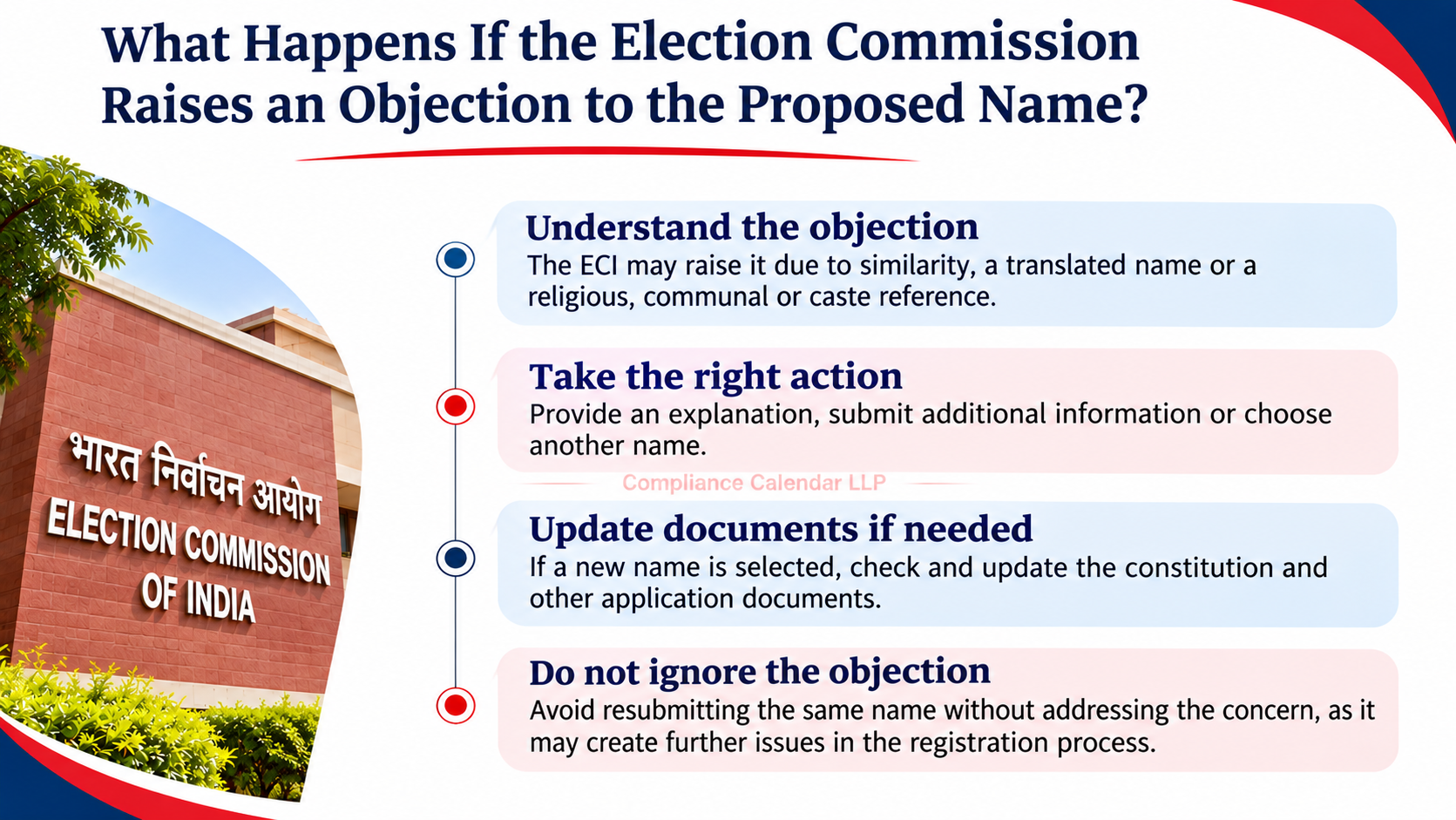
If the ECI raises an objection, the applicant should first understand the reason. The issue may relate to similarity with an existing party, a translated name or a religious, communal or caste reference.
The next step depends on the objection raised by the Commission. The applicant may need to provide an explanation, submit additional information or choose another name. If a new name is selected, the party should also check whether the constitution and other application documents need to be updated. The founding members should not ignore an objection or submit the same name again without addressing the concern. Doing so may create further problems during the registration process.
For a wider understanding of the application process, read our guide on How to Register a Political Party in India.
Can a Registered Political Party Change Its Name Later?
Yes. A registered political party can change its name, but it must inform the Election Commission of India.
Section 29A(9) of the Representation of the People Act, 1951 requires a registered political party to communicate changes in its name, head office, office-bearers, address or other material matters to the Commission without delay. The party should follow the applicable ECI procedure and provide the required details and supporting documents. It should also update its internal records and official communication wherever necessary.
A name change after registration can involve additional paperwork and may create confusion among members and the public. Therefore, founding members should try to select a suitable name at the time of formation itself.
Is a Political Party Name the Same as Its Election Symbol?
No. A party name and an election symbol serve different purposes.
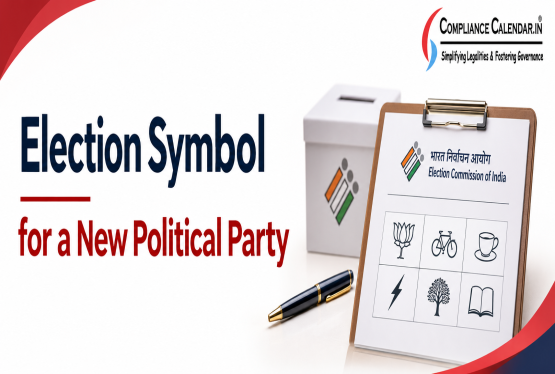
The party name is the official identity under which the organisation applies for registration with the Election Commission. An election symbol is the visual mark used to identify a party or candidate during elections. Registering a political party does not automatically mean that it will receive a reserved election symbol. Symbol allotment and reservation are governed by separate rules under the Election Symbols (Reservation and Allotment) Order, 1968.
What Other Things Should Be Prepared Along with the Party Name?
Choosing a suitable name is only the beginning. A new political party also needs to prepare its constitution, member details, office-bearer information and other papers required by the ECI.
The party constitution is particularly important because it explains how the organisation will work. It should contain the party's name, aims, membership rules, leadership structure, internal elections and other important provisions. Before submitting the application, founding members should also check the documents and eligibility conditions.
You can read our article Political Party Registration Fees, Eligibility and Timeline – which covers the application fee, eligibility conditions and important deadlines.
How Compliance Calendar LLP Can Help with Political Party Registration
Selecting a suitable name is one part of the registration process. The founding members must also prepare the party constitution, collect member details, arrange affidavits and complete the application according to the Election Commission's guidelines.
Compliance Calendar LLP can assist with checking the proposed name against the applicable guidelines, preparing and reviewing registration documents, organising the application and providing filing and follow-up support.
If you are planning to start a political party and need help with the registration process, you can contact our team on +919988424211 or info@ccoffice.in
Frequently Asked Questions (FAQs)
1. What are the rules for choosing a political party name in India?
The proposed name should be clearly different from existing political parties. Under the ECI's amended registration checklist, it should not contain religious, communal or caste connotations.
2. Can two political parties have the same name?
A new party should not select a name that is identical or confusingly similar to an existing party. The ECI checks whether the proposed name gives the new party a separate identity.
3. Can a new political party use the Hindi translation of an existing party's name?
No. The ECI's order dated 19 May 2014 restricts translated versions of the names of existing recognised National and State Political Parties.
4. Can a political party have a religious or caste-based name?
The ECI's amended registration checklist says that no part of a proposed party name should have a religious, communal or caste connotation. New applicants should follow this requirement.
5. Who approves a political party name in India?
The Election Commission of India considers the proposed name as part of the registration application under Section 29A of the Representation of the People Act, 1951.
6. Can the public object to a proposed political party name?
Yes. The ECI's public notice process allows members of the public to submit objections within 30 days from the publication of the notice.
7. What happens if the ECI objects to a proposed party name?
The applicant may need to explain the proposed name, provide further information or select a different name, depending on the objection raised by the Commission.
8. Can a registered political party change its name?
Yes. However, the party must inform the Election Commission without delay as required under Section 29A(9) of the Representation of the People Act, 1951.
9. Does political party registration guarantee an election symbol?
No. Party registration and election symbol allotment are separate matters. The party must follow the applicable symbol rules.
10. Can Compliance Calendar LLP help with political party name selection?
Yes. Compliance Calendar LLP can assist with reviewing the proposed name, checking the applicable ECI guidelines and supporting the preparation of registration documents. The final registration decision rests with the Election Commission of India.
Article last updated on : 23 Nov 2026.













_learn_crop10_thumb.jpg)