


Airports need a strong security system because thousands of passengers, employees, aircraft and valuable goods move through them every day. Security arrangements at an airport are different from those at an office, shopping mall or residential building. Employees may need permission to enter certain areas, complete special training and follow instructions issued by authorised airport security teams.
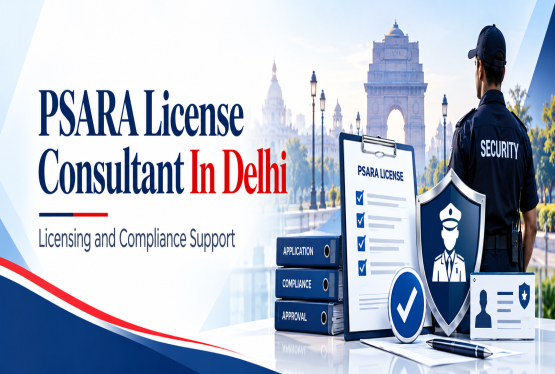
The PSARA License is an important requirement for businesses operating as private security agencies in India. However, an agency planning to provide security services at an airport must understand that a PSARA License alone may not be enough. Depending on the contract and assigned duties, it may also need security clearance from the Bureau of Civil Aviation Security (BCAS), approval of a security programme, employee verification, aviation security training and Aerodrome Entry Permits (AEPs).
This article explains the PSARA requirements for airport security service providers, the additional permissions they may need and the checks they should complete before accepting an airport security contract.
Does an Airport Security Service Provider Need a PSARA License?
Yes, a business carrying on the work of a private security agency generally needs a PSARA License under the Private Security Agencies (Regulation) Act, 2005. Section 4 of the Act states that a person cannot start or carry on the business of a private security agency without obtaining the required licence. This requirement is relevant to agencies that provide private security guards or security services to airport operators, airlines, contractors or other organisations.
However, the actual work matters. A company providing housekeeping, catering, maintenance or general manpower services at an airport does not automatically become a private security agency. If it provides private security services, it must check the PSARA requirements before starting the work. A normal business registration, GST registration or labour registration cannot replace the PSARA License.
What Is the Difference Between PSARA License and BCAS Approval?
PSARA and BCAS deal with different parts of security compliance. PSARA regulates the business of private security agencies, while BCAS is responsible for regulating aviation security in India. The National Civil Aviation Policy, 2016 also discusses the use of private security agencies for permitted non-core security functions at airports and their registration under PSARA along with separate BCAS accreditation.
|
Requirement |
What Does It Mean? |
|
PSARA License |
Licence required to operate a private security agency in the relevant State or Union Territory. |
|
BCAS Security Clearance |
Security clearance that may be required for an agency undertaking specified airport-related work. |
|
Security Programme Approval |
Approval of the agency's security arrangements and responsibilities, where required. |
|
Airport Contract or Work Order |
Official appointment that explains which services the agency is allowed to provide. |
|
Employee Verification |
Background checks required for employees proposed for airport deployment. |
|
Aerodrome Entry Permit (AEP) |
Permission allowing an eligible employee to enter designated airport areas. |
|
Aviation Security Training |
Special training required for employees performing specified airport duties. |
An agency should not assume that obtaining a PSARA License gives it automatic permission to work inside an airport. It must check the additional requirements mentioned in the airport tender, work order and applicable BCAS instructions.
What Airport Security Duties Can Private Agencies Handle?
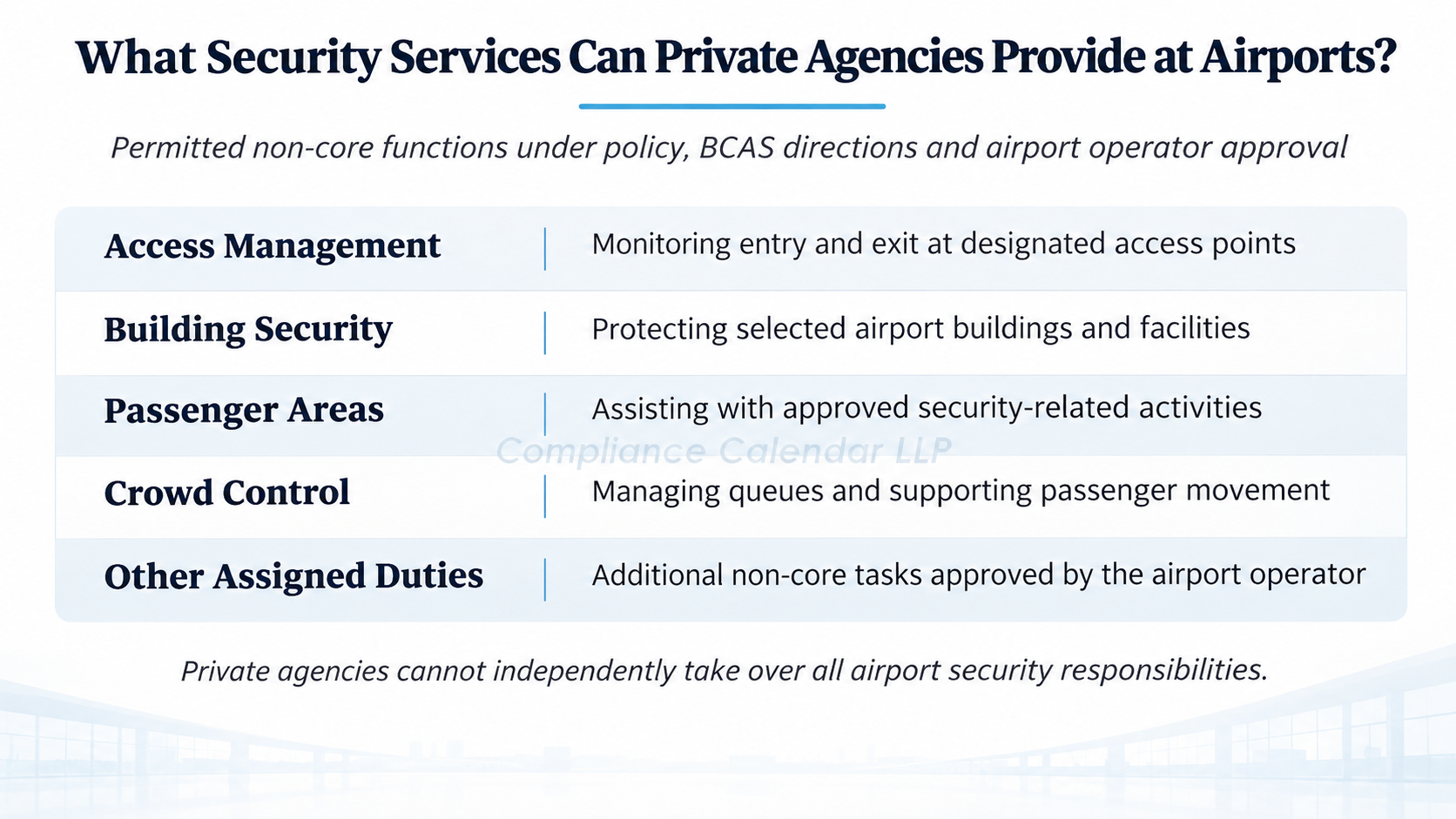
Private security agencies may be engaged for certain non-core security functions at airports, depending on government policy, BCAS directions and the airport operator's approval. The National Civil Aviation Policy, 2016 supports the use of private agencies for permitted non-core functions under the overall supervision of the government security agency. This means a private agency cannot independently take over every airport security responsibility.
The type of work depends on the contract and the permissions granted for that assignment. Some examples of possible duties include:
|
Area of Work |
Permitted Support |
|
Access Management |
Monitoring entry and exit at designated access points. |
|
Building Security |
Protecting selected airport buildings and facilities. |
|
Passenger Areas |
Assisting with approved security-related activities in passenger areas. |
|
Crowd Control |
Managing queues and supporting the smooth movement of passengers. |
|
Other Assigned Duties |
Handling additional non-core security tasks approved by the airport operator. |
Private security personnel should not assume that they can perform passenger screening, baggage screening or other restricted aviation security functions simply because their agency holds a PSARA License. Such duties are governed by separate aviation security requirements and must be performed by authorised and appropriately qualified personnel.
BCAS is particularly important because it regulates aviation security requirements. The airport operator also plays an important role in communicating the contract conditions, arranging operational coordination and explaining employee access procedures. The agency must follow the instructions of the concerned authorities instead of relying only on its PSARA compliance.
What Documents Are Required for Airport Security Service Providers?
An agency should prepare its business, licence and employee documents before applying for an airport security contract. The exact list depends on the airport, type of work, tender conditions and applicable BCAS requirements. A document required for one airport assignment may not automatically be required in the same form for another.
|
Document or Information |
Why Is It Needed? |
|
PSARA License |
Shows that the agency is authorised to carry on private security agency business in the relevant jurisdiction. |
|
Business Registration Documents |
Establish the legal identity and constitution of the agency. |
|
PAN and GST Details |
Support business and tax-related verification, wherever applicable. |
|
Office Address Proof |
Establishes the agency's registered or business address. |
|
Director, Partner or Proprietor Details |
Identifies the people responsible for managing the agency. |
|
BCAS Security Clearance Documents |
Support the applicable airport security clearance process. |
|
Security Programme |
Explains the agency's security arrangements where approval is required. |
|
Employee Details |
Provides information about guards and supervisors proposed for deployment. |
|
Police Verification Records |
Support the background checks required for employee access. |
|
Training Certificates |
Show that personnel have completed the training required for their assigned duties. |
|
AEP Application Details |
Support the process of obtaining airport entry permission for eligible employees. |
|
Tender and Work Order |
Explain the services, location, staffing and conditions accepted by the agency. |
This is a general preparation list, not a fixed checklist for every airport. The agency should follow the latest tender conditions and instructions issued by the concerned airport operator and BCAS.
For more information about required documents read our article : PSARA License Documents Checklist
What Is the Process for Getting a PSARA License for Airport Security Work?
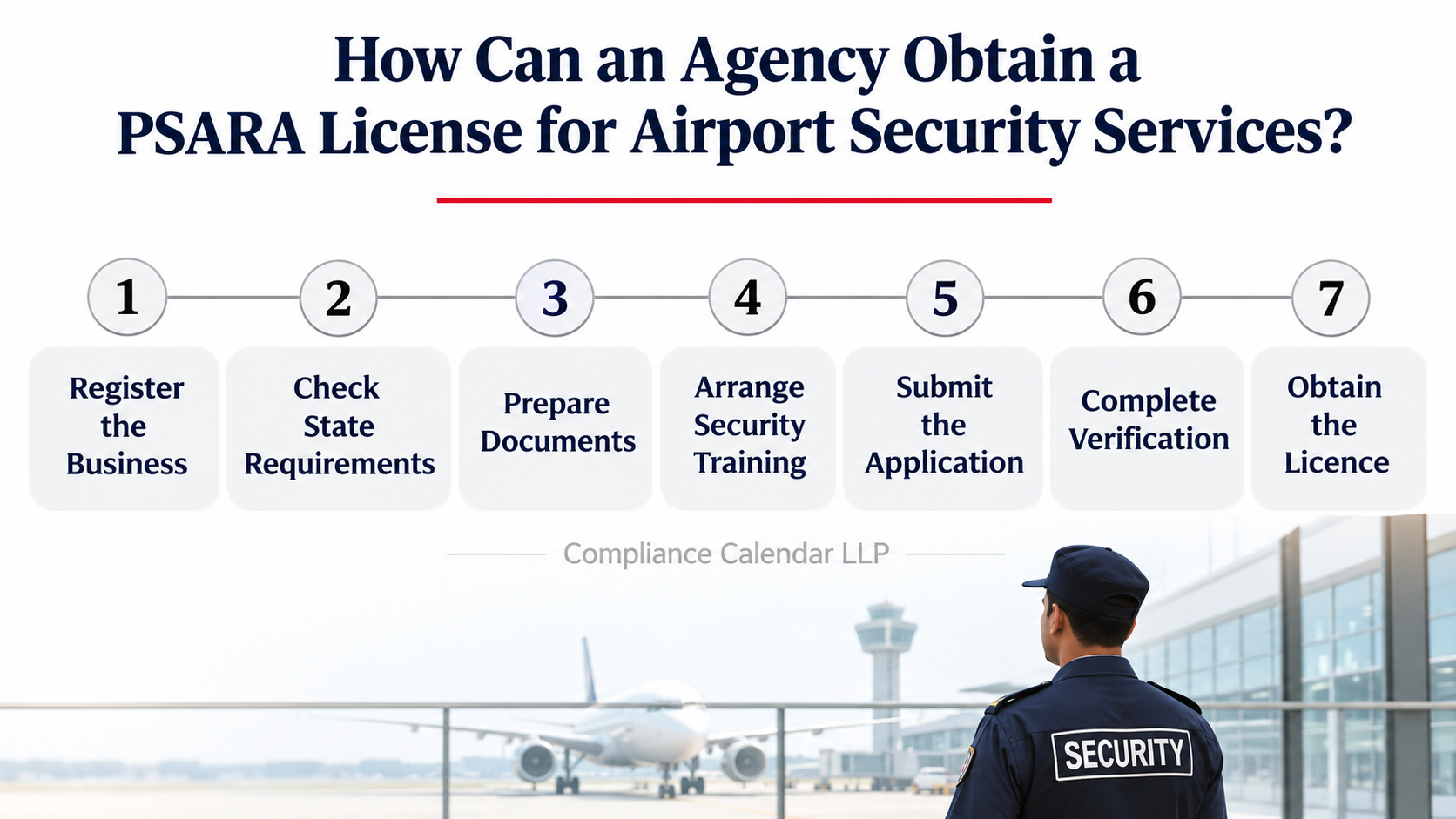
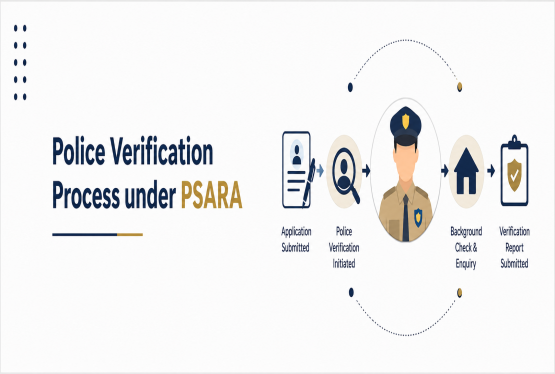
An agency must first meet the PSARA licensing requirement applicable to its private security business. The application is submitted to the Controlling Authority of the relevant State or Union Territory. The forms, fees and supporting documents may differ depending on the State.
Step 1: Register the Business
Set up the agency and arrange its business registration and address documents.
Step 2: Check State Requirements
Identify the concerned PSARA Controlling Authority and confirm the applicable forms, fees and rules.
Step 3: Prepare Documents
Collect the required details and verification documents of the proprietor, partners or directors.
Step 4: Arrange Security Training
Ensure that security guards and supervisors meet the prescribed training requirements.
Step 5: Submit the Application
File the application with the required documents and applicable fee.
Step 6: Complete Verification
Cooperate with the authority during police verification and respond to any queries.
Step 7: Obtain the Licence
Receive the PSARA License after approval and follow all licence conditions.
What Additional Permissions Are Required Before Starting Airport Security Work?
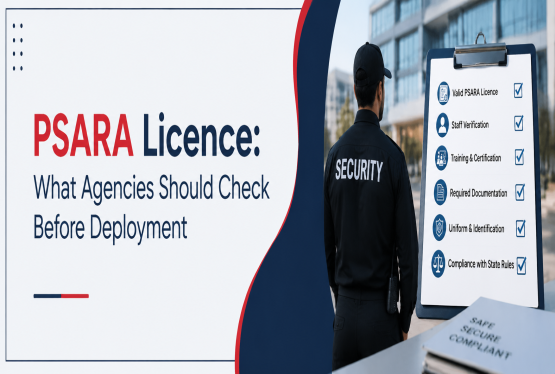
A PSARA License is only one part of airport-related compliance. Depending on the assignment, an agency may need additional security clearance and approval before its employees can start work. These requirements should be checked while reviewing the tender, rather than after the agency has promised a deployment date.
|
Additional Requirement |
What Should the Agency Do? |
|
BCAS Security Clearance |
Apply through the prescribed process where the airport assignment requires security clearance. |
|
Security Programme Approval |
Prepare and submit the agency's security programme for approval where required. |
|
Airport Operator's Authorisation |
Obtain the required contract, work order or appointment before starting the assigned services. |
|
Employee Background Verification |
Complete the required character and antecedent checks for employees proposed for deployment. |
|
Employee Training |
Arrange the aviation security training and familiarisation required for the assigned duties. |
|
Airport Entry Permission |
Apply for the necessary AEPs for employees who need access to designated airport areas. |
For example, an Airports Authority of India tender may require BCAS security clearance through the e-Sahaj portal and approval of the agency's security programme before deployment. This is an example of an airport-specific tender condition, not a statement that every airport contract follows an identical process.
For more detailed information visit : PSARA License Requirements
What Should an Agency Check Before Accepting an Airport Security Contract?
An airport contract may look like a good business opportunity, but it can involve strict requirements relating to staffing, training, verification and operations. An agency should study the tender carefully before submitting its bid. It should not calculate its price only by looking at the number of guards and their monthly wages.
|
What Should the Agency Check? |
Why Does It Matter? |
|
PSARA Licence Coverage |
The licence should cover the relevant jurisdiction and proposed operations. |
|
Scope of Work |
The agency must understand the exact duties it is expected and permitted to perform. |
|
BCAS Requirements |
It should identify whether security clearance or programme approval is required. |
|
Employee Verification |
It must understand the background checks needed for every proposed employee. |
|
Training Conditions |
It should calculate the time and cost of the required training. |
|
AEP Process |
It should understand the application process and time needed for employee entry permissions. |
|
Staffing and Shifts |
It must check the number of guards, supervisors, working hours and replacement requirements. |
|
Salary and Labour Costs |
It should calculate wages and applicable employee-related statutory costs. |
|
Contract Penalties |
It should review penalties for delayed deployment, absence or poor performance. |
|
Record Maintenance |
It should be able to maintain attendance, verification, training and deployment records. |
This review helps the agency understand the actual cost and responsibility involved in the contract. It also reduces the risk of accepting work that cannot be started on time because employees are not ready or required permissions are still pending.
What Are the Consequences of Operating Without the Required Licence or Approvals?
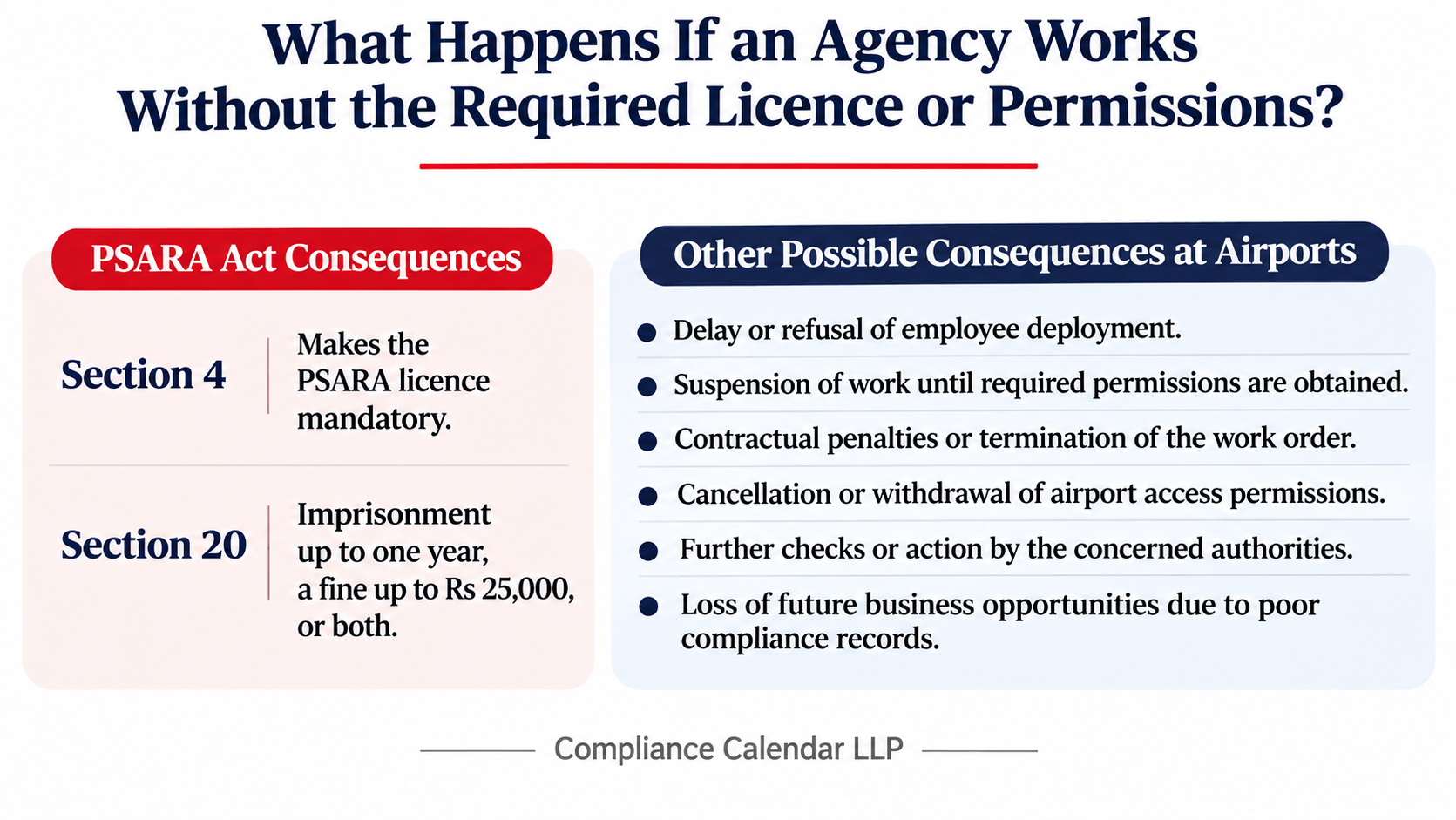
An agency that carries on private security agency business without the required PSARA License may face action under the PSARA Act. Section 4 makes the licence mandatory, while Section 20 provides for imprisonment of up to one year, a fine of up to Rs 25,000, or both for contravention of Section 4.
Airport-related non-compliance can create separate problems. If the agency does not obtain the required security clearance, security programme approval or employee entry permissions, the airport operator may refuse deployment or take action under the contract. Depending on the violation, the agency may face:
- Delay or refusal of employee deployment.
- Suspension of work until the required permissions are obtained.
- Contractual penalties or termination of the work order.
- Cancellation or withdrawal of airport access permissions.
- Further checks or action by the concerned authorities.
- Loss of future business opportunities due to poor compliance records.
A PSARA violation and an airport security violation are not automatically the same offence. The legal consequences depend on the particular requirement that has been violated and the facts of the case.
Practical Example: A Security Agency Planning to Work at an Airport
One of famous agency named AeroShield Security Services, a private security agency based in Delhi. The company already holds a PSARA License and provides guards to offices and commercial buildings. It receives an opportunity to provide personnel for permitted non-core duties at an airport.
The management initially believes that its existing licence and the guards' general training certificates will be enough. However, while reviewing the airport contract, the company finds additional conditions relating to BCAS security clearance, approval of its security programme, police verification of employees, aviation security training and AEPs.
The agency then checks the scope of work, prepares the required documents and plans employee verification and training before deployment. It also confirms that its PSARA licence covers the relevant jurisdiction.
This situation shows why airport security contracts need more preparation than an ordinary commercial security assignment. A PSARA License is an important starting point, but the agency must also meet the airport-specific conditions before its employees can begin the permitted work.
How Compliance Calendar LLP Can Help With PSARA License Requirements
Starting a private security agency or expanding into airport-related security services requires careful attention to licensing and documentation. An agency must understand the PSARA requirements, identify the correct State Controlling Authority and prepare its application properly. It should also review the separate BCAS and airport operator conditions that apply to its proposed assignment.
Compliance Calendar LLP can assist private security agencies with PSARA License documentation, application preparation, filing support and follow-up with the concerned authority. We can help businesses understand the licensing process and prepare for the relevant compliance steps. Airport-specific security clearance, training and entry permissions should be checked separately with the concerned authorities because they depend on the nature of the airport contract.
For expert assistance with your PSARA License, contact Compliance Calendar LLP at +91 9988424211 or email info@ccoffice.in
Frequently Asked Questions (FAQs)
1. Is a PSARA License mandatory for airport security service providers?
A business carrying on private security agency operations generally needs a PSARA License under Section 4 of the PSARA Act, 2005. An agency supplying private security guards to an airport or another organisation should check the licensing requirement before starting work.
2. Is a PSARA License enough to provide security services at an airport?
No. A PSARA License does not automatically authorise an agency to start work at an airport. Depending on the assignment, it may also need BCAS security clearance, security programme approval, employee verification, training and AEPs.
3. What is BCAS in airport security?
BCAS stands for the Bureau of Civil Aviation Security. It is India's aviation security regulator and is responsible for setting and monitoring security standards for civil aviation.
4. Can private security agencies work at Indian airports?
Yes. Private agencies may be engaged for permitted non-core security functions, subject to government policy, BCAS requirements and airport operator approval. They must work within the duties and responsibilities assigned to them.
5. What is the difference between PSARA and BCAS approval?
PSARA regulates the business of private security agencies. BCAS regulates aviation security requirements and handles applicable airport-related security approvals. One does not replace the other.
6. What is an Aerodrome Entry Permit (AEP)?
An AEP is an entry permission for eligible persons who need access to designated airport areas. Employees may need to complete the required verification and approval process before receiving an AEP.
7. Do airport security guards need special training?
They may need aviation security training, such as the applicable AVSEC Foundation Course, in addition to the general training required under PSARA. The exact requirements depend on the airport, assigned duties and current BCAS instructions.
8. Can an agency use its existing guards for airport deployment?
An agency may propose its existing employees, but it must first check whether they meet the airport's eligibility, verification, training and entry requirements. Existing employment and general security training do not automatically qualify a guard for airport deployment.
9. Does an agency need a separate PSARA License for every airport?
Not necessarily for every individual airport. However, PSARA licensing is State- and Union Territory-specific. An agency must check whether its licence covers the jurisdiction where the airport assignment is located.
10. Can a housekeeping or manpower company need a PSARA License for airport work?
Not automatically. A company providing housekeeping, maintenance or general manpower services does not become a private security agency simply because its employees work at an airport. If it also provides private security services, the PSARA requirement should be examined separately.
11. Can a private security agency perform passenger or baggage screening at an airport?
An agency cannot assume that its PSARA License allows it to perform passenger or baggage screening. These are specialised aviation security functions governed by separate requirements and must be performed only by authorised and appropriately qualified personnel.
12. What happens if an agency provides airport security services without the required licence?
If the agency carries on private security agency business without the required PSARA License, it may face action under Sections 4 and 20 of the PSARA Act. It may also face separate contractual or airport-related consequences if it works without other required permissions
Article last updated on : 24 Nov 2026.











_learn_crop10_thumb.jpg)