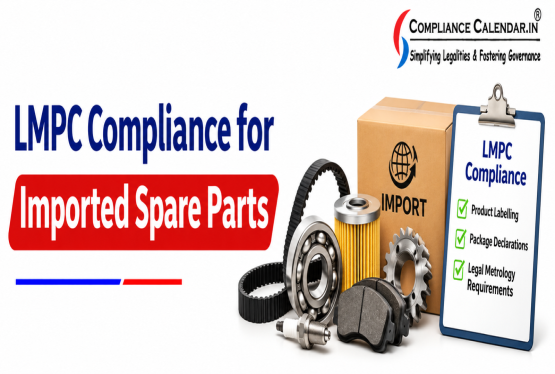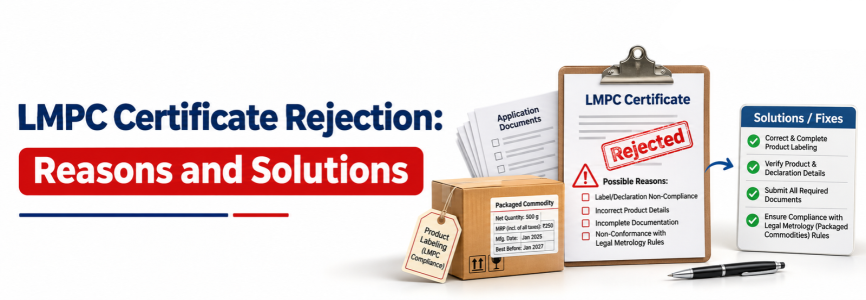



A business planning to import packaged products into India may complete its registration application, upload the required documents and pay the government fee, only to discover that its LMPC Certificate application has been returned for clarification or rejected.
For an importer with goods ready for shipment, this can become a serious problem. A delayed registration may affect customs documentation, product launches, distributor commitments and the ability to sell covered packaged commodities legally in India.
LMPC Certificate Rejection commonly arises from incomplete applications, incorrect business details, unsuitable supporting documents, inconsistent addresses or uncertainty about the applicant's registration requirements. However, not every application objection means that the registration has been permanently refused. Sometimes the Legal Metrology authority simply requires corrected information or additional evidence before processing the application.
The solution depends on the reason recorded by the authority. A missing document may be corrected through resubmission, while an application filed under the wrong category or jurisdiction may require a different approach.
What Is an LMPC Certificate?
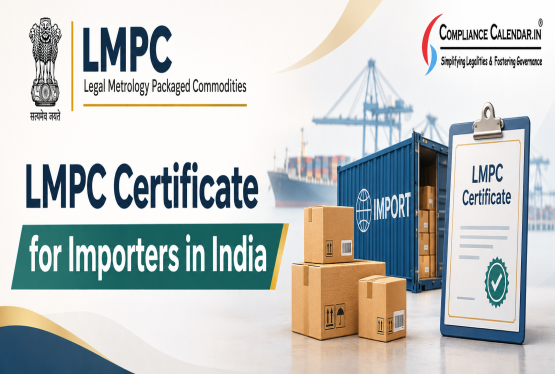
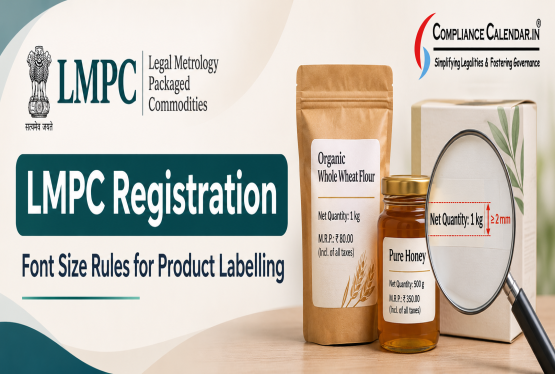
An LMPC Certificate generally refers to the registration issued under Rule 27 of the Legal Metrology (Packaged Commodities) Rules, 2011 to covered manufacturers, packers and importers. The registration identifies the business responsible for manufacturing, packing or importing applicable packaged commodities. For example, a company importing packaged kitchenware, electronic accessories or household products may need LMPC Importer Registration when the applicable legal conditions are satisfied.
The registration should not be confused with certification of each individual product. LMPC Registration concerns the business and relevant registration particulars, while the packaged products must separately comply with applicable labelling and quantity requirements. It is also different from BIS Certification, GST Registration and Import Export Code (IEC).
For a detailed explanation, read LMPC Registration: Legal Metrology Compliance Guide
What Does LMPC Certificate Rejection Mean?
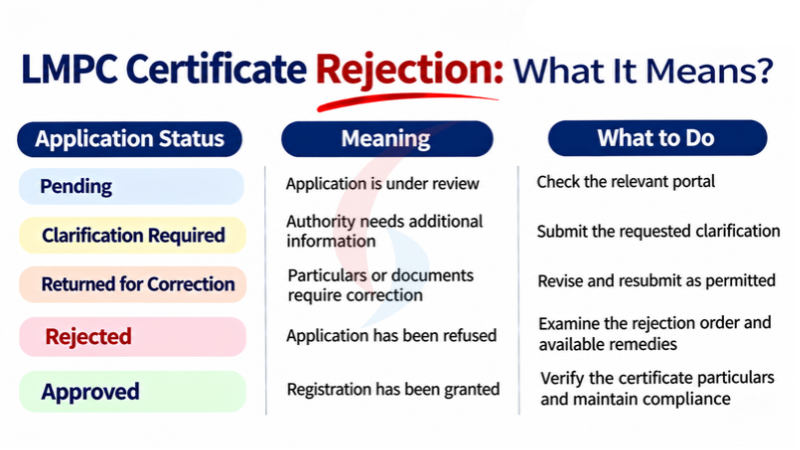
LMPC Certificate rejection means that the competent authority has not approved the application in its submitted form. However, applicants should distinguish between an application returned for correction, an application awaiting clarification and a formally rejected application.
|
Application Status |
Meaning |
What the Applicant Should Do |
|
Pending |
Application is under review |
Check the relevant portal and communications |
|
Clarification Required |
Authority needs additional information |
Submit the requested clarification |
|
Returned for Correction |
Particulars or documents require correction |
Revise and resubmit as permitted |
|
Rejected |
Application has been refused |
Examine the rejection order and available remedies |
|
Approved |
Registration has been granted |
Verify the certificate particulars and maintain compliance |
These are general descriptions; actual status labels differ across registration systems and jurisdictions. A returned application should not automatically be described as a final rejection. Similarly, an application acknowledgement is not the same as an approved registration certificate.
A Practical Example: An Importer Whose LMPC Application Was Rejected
Consider the fictional case of ABC Imports Private Limited, a Delhi-based company importing packaged home accessories from Vietnam. The company placed an order for 4,000 products worth Rs 16 lakh and applied for LMPC Registration before arranging retail distribution.
During the application review, the authority identified inconsistencies in the company's business address. Its Certificate of Incorporation showed the registered office in Delhi, but the application contained a warehouse address in Haryana without clearly explaining the difference. The uploaded product label also displayed the overseas manufacturer's address but did not identify the Indian importer correctly. ABC's accounts team initially believed that the application had been rejected because the company was ineligible to import the products.
After examining the authority's observations, the company realised that the problems were mainly documentary. It prepared an explanation of the registered office and warehouse locations, uploaded consistent supporting records and revised the sample package label.
The company then followed the correction or fresh-application procedure permitted by the concerned authority. This example illustrates why businesses should read the actual rejection reason before making changes. Correcting the underlying problem is usually more effective than repeatedly submitting the same application.
Common Reasons for LMPC Certificate Rejection and Their Solutions
LMPC applications may be delayed or refused for different reasons. Most commonly, the problem concerns the applicant's identity, supporting documents, product information or the registration category selected.
|
Reason for Rejection |
Common Problem |
Possible Solution |
|
Incomplete Application |
Required fields are missing |
Complete all applicable particulars |
|
Incorrect Business Name |
Name differs from PAN or incorporation records |
Use the registered legal name |
|
Address Mismatch |
Application and address proof contain different details |
Submit consistent proof or explain separate premises |
|
Missing Documents |
IEC, authorisation or other requested records unavailable |
Upload the prescribed documents |
|
Incorrect Applicant Category |
Importer applies as a manufacturer or packer |
Select the category matching actual business activity |
|
Product Information Errors |
Imported products or relevant particulars are incorrectly declared |
Correct the product and activity details |
|
Incorrect Sample Label |
Importer information, quantity or MRP is missing |
Prepare a compliant label where required |
|
Unclear Authorisation |
Application submitted without valid business authorisation |
Provide the appropriate authority letter |
|
Wrong Jurisdiction |
Application sent to an authority that does not handle the case |
Confirm the competent Legal Metrology authority |
|
Unanswered Clarification |
Applicant fails to respond to an official observation |
Reply within the prescribed time |
|
Fee or Submission Error |
Payment or final submission is incomplete |
Verify the payment and application acknowledgement |
These are practical causes of application objections rather than an exhaustive statutory list of automatic rejection grounds. he concerned authority must assess the actual application against applicable legal requirements. Applicants should rely on the observations communicated in their specific case.
Legal Provisions Applicable to LMPC Certificate Rejection
The Legal Metrology Act, 2009 and the Legal Metrology (Packaged Commodities) Rules, 2011, as amended, govern LMPC Registration, packaging declarations, exemptions and penalties for non-compliance.
|
Act / Legal Provision |
Key Requirement |
|---|---|
|
Mandatory declarations on pre-packaged commodities. |
|
|
Penalties for specified packaging violations. |
|
|
Power of the Central Government to make rules. |
|
|
Definitions of important terms. |
|
|
Exemptions from retail-package requirements. |
|
|
Packaging and declaration requirements. |
|
|
Mandatory declarations, including MRP and importer details. |
|
|
Manner of displaying declarations. |
|
|
Legal Metrology (Packaged Commodities) Rules, 2011 – Rule 27 |
Registration of manufacturers, packers and importers. |
|
Legal Metrology (Packaged Commodities) Rules, 2011 – Rule 32 |
Penalties for specified contraventions. |
Important: Under Rule 27 of the Legal Metrology (Packaged Commodities) Rules, 2011, covered businesses must generally apply for LMPC Registration within 90 days of commencing the relevant activity. Applications should be prepared according to the current rules and amendments to avoid unnecessary objections or rejection.
How to Resolve LMPC Certificate Rejection
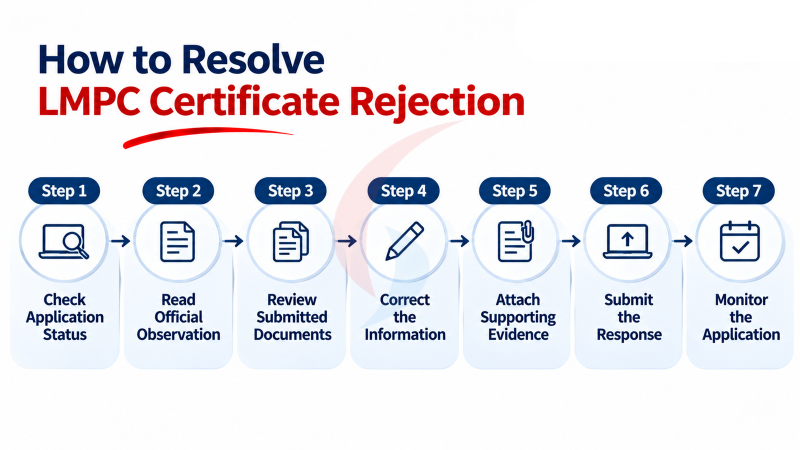
A rejected application should be approached systematically. Submitting a new application without examining the earlier observations may lead to the same problem again.
|
Step |
Correction Process |
Required Action |
|
Step 1 |
Check Application Status |
Identify whether the application is pending, returned or formally rejected |
|
Step 2 |
Read the Official Observation |
Understand the exact deficiency recorded by the authority |
|
Step 3 |
Review Submitted Documents |
Compare the application with supporting records |
|
Step 4 |
Correct the Information |
Amend incorrect names, addresses, product details or other particulars |
|
Step 5 |
Prepare Supporting Evidence |
Attach declarations or documents explaining the discrepancy |
|
Step 6 |
Submit the Response |
Use the applicable clarification, resubmission or fresh-application process |
|
Step 7 |
Monitor the Application |
Track subsequent communications and approval status |
The applicant should retain copies of the original application, payment acknowledgement, official observations and revised documents.
If the application has been formally refused, the business should examine the reasoned decision and any review, representation or other remedy available under the applicable law and jurisdiction. There is no single universal LMPC appeal process that applies identically to every state and registration platform.
Documents Required to Correct a Rejected LMPC Application
The documents needed depend on the deficiency. For example, an address mismatch requires different evidence from an incorrect product declaration.
|
Document |
Purpose |
|
Certificate of Incorporation or Business Registration |
Verifies the legal business name |
|
PAN |
Supports business identity verification |
|
IEC, for importers |
Confirms relevant import-export identity |
|
GST Registration, where applicable |
Supports business particulars |
|
Address Proof |
Establishes the relevant premises |
|
Rent Agreement or Ownership Documents, if required |
Explains business occupancy |
|
Authorisation Letter |
Confirms authority to submit the application |
|
Product List |
Identifies manufactured, packed or imported commodities |
|
Sample Package Label, where required |
Supports review of applicable declarations |
|
Previous Application and Objection Letter |
Identifies what must be corrected |
|
Explanation or Clarification Letter |
Addresses the authority's specific observations |
Not every applicant must submit every document in this table. Requirements depend on the business activity, competent authority and application system. For example, a company with a registered office in Delhi and a warehouse in Haryana may need to explain the purpose of each premises. It should not change its registered office address merely to make both records appear identical.
Can Incorrect Product Labels Lead to LMPC Application Objections?
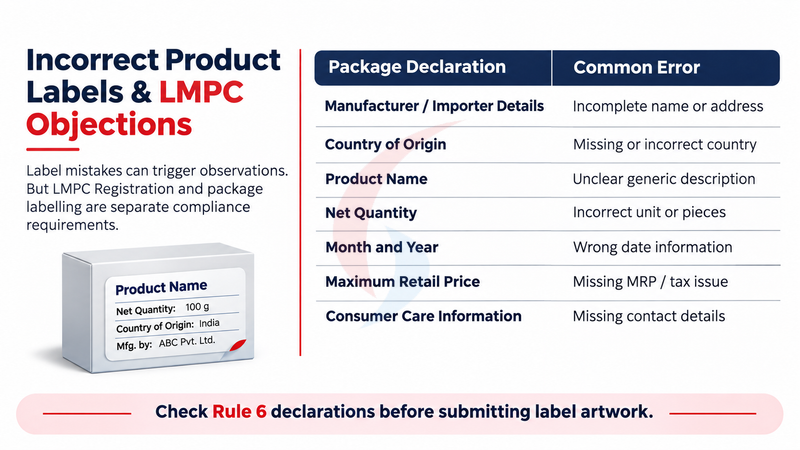
Yes, where the relevant authority requests a sample label or packaging information, incomplete or inconsistent declarations can lead to observations. However, LMPC Registration and package labelling are separate compliance requirements. A label defect is not automatically proof that an importer is ineligible for Rule 27 registration. Under Rule 6, covered retail packages must display prescribed information in the applicable manner.
|
Package Declaration |
Common Error |
|
Manufacturer / Importer Details |
Incomplete name or address |
|
Country of Origin |
Missing or incorrect country |
|
Product Name |
Unclear generic description |
|
Net Quantity |
Incorrect unit or number of pieces |
|
Month and Year |
Incorrect prescribed date information |
|
Maximum Retail Price |
Missing MRP or incorrect tax-inclusive declaration |
|
Consumer Care Information |
Missing prescribed contact information |
For example, a packaged kitchen appliance imported from China may display the overseas manufacturer's address but omit the Indian importer details required for the retail package. The importer should review the label against the current legal requirements before supplying corrected artwork.
For more information, read LMPC Labelling Rules: Mandatory Declarations on Packaged Goods
What If LMPC Registration Is Not Applicable to the Product?
Some businesses receive LMPC-related queries even though their products or particular transactions may fall outside the relevant packaged commodity requirements. For example, a business importing goods exclusively for a qualifying industrial consumer may have a different legal position from an importer bringing retail-ready products for household buyers.
Rule 3 of the Packaged Commodities Rules provides exclusions for specified packages. Whether an exclusion applies depends on the actual facts. Where registration is not applicable, the business should prepare a clear explanation supported by the relevant statutory provision and transaction documents. It should not submit an incorrect declaration merely to obtain a certificate that is not required for the activity.
Read LMPC Registration Exemptions in India for related guidance
LMPC Registration Fees and Processing Timeline
The Packaged Commodities Rules prescribe fees for Rule 27 registration and alterations to registered particulars.
|
Particulars |
General Requirement |
|
Registration Application Fee |
Rs 500 |
|
Alteration of Registration Particulars |
Rs 100 |
|
Application Deadline |
Generally within 90 days of starting the covered activity |
|
Competent Authority |
Relevant Central or State Legal Metrology authority |
|
Processing Time |
Depends on application completeness and the authority |
|
Rejected Application |
Follow the applicable correction or fresh-filing procedure |
The government fee should not be confused with penalties, professional charges or additional costs arising from document preparation. There is no reliable universal approval timeline for all LMPC applications. Processing can differ by jurisdiction, application type and the nature of any outstanding clarification.
For further information, read LMPC Certificate for Importers in India
Latest Legal Metrology Updates Affecting LMPC Registration in 2026
The government introduced several changes to the Legal Metrology (Packaged Commodities) Rules in 2026. These updates affect LMPC Registration, product labelling and compliance requirements for importers.
|
Government Update |
Date |
Key Changes |
|---|---|---|
|
Legal Metrology Third Amendment Rules, 2026 |
29 May 2026 |
LMPC certificates remain valid until cancelled. Businesses must update prescribed registration details annually and provide responsible director information. |
|
Bonded Warehouse Labelling |
29 May 2026 |
Eligible AEO Tier-2 and Tier-3 bonded warehouses can be used to complete mandatory package declarations before goods leave the warehouse. |
|
Legal Metrology Fourth Amendment Rules, 2026 |
21 September 2026 |
Updated labelling requirements for certain cosmetics and toiletries, including prescribed coloured-dot declarations. |
|
Guidance on Imported Packages |
8 October 2026 |
Provided clarification on implementing mandatory declarations for imported pre-packaged commodities. |
|
Country-of-Origin Filter |
Effective 1 July 2027 |
E-commerce platforms selling imported products must introduce a searchable and sortable country-of-origin filter from this date. |
Important: LMPC Registration certificates remain valid until cancelled, but businesses must keep their prescribed registration details updated. Importers must also ensure that their products meet the applicable packaging and labelling requirements.
Why Choose Compliance Calendar LLP ?
Compliance Calendar LLP assists importers, manufacturers and packers with LMPC Registration, document preparation and Legal Metrology compliance. Our team helps applicants identify the reasons for registration objections, review business records, correct application particulars and prepare supporting explanations for the concerned authority. We also assist businesses with LMPC Registration amendments, package declaration reviews and relevant importer compliance procedures.
For enquiries, contact Compliance Calendar LLP by email at info@ccoffice.in or via WhatsApp at 9988424211
Frequently Asked Questions (FAQs)
Q1. Why is an LMPC Certificate application rejected?
Ans: Common reasons include incomplete documents, incorrect business details, address mismatches and missing application particulars. The exact reason should be identified from the authority's official communication.
Q2. Can I reapply after LMPC Certificate rejection?
Ans: Yes, where the competent authority permits a fresh application. However, applicants should first examine whether the existing application can be corrected or resubmitted.
Q3. What should I do if my LMPC application is returned for correction?
Ans: Read the authority's observations, correct the relevant information and upload the required supporting documents through the applicable resubmission process.
Q4. Can an incorrect business address cause LMPC rejection?
Ans: An inconsistent or unsupported address may result in an objection. Applicants should submit accurate premises details and explain differences between registered offices and other business locations.
Q5. Can incorrect packaging labels affect LMPC Registration?
Ans: They may lead to observations where labels are part of the application review. Businesses must also separately comply with the applicable packaged commodity declaration requirements.
Q6. What is the government fee for LMPC Registration?
Ans: The prescribed Rule 27 registration application fee is generally Rs 500. The fee for alteration of approved registration particulars is Rs 100.
Q7. Does an LMPC Certificate expire in 2026?
Ans: Under the May 2026 amendment, certificates remain valid until cancelled. However, companies and firms must comply with applicable annual information-updating requirements.
8. Can goods be imported if an LMPC application is rejected?
Ans: The position depends on whether LMPC Registration applies and whether the goods comply with other import requirements. An applicant should not assume that a rejected application authorises non-compliant imports or retail sales.
Q9. Is there an appeal against LMPC Certificate rejection?
Ans: Available remedies depend on the applicable law, competent authority and nature of the rejection decision. Applicants should review the official order before pursuing a representation, fresh application or other legal remedy.
Q10. Can Compliance Calendar LLP help with LMPC Certificate rejection?
Ans: Yes. Compliance Calendar LLP assists with application reviews, document corrections, clarification responses and the applicable LMPC Registration process.
Article last updated on : 27 Nov 2026.










_learn_crop10_thumb.jpg)