



For employees working in startups and growing companies, Employee Stock Option Plans (ESOPs) are often more than an employment benefit. They represent years of hard work, loyalty and the hope of benefiting from the company's future success. However, when a business announces a merger or acquisition, employees holding stock options may suddenly find themselves facing several unanswered questions.
ESOPs During Merger and Acquisition can be treated differently depending on the transaction structure, employee agreements, vesting conditions and applicable regulations. Some employees may receive cash payouts, while others may receive replacement options in the acquiring company. Understanding these arrangements is important for employees, founders and investors who want to protect their financial interests.
Understanding ESOPs in Mergers and Acquisitions
An Employee Stock Option Plan allows eligible employees to purchase company shares at a predetermined exercise price after completing specific conditions. These conditions generally include continued employment, performance targets or a defined vesting period. Startups commonly use ESOPs to attract and retain talented employees while managing their immediate salary expenses.
A merger takes place when companies combine their businesses, while an acquisition generally involves one company purchasing another company's shares, assets or controlling interest. Both transactions can affect the ownership and value of employee stock options. However, the treatment of ESOPs is not necessarily the same in every transaction, because an acquisition through a share purchase differs legally from a merger under an approved scheme. Businesses planning corporate restructuring should understand how Merger and Acquisition transactions affect employee benefits and existing shareholding arrangements.
Employees who are new to stock options should first understand ESOPs for Employees: What It Is, How It Works and Advantages before evaluating how a merger or acquisition may affect their benefits.
A Startup Story: When an Acquisition Changes an Employee's Financial Future
Imagine a Bengaluru-based technology startup named XYZ Private Limited. The company was established in 2020 by two entrepreneurs who wanted to develop software for small businesses. During its initial years, XYZ could not offer salaries comparable to those of large technology companies. Instead, it provided ESOPs to employees who believed in its long-term growth potential.
One of its earliest employees, Rahul, received 4,000 stock options at an exercise price of Rs. 100 per share. Over the following four years, Rahul worked closely with the founders and helped the startup expand its customer base. By 2026, XYZ had attracted the attention of a larger technology company willing to acquire the business at a valuation that implied Rs. 800 per ordinary share.
Rahul had completed his vesting period, but he had not exercised his options. If the acquisition allowed him to exercise all 4,000 options and sell the resulting shares at Rs. 800 each, the gross sale value would be Rs. 32 lakh. After deducting the exercise cost of Rs. 4 lakh, the difference would amount to Rs. 28 lakh before applicable taxes and transaction expenses.
However, Rahul's colleague Priya faced a different situation. She had received 3,000 options, but only 1,500 had vested. Priya was uncertain whether the remaining options would become immediately available or whether she would need to continue working for the acquiring company. Their situations demonstrate why understanding ESOP treatment is essential before an acquisition is completed.
This is a fictional example intended to explain how ESOPs may work during an acquisition.
What Happens to ESOPs During a Merger or Acquisition?
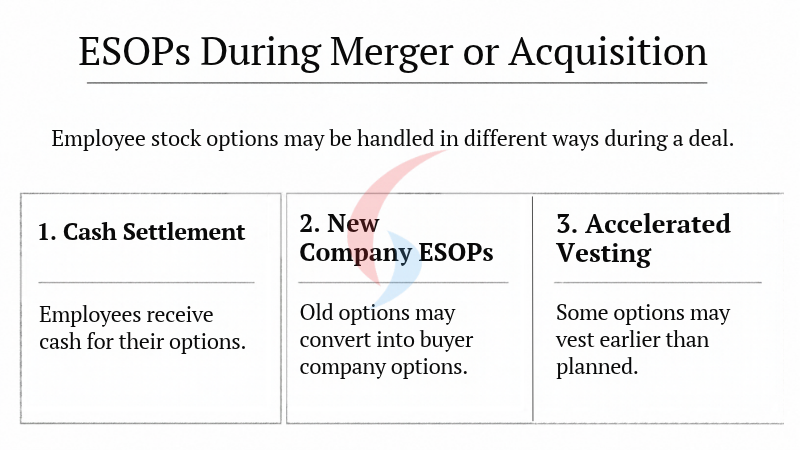
The treatment of employee stock options generally depends on the ESOP scheme, grant agreements, acquisition terms and relevant statutory provisions. Companies usually negotiate how existing employee rights will be handled before completing a transaction. The objective is to balance employee expectations with the commercial interests of the acquiring company.
1. Cash Settlement of ESOPs
Cash settlement is an arrangement in which eligible employees receive financial compensation in exchange for surrendering or cancelling their outstanding options. This method may be preferred when the acquiring company does not want to continue the existing ESOP scheme or issue replacement options.
For example, an employee holding 2,000 vested options with an exercise price of Rs. 150 may receive an economic benefit of Rs. 7 lakh if the agreed settlement value is Rs. 500 per underlying share. However, the actual amount payable depends on the approved settlement mechanism, and the tax treatment of surrendering unexercised options can differ from selling shares after exercise.
2. Conversion into New Company ESOPs
In many acquisitions, the buyer may offer replacement options instead of immediate cash payments. Employees holding options in the target company may receive options linked to shares of the acquiring company based on an agreed exchange ratio. This arrangement allows employees to participate in the future growth of the combined business.
Suppose an employee holds 1,000 options in the target company and the approved exchange ratio provides one replacement option for every two existing options. The employee may receive 500 options in the acquiring company. However, the exercise price, vesting schedule and other conditions must be considered carefully to determine whether the replacement arrangement preserves the intended economic benefits.
3. Accelerated Vesting of ESOPs
Accelerated vesting allows employees to become entitled to exercise certain options earlier than originally scheduled. Some ESOP schemes contain provisions under which a qualifying merger or acquisition may trigger accelerated vesting. Such arrangements are often negotiated to protect employees who contributed to the company's development before its acquisition.
Acceleration may follow a single-trigger structure, where the acquisition itself activates vesting, or a double-trigger structure, where another specified event must also occur. These benefits are not automatically available in every transaction. Their enforceability depends on the approved ESOP documents, transaction arrangements and applicable legal requirements.
Employee rights may also change when employment ends during a merger or acquisition, making it important to understand ESOP Treatment on Resignation, Termination and Death before accepting revised vesting conditions.
Treatment of Vested and Unvested ESOPs During M&A
One of the most important distinctions during an acquisition is between vested and unvested employee stock options. Vested options are those for which employees have completed the necessary vesting conditions. Unvested options remain subject to future service requirements or performance milestones.
Employees holding vested ESOPs may be permitted to exercise their options, receive cash compensation or obtain replacement awards. Unvested options may continue under the original schedule, become subject to revised arrangements or qualify for acceleration where permitted. The acquiring company must examine existing contractual obligations before making changes that affect employee rights.
|
ESOP category |
Possible treatment during acquisition |
|---|---|
|
Vested and unexercised ESOPs |
Exercise, settlement or replacement |
|
Unvested ESOPs |
Continued vesting or permitted acceleration |
|
Already exercised ESOPs |
Treatment as existing shareholder |
|
Replacement ESOPs |
Revised options under acquiring company scheme |
|
Lapsed options |
Generally no continuing entitlement |
Employees should carefully review their ESOP grant letters and acquisition-related communications instead of assuming that all outstanding options will automatically convert into cash.
Legal Framework for ESOPs During Mergers in India
The legal framework governing ESOPs in India includes the Companies Act, 2013, the Companies (Share Capital and Debentures) Rules, 2014 and applicable SEBI regulations. The exact requirements depend on whether the company is listed or unlisted and whether the transaction involves a share acquisition, amalgamation or another restructuring arrangement.
Section 62(1)(b) of the Companies Act, 2013
Section 62(1)(b) provides the statutory framework for issuing shares to employees under employee stock option schemes. Applicable shareholder approvals and compliance conditions must be satisfied before such arrangements are implemented. Companies should also examine whether modifications to an existing ESOP scheme require further approvals.
Rule 12 of the Companies (Share Capital and Debentures) Rules, 2014
Rule 12 governs employee stock option schemes of relevant unlisted companies. It deals with matters including eligible employees, vesting requirements, disclosures, exercise conditions and maintenance of records. Rule 12(6)(a) also recognises replacement options issued following a merger or amalgamation by allowing the period for which earlier options were held to be adjusted against the prescribed minimum vesting period.
SEBI Regulations for Listed Companies
Listed companies must comply with the SEBI (Share Based Employee Benefits and Sweat Equity) Regulations, 2021, as amended. These regulations address employee benefit schemes and the treatment of options when employees are transferred under a merger, amalgamation, demerger or scheme of arrangement. Regulation 9(8) requires the relevant arrangement to specify the treatment of employee benefits without prejudicing employee interests. Additionally, mergers carried out through statutory schemes may require compliance with Sections 230 to 232 of the Companies Act, 2013. Eligible transactions may follow the fast-track merger procedure under Section 233. Companies must therefore assess the transaction structure before determining which approvals and filings are necessary.
For companies introducing or modifying employee stock option arrangements, professional assistance with ESOP Scheme Compliance can help address statutory approvals, scheme documentation and corporate compliance requirements.
ESOP Valuation During Merger and Acquisition
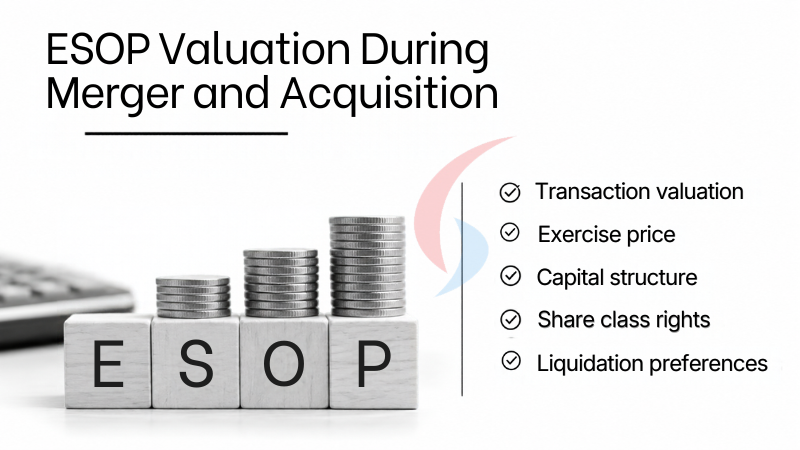 Valuation plays an important role in determining the financial benefits employees may receive during an acquisition. Although the acquisition agreement may specify a transaction price, that price does not always represent the amount available to every ESOP holder. The company must consider its capital structure, exercise prices, different classes of shares and other contractual rights.
For example, a startup may announce an acquisition valuation of Rs. 100 crore, but this does not mean all shareholders will receive money in direct proportion to the headline valuation. Preference shareholders may have contractual liquidation preferences, and other financial obligations may affect the proceeds ultimately available to ordinary shareholders.
An appropriate valuation assessment helps employees and management understand the potential value of outstanding options. It can also support financial reporting, tax calculations and regulatory requirements. Depending on the transaction, a registered valuer, merchant banker or other qualified professional may be required. Companies can explore Valuation Services to assess the value of shares and ESOP-related interests for applicable corporate and regulatory purposes.
Understanding ESOP Valuation in India can help founders and employees determine how share prices, exercise costs and fair market value influence the actual financial benefits of stock options.
Taxation of ESOPs During Merger and Acquisition in India
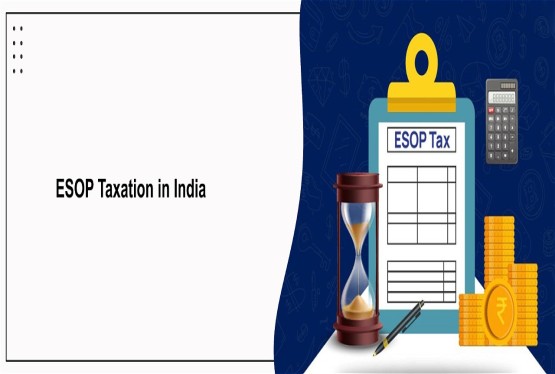
Taxation is an important consideration because employees may face tax obligations even when the acquisition creates a substantial financial benefit. Under the Indian income-tax framework, conventional ESOP arrangements can involve salary taxation when shares are allotted or transferred following exercise and capital gains taxation when those shares are subsequently sold. The Income-tax Act, 2025 came into effect on 1 April 2026. Under the applicable ESOP perquisite provisions, the difference between the prescribed fair market value of shares and the amount recovered from the employee is generally considered a taxable employment benefit, subject to relevant conditions.
Consider an employee exercising 1,000 options at Rs. 100 per share when the prescribed fair market value is Rs. 400. The taxable perquisite would ordinarily amount to Rs. 3 lakh. If those shares are later sold for Rs. 600 each, a further Rs. 2 lakh may arise as capital gains before applicable adjustments. However, cancellation of unexercised options, direct cash settlements and replacement awards require separate tax analysis. Certain eligible startup employees may also qualify for special provisions concerning the timing of tax payment and withholding. Companies should therefore examine each settlement arrangement before communicating the expected post-tax benefits to employees.
Employees should also understand ESOP Taxation for Employees and Startups in India to learn how taxable perquisites, capital gains and applicable tax benefits affect their ESOP earnings.
Importance of ESOP Due Diligence Before an Acquisition
Before completing a merger or acquisition, the acquiring company should examine the target company's ESOP records carefully. This process helps identify outstanding employee rights, potential dilution, pending exercise obligations and contractual commitments that may influence the transaction's value.
The review generally covers ESOP scheme documents, shareholder approvals, grant letters, vesting schedules, exercise records, cancellations and employee communications. It should also identify change-of-control provisions and any commitments relating to accelerated vesting or cash compensation. Incomplete records may result in disputes after the acquisition or unexpected changes to the agreed purchase consideration. A comprehensive Due Diligence of Company exercise helps buyers and sellers identify these obligations early and address them before finalising the acquisition documents.
Businesses preparing for a takeover should also read Due Diligence Before an IPO or Takeover of the Company to understand how reviewing financial records, shareholder rights and regulatory obligations can reduce transaction risks.
Can Employees Lose Their ESOPs After an Acquisition?
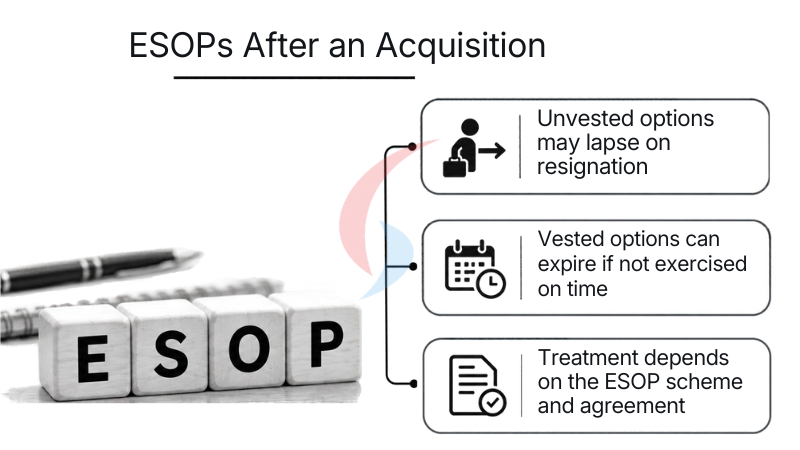
Employees sometimes believe that receiving an ESOP grant guarantees a future financial payment. However, stock options generally remain subject to the conditions contained in the relevant scheme and grant agreement. A merger or acquisition does not automatically guarantee payment for every vested or unvested option. For instance, an employee who resigns before completing the vesting period may lose unvested options under the applicable rules. Similarly, vested options may expire if an employee does not exercise them within the permitted period. Companies must nevertheless honour applicable contractual rights and statutory requirements when implementing changes connected with an acquisition. Employees should review the exercise period, treatment of unvested awards, termination provisions and any proposed replacement arrangements. Obtaining written clarification before accepting modified ESOP terms can help prevent misunderstandings later.
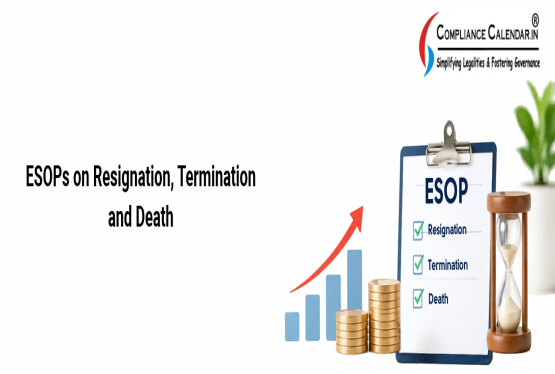
For a better understanding of employee rights after leaving an organisation, read ESOPs on Resignation, Termination and Death, which explains how vesting and exercise conditions affect outstanding stock options.
Accounting Treatment of ESOPs After a Merger
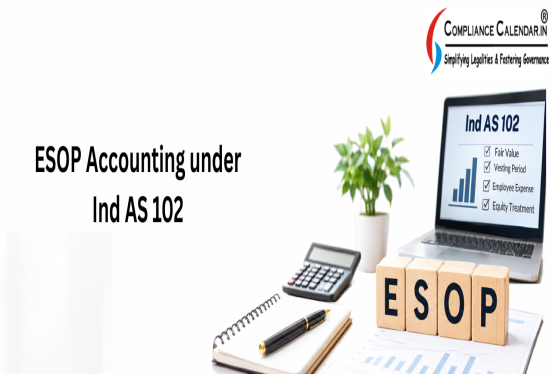
ESOPs may also create accounting obligations for companies involved in mergers and acquisitions. Entities applying Indian Accounting Standards generally assess share-based payment arrangements under Ind AS 102, while business combinations may require consideration of Ind AS 103. When the acquiring company replaces outstanding employee options, it may need to determine which portion of the replacement award relates to services provided before the acquisition and which portion relates to future employment. This distinction can affect the recognition of acquisition consideration and employee compensation expenses. Proper accounting ensures that ESOP-related obligations are reflected appropriately in the company's financial statements. It also helps management understand the financial consequences of modifying employee benefit arrangements after an acquisition.
Companies dealing with replacement awards and employee compensation expenses can refer to ESOP Accounting under Ind AS 102 to understand the applicable accounting treatment and financial reporting requirements.
Common Mistakes Companies Make When Handling ESOPs During M&A
A common mistake is discussing employee stock options only after the acquisition terms have been substantially negotiated. Outstanding options may affect the fully diluted shareholding structure, transaction consideration and future ownership of the combined company. Ignoring these factors may result in unexpected dilution or disagreements between stakeholders. Another mistake is treating all employees equally without considering their individual grant conditions. Some employees may hold vested options, while others may have recently joined the business. Their rights can differ significantly, and a uniform settlement approach may not reflect the obligations contained in existing agreements. Companies also sometimes overlook taxation, employee communications and necessary corporate approvals. These issues can delay implementation and create dissatisfaction among employees. Addressing ESOP treatment during the initial transaction planning stage can reduce uncertainty and make the acquisition process more predictable.
How Companies Can Manage ESOPs Effectively During Mergers
Companies should begin by preparing an accurate register of outstanding employee stock options. The register should identify granted, vested, unvested, exercised and lapsed options, along with their exercise prices and relevant conditions. This information should be reconciled with the ESOP scheme, grant records and fully diluted capitalization table. The next step involves deciding whether options will be settled, continued, accelerated or replaced. The proposed treatment should be documented in the acquisition agreements or merger scheme, where applicable. Management should also identify the necessary shareholder, board and regulatory approvals before implementing the arrangement. Employee communication should remain a priority throughout the process. Clear explanations regarding vesting, exercise deadlines, replacement awards and tax implications can prevent confusion and help retain important employees following the acquisition.
Companies should also review ESOPs Compliance Checklist and Procedure under the Companies Act, 2013 to understand the documentation, approvals and statutory requirements involved in managing employee stock options.
Why Choose Compliance Calendar LLP
ESOPs during merger and acquisition transactions can create significant financial opportunities for employees, but their actual value depends on vesting conditions, exercise rights, company valuation and transaction terms. A successful acquisition should consider not only the interests of founders and investors but also the rights of employees who contributed to the company's growth.
For businesses, early planning, proper documentation and regulatory compliance are essential to managing employee stock options effectively. Employees should understand their ESOP agreements and seek clarification before accepting modified terms or settlement arrangements. A transparent approach can help preserve employee confidence and support a smoother business transition.
Companies planning employee benefit restructuring can explore ESOP Scheme Compliance services offered by Compliance Calendar LLP. Businesses preparing for corporate restructuring can also consider Merger and Acquisition assistance to address transaction documentation, approvals and applicable compliance requirements.
If your company is planning a merger or acquisition and needs professional assistance with ESOP valuation, employee stock option restructuring, documentation, or regulatory compliance, you can contact Compliance Calendar LLP at +91 9988424211 or info@ccoffice.in for expert guidance.
Frequently Asked Questions (FAQs)
Q1. What happens to ESOPs when a company is acquired?
Ans. ESOPs may be settled in cash, converted into acquiring-company options, continued under existing terms or treated according to another approved arrangement. The outcome depends on the ESOP scheme, employee agreements and acquisition documents.
Q2. Do unvested ESOPs become vested during a merger?
Ans. Not automatically. Unvested ESOPs may continue under the original schedule or qualify for accelerated vesting if the governing documents and applicable law permit it.
Q3. Can employees receive cash for their ESOPs during an acquisition?
Ans. Yes. Some acquisitions provide cash settlement for eligible vested options. The payment amount depends on the agreed valuation, exercise price, contractual terms and settlement mechanism.
Q4. Are ESOPs taxable during an acquisition?
Ans. Tax may arise when options are exercised and shares are allotted or transferred, when the resulting shares are sold, or when certain cash settlement arrangements occur. The applicable treatment depends on the nature of the transaction.
Q5. What happens to ESOPs if employees leave after a merger?
Ans. The outcome depends on the governing ESOP scheme, employment terms and any revised arrangements. Unvested options may lapse, while vested options may remain exercisable for a specified period.
Q6. Can an acquiring company replace existing ESOPs?
Ans. Yes. An acquiring company may provide replacement options under an approved arrangement. The conversion ratio, exercise price and vesting conditions must be determined according to the transaction terms and applicable law.
Q7. Which laws govern ESOPs during mergers in India?
Ans. The principal framework includes the Companies Act, 2013, the Companies (Share Capital and Debentures) Rules, 2014, applicable SEBI regulations and relevant income-tax provisions.
Q8. Why is ESOP valuation important during an acquisition?
Ans. Valuation helps determine the economic value of outstanding options and supports informed decisions regarding settlement, conversion, taxation and financial reporting.
Q9. Can employees lose vested ESOPs during a merger?
Ans. Vested options do not necessarily guarantee an unrestricted right to payment. Their treatment depends on the exercise conditions, expiry provisions, acquisition terms and applicable legal protections.
Q10. Why should companies conduct ESOP due diligence before an acquisition?
Ans. ESOP due diligence helps identify outstanding employee rights, potential dilution, pending obligations and contractual commitments. It reduces the risk of disputes and unexpected financial liabilities after the transaction.
Article last updated on : 23 Nov 2026.


































































_learn_crop10_thumb.jpg)