


Foreign companies establishing subsidiaries in India are required to comply with various corporate and foreign investment regulations. Apart from company registration, annual ROC filings and FEMA reporting, Indian subsidiaries must also examine the mandatory dematerialisation requirements introduced by the Ministry of Corporate Affairs (MCA).
The introduction of Rule 9B under the Companies (Prospectus and Allotment of Securities) Rules, 2014, has made dematerialisation applicable to private companies other than small companies, subject to prescribed exemptions. Since subsidiary companies are excluded from the definition of a small company, Indian subsidiaries of foreign companies generally fall within the scope of these requirements, irrespective of their paid-up capital or turnover.
Obtaining an International Securities Identification Number (ISIN) is an important step towards complying with mandatory dematerialisation requirements. Failure to complete this compliance may create difficulties during share transfers, fresh allotments, foreign investment transactions and corporate restructuring.
What is an ISIN?
An International Securities Identification Number (ISIN) is a unique 12-character alphanumeric code assigned to a particular security. It enables electronic identification and management of securities through recognised depositories. For Indian companies, ISIN facilitates the holding, issuance and transfer of securities in dematerialised form through the National Securities Depository Limited (NSDL) or Central Depository Services (India) Limited (CDSL).
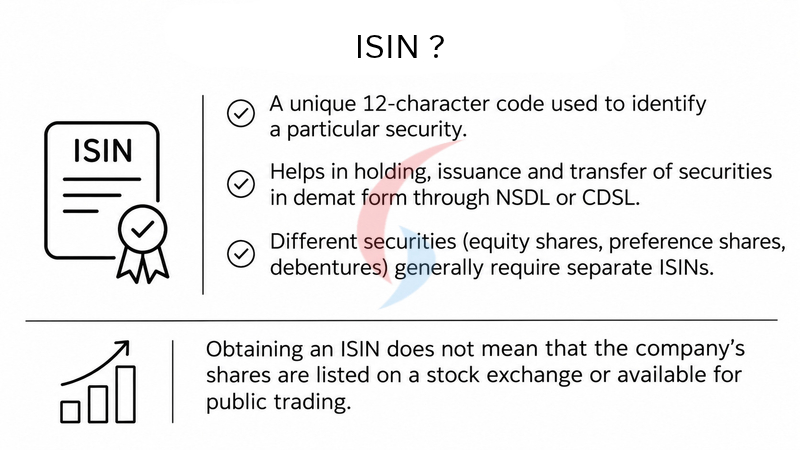
Different classes of securities, such as equity shares, preference shares and debentures, generally require separate ISINs. Obtaining an ISIN does not mean that the company's shares are listed on a stock exchange or available for public trading.
Obtaining an ISIN enables companies to issue and manage securities electronically through recognised depositories. Indian subsidiaries must understand the applicable registration and post-registration requirements. Read more about All About ISIN for Private Limited Companies: Process and Compliance
Is ISIN Mandatory for Indian Subsidiaries?
Yes, obtaining an ISIN and facilitating dematerialisation is generally mandatory for Indian subsidiaries incorporated as private limited companies and covered under Rule 9B.
Under Section 2(85) of the Companies Act, 2013, holding and subsidiary companies are specifically excluded from the definition of a small company. Consequently, even an Indian subsidiary having paid-up capital of only Rs 1 lakh may be required to comply with mandatory dematerialisation provisions.
The requirement applies to both wholly owned subsidiaries and partially owned subsidiaries, provided they satisfy the statutory definition of a subsidiary company. Foreign ownership does not provide an independent exemption from Rule 9B.
Indian subsidiaries and wholly owned subsidiaries must examine their dematerialisation obligations under Rule 9B. Foreign ownership does not provide an independent exemption from these requirements. Learn more about Mandatory Conversion of Physical Shares into Demat for Private Companies, WOS and Subsidiary Companies
Legal Provisions Governing ISIN Applicability
The requirement to obtain an ISIN and facilitate dematerialisation of securities is governed by the Companies Act, 2013, the Depositories Act, 1996, and applicable rules and regulations.
| Legal provision | Applicability |
| Section 2(85), Companies Act, 2013 | Definition and exclusions of small companies |
| Section 2(87) | Definition of subsidiary company |
| Section 29 | Issuance of securities in dematerialised form |
| Rule 9A | Dematerialisation requirements for unlisted public companies |
| Rule 9B | Dematerialisation requirements for eligible private companies |
| Depositories Act, 1996 | Electronic holding and transfer of securities |
| SEBI (Depositories and Participants) Regulations, 2018 | Regulation of depositories and participants |
| Section 450, Companies Act, 2013 | General penalty for contraventions without a specific penalty |
Indian subsidiaries must examine their corporate classification and applicable exemptions before determining their dematerialisation obligations.
Why Indian Subsidiaries Cannot Claim Small Company Exemption
Many newly incorporated Indian subsidiaries have limited turnover and relatively low paid-up share capital. Their management may assume that these companies qualify as small companies and are therefore exempt from mandatory dematerialisation.
However, Section 2(85) specifically excludes holding companies and subsidiary companies from the small company classification. Even an increase in the prescribed financial thresholds for small companies does not remove this statutory exclusion.
| Type of company | Rule 9B applicability |
| Private company qualifying as a small company | Exempt |
| Indian subsidiary of a foreign company | Generally applicable |
| Foreign wholly owned subsidiary in India | Generally applicable |
| Private holding company | Generally applicable |
| Section 8 private company | Generally applicable |
| Private government company | Exempt under Rule 9B |
| Producer company | Applicable subject to special timelines |
Subsidiary companies are excluded from the statutory definition of small companies irrespective of their financial thresholds. Consequently, they must fulfil additional applicable corporate compliance requirements. Refer to Disclosure and Compliance for Other Than Small Companies
Latest ISIN and Dematerialisation Compliance Deadlines
The MCA introduced Rule 9B through the Companies (Prospectus and Allotment of Securities) Second Amendment Rules, 2023, notified on 27 October 2023. Initially, private companies that were not small companies as on 31 March 2023 were required to comply by 30 September 2024.
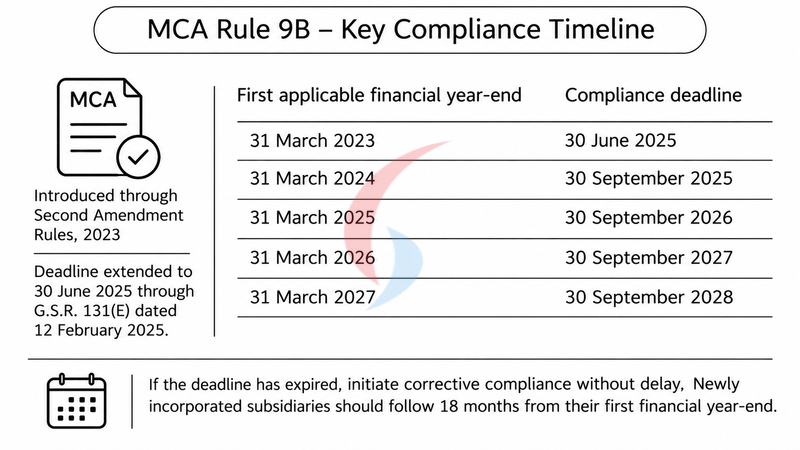
Through Notification G.S.R. 131(E), dated 12 February 2025, the MCA extended this deadline to 30 June 2025 for eligible private companies other than producer companies. For companies becoming eligible in subsequent financial years, the general compliance period remains 18 months from the closure of the relevant financial year.
Indian subsidiaries whose applicable deadline has already expired should initiate corrective compliance without unnecessary delay. Newly incorporated subsidiaries should determine their deadline based on their first applicable financial year-end.
The MCA has previously extended dematerialisation deadlines to provide eligible private companies with additional compliance time. Indian subsidiaries must determine their applicable deadline based on the relevant financial year. Read more about the MCA Extension of Mandatory Dematerialisation Deadline
Difference Between Rule 9A and Rule 9B
Indian subsidiaries must determine whether Rule 9A or Rule 9B applies to them based on their corporate classification. Although both provisions promote electronic holding of securities, their applicability and exemptions differ.
| Particulars | Rule 9A | Rule 9B |
| Applicability | Unlisted public companies | Private companies other than small companies |
| Wholly owned subsidiary exemption | Available under the prescribed conditions | No general WOS exemption |
| Government companies | Exempt | Exempt |
| ISIN generation | Mandatory for covered companies | Mandatory for covered companies |
| PAS-6 filing | Applicable | Applicable |
| New issuance of securities | Demat form | Demat form |
An Indian subsidiary should not assume that the wholly owned subsidiary exemption under Rule 9A automatically extends to Rule 9B.
Storytelling: How a Foreign Subsidiary's Expansion Was Delayed Due to ISIN Non-Compliance
Consider an illustrative example of Global Technologies India Private Limited, a wholly owned subsidiary of a Singapore-based technology company. The Indian subsidiary was incorporated in 2022 with a paid-up share capital of Rs 5 lakh.
In October 2026, the foreign holding company decided to invest an additional Rs 3 crore to expand its Indian operations. However, during the proposed share allotment, the management discovered that the subsidiary had not obtained an ISIN and its existing shares were still held in physical form.
The management had assumed that the company qualified for the small company exemption because of its limited turnover and capital. Unfortunately, its subsidiary status excluded it from that exemption.
The company approached compliance professionals, appointed a Registrar and Transfer Agent (RTA), obtained an ISIN and facilitated the opening of a corporate demat account for its foreign shareholder. After completing the necessary dematerialisation formalities and assessing historical non-compliance, the company proceeded with the proposed foreign investment. This example demonstrates why Indian subsidiaries should complete ISIN and dematerialisation compliance before planning fresh investments or restructuring their shareholding.
Indian subsidiaries must examine applicable dematerialisation requirements before undertaking share transfers or fresh investments. Non-compliance may delay transactions involving existing shareholders and new investors. Read more about Transfer of Shares in Demat or Physical Format for Private Companies
Conditions Under Rule 9B for Indian Subsidiaries
Rule 9B imposes responsibilities on both companies and their security holders. Once the applicable compliance deadline has passed, the company must issue new securities in dematerialised form and provide facilities for converting existing physical securities. Before making an offer for fresh issuance, buyback, bonus shares or rights shares, the company must ensure that the entire securities holdings of its promoters, directors and key managerial personnel have been dematerialised.
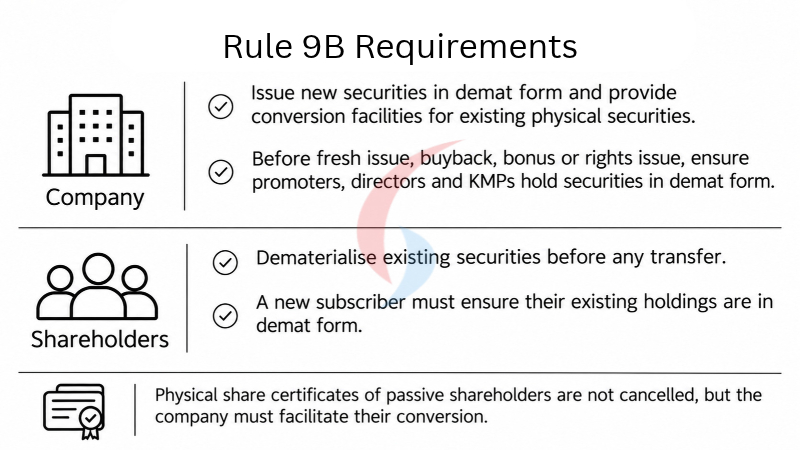
Existing shareholders intending to transfer their securities must first dematerialise those securities. Similarly, a person subscribing to new securities after the applicable deadline must ensure that their existing holdings in the company are held in dematerialised form. The rule does not automatically cancel existing physical share certificates held by passive shareholders. However, the company must facilitate their conversion and comply with restrictions applicable to subsequent transactions.
Rule 9B requires covered private companies to facilitate electronic holding and issuance of securities. Companies must also comply with applicable restrictions on share allotments and transfers. Learn more about Dematerialisation of Shares of Private Companies Under Rule 9B
Documents Required for ISIN Registration of Indian Subsidiaries
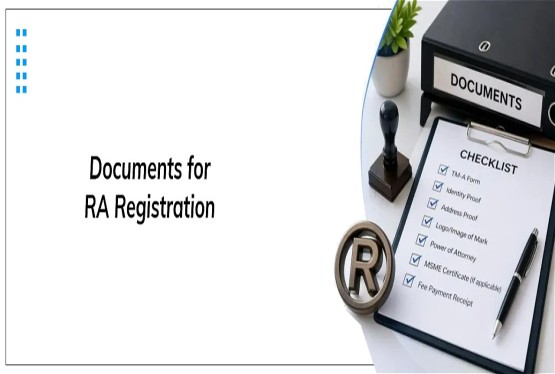
Indian subsidiaries should prepare their corporate documents and shareholding records before initiating depository admission. Additional documentation may be required depending on the appointed RTA, depository and nature of the securities.
- Certificate of Incorporation, PAN, MOA and AOA.
- Latest audited financial statements.
- Board resolution approving ISIN registration.
- Details of authorised and paid-up share capital.
- Latest shareholding pattern and register of members.
- Details of existing physical share certificates.
- Directors' and authorised signatories' details.
- Applicable ROC allotment filings.
- Specimen share certificate.
- RTA and depository agreements.
- Prescribed declarations and application forms.
- Details of each class of securities.
Companies should reconcile their issued capital with statutory records before submitting the application to avoid discrepancies during the admission process.
Proper documentation and reconciliation of share capital are important for successful depository admission. Companies must maintain accurate records of physical and electronic securities. Explore the Complete Procedure of Dematerialisation of Shares Under Companies Act, 2013
Procedure for Obtaining ISIN for Indian Subsidiaries
Step 1: Determine ISIN Applicability
Examine the company's corporate structure, subsidiary status and relevant financial year-end under Rule 9B. Identify the applicable compliance deadline and assess whether any historical non-compliance requires corrective action.
Step 2: Obtain Board Approval
Conduct a Board meeting to approve the admission of securities into the depository system. Authorise the appointment of an RTA, execution of necessary agreements and submission of the ISIN application.
Step 3: Appoint a Registrar and Transfer Agent
Engage a SEBI-registered Registrar and Transfer Agent to facilitate securities admission and dematerialisation, unless the company has an eligible alternative arrangement. The RTA assists with shareholder records, depository coordination and electronic securities processing.
Step 4: Prepare Corporate and Shareholding Documents
Collect the necessary incorporation documents, financial statements, shareholding details and Board resolutions. Reconcile the issued share capital with existing share certificates and applicable ROC filings.
The dematerialisation process involves corporate approvals, appointment of an RTA and coordination with recognised depositories. Companies should prepare their statutory documents before initiating registration. Refer to ISIN and Demat Process for Private, Section 8, Holding and Subsidiary Companies
Step 5: Submit Application to NSDL or CDSL
Submit the prescribed issuer admission application to NSDL or CDSL, depending on the selected depository arrangement. Execute the applicable agreements and pay the prescribed admission charges and security deposit.
Step 6: Obtain ISIN Allotment
The depository examines the submitted documents and assigns an ISIN upon successful admission of the securities. Separate ISINs must be obtained for different eligible classes of securities, wherever required.
Step 7: Open Demat Accounts for Shareholders
Existing shareholders, including foreign holding companies, should open suitable demat accounts with authorised Depository Participants. Complete the applicable KYC, foreign entity documentation and beneficial ownership verification requirements.
Step 8: Convert Physical Shares into Demat Form
Shareholders submit Dematerialisation Request Forms along with their original share certificates to their Depository Participants. After verification by the issuer or RTA, the approved securities are credited electronically to their demat accounts.
Step 9: Complete Post-Registration Compliance
The company must maintain updated securities records, pay annual depository and RTA charges and complete applicable PAS-6 filings. Future share allotments and transfers must comply with prescribed dematerialisation requirements.
ISIN registration is followed by ongoing statutory reporting and share capital reconciliation obligations. Companies should maintain accurate depository records to complete their half-yearly filings. Refer to PAS-6 Half-Yearly Return and Dematerialisation of Securities
Demat Account Requirements for Foreign Shareholders
Obtaining an ISIN for an Indian subsidiary and opening a demat account for its foreign shareholder are two separate processes. While the Indian subsidiary obtains an ISIN for its securities, the overseas holding company requires a suitable demat account to hold those securities electronically. Foreign corporate shareholders may generally require the following documents for opening a demat account:
| Document | Purpose |
| Foreign Certificate of Incorporation | Verification of legal existence |
| Constitutional documents | Verification of corporate structure |
| PAN | Tax identification |
| Board resolution | Authorisation for demat account opening |
| Overseas registered address proof | Address verification |
| Authorised signatory documents | Identity verification |
| Ultimate beneficial ownership declaration | KYC compliance |
| Existing Indian shareholding records | Securities verification |
Additional notarisation, apostille or consular authentication may be required depending on the Depository Participant's requirements.
PAS-6 Filing Requirements for Indian Subsidiaries
Obtaining an ISIN is not a one-time compliance exercise. Companies covered under Rule 9B must also submit Form PAS-6, which is a half-yearly reconciliation of share capital audit report. Under Rule 9A(8), read with Rule 9B(5), the return must be filed with the ROC within 60 days from the conclusion of each half-year. It must be duly certified by a practising Chartered Accountant or Company Secretary.
| Reporting period | Ordinary filing deadline |
| April to September 2026 | 29 November 2026 |
| October 2026 to March 2027 | 30 May 2027 |
| April to September 2027 | 29 November 2027 |
The company must also maintain timely payment of applicable depository and RTA fees, along with the prescribed security deposit equivalent to at least two years' fees.
Companies covered under Rule 9B must complete half-yearly reconciliation of their share capital. Form PAS-6 helps reconcile securities held in physical and electronic form. Learn more about PAS-6 Applicability to Private Limited Companies Under Rule 9B
FEMA Compliance for Dematerialisation of Foreign-Owned Shares
Dematerialisation of existing shares held by a foreign shareholder does not independently constitute fresh foreign investment or a transfer of ownership. Therefore, Form FC-GPR or FC-TRS is not required merely because physical shares have been converted into electronic form.
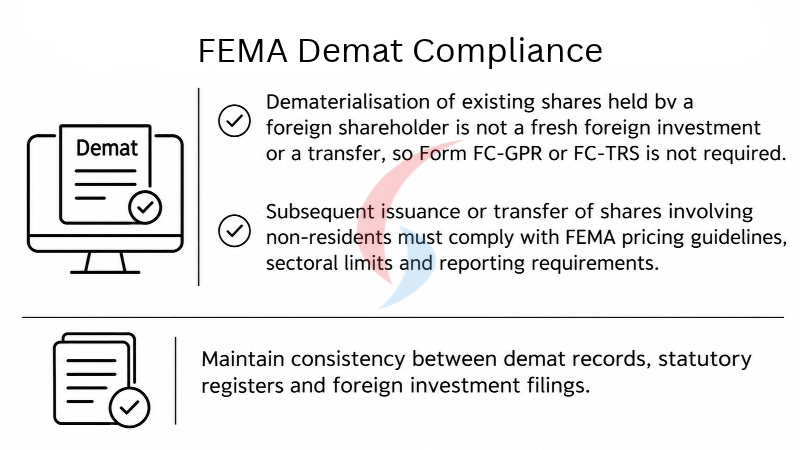
However, subsequent issuance or transfer of shares involving non-residents must comply with applicable FEMA pricing guidelines, sectoral limits and reporting requirements. Indian subsidiaries should maintain consistency between their demat records, statutory registers and foreign investment filings.
Penalty for Non-Compliance with ISIN Requirements
Where no specific penalty is prescribed for a Rule 9B contravention, Section 450 of the Companies Act, 2013 may apply.
| Particulars | Applicable penalty |
| Initial penalty | Rs 10,000 |
| Continuing contravention | Rs 1,000 per day |
| Maximum penalty for company | Rs 2 lakh |
| Maximum penalty for each officer in default | Rs 50,000 |
| Delayed PAS-6 filing | Applicable additional filing fees and potential statutory penalties |
Apart from monetary penalties, non-compliance may prevent companies and shareholders from completing certain securities transactions.
Recent ROC adjudication proceedings discussed in September 2026 demonstrate that dematerialisation violations are subject to practical regulatory enforcement and should not be treated as merely procedural defaults.
Why Choose Compliance Calendar LLP?
Compliance Calendar LLP provides professional assistance to Indian subsidiaries and foreign holding companies with ISIN Registration and Dematerialisation of Shares, RTA appointment, depository admission and corporate documentation. Our professionals assist businesses in determining Rule 9B applicability, identifying compliance deadlines and preparing the necessary statutory records.
From coordinating with NSDL and CDSL to assisting foreign shareholders with demat account opening and PAS-6 filing, Compliance Calendar LLP provides comprehensive compliance support. Our team also assists with share allotment, foreign investment reporting and ongoing corporate compliance.
For professional assistance, contact +91 9988424211 or email info@ccoffice.in
Frequently Asked Questions (FAQs)
Q1. Is ISIN mandatory for Indian subsidiaries?
Ans. Yes, Indian private limited subsidiaries are generally covered under Rule 9B. They must obtain an ISIN and facilitate dematerialisation within their applicable compliance deadline.
Q2. Is ISIN mandatory for a foreign wholly owned subsidiary?
Ans. Yes, Rule 9B does not provide a general exemption for private wholly owned subsidiaries. Foreign ownership does not remove applicable dematerialisation obligations.
Q3. Can an Indian subsidiary qualify as a small company?
Ans. No, subsidiary companies are excluded from the small company definition under Section 2(85). Their turnover and paid-up capital do not override this statutory exclusion.
Q4. Can foreign shareholders open demat accounts in India?
Ans. Yes, foreign shareholders can open suitable demat accounts with authorised Depository Participants. They must satisfy applicable KYC, documentation and regulatory requirements.
Q5. Is PAS-6 filing mandatory for Indian subsidiaries?
Ans. Yes, Indian subsidiaries covered under Rule 9B must file Form PAS-6 half-yearly. The prescribed deadline is 60 days from the conclusion of each half-year.
Q6. Can an Indian subsidiary issue physical shares after its compliance deadline?
Ans. No, companies covered under Rule 9B must issue new securities in dematerialised form after their applicable deadline. Physical issuance may result in statutory non-compliance.
Q7. Does dematerialisation require FC-GPR filing?
Ans. No, converting existing physical shares into demat form does not independently require FC-GPR filing. However, fresh issuance of shares constituting FDI attracts applicable reporting requirements.
Q8. Is a separate ISIN required for preference shares?
Ans. Yes, different classes of securities generally require separate ISINs. Equity shares, preference shares and debentures must be identified separately according to depository requirements.
Q9. Can an Indian subsidiary obtain an ISIN after the deadline?
Ans. Yes, companies can initiate ISIN registration after their compliance deadline. However, delayed compliance does not automatically eliminate liability for previous contraventions.
Q10. Does obtaining an ISIN mean that a company is listed?
Ans. No, ISIN registration does not constitute stock exchange listing. Private and unlisted companies can obtain ISINs solely for electronic holding and transfer of securities.
Article last updated on : 25 Nov 2026.



































































_learn_crop10_thumb.jpg)