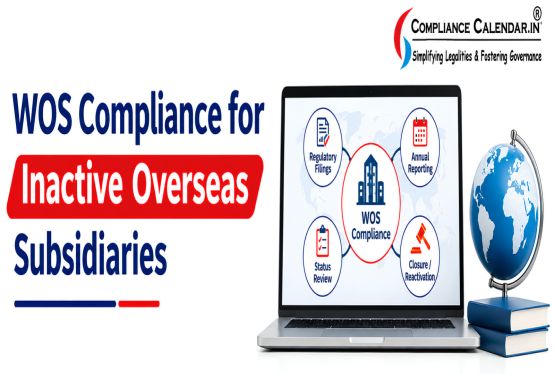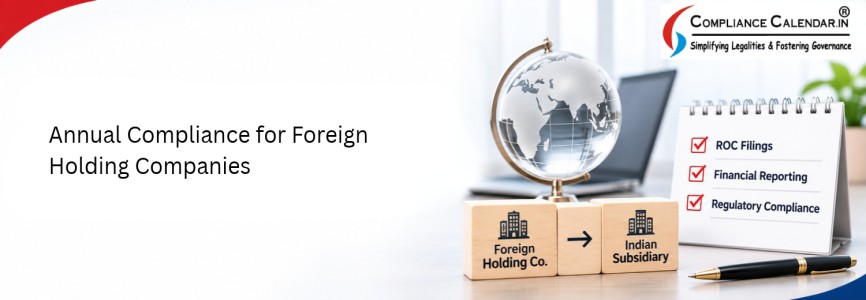



Foreign companies often establish subsidiaries in India to expand their global operations, access new markets and benefit from India's growing business opportunities. While the foreign holding company exercises ownership and strategic control over its Indian subsidiary, both entities have separate legal identities and distinct regulatory responsibilities.
Annual compliance for foreign holding companies having subsidiaries in India involves various requirements under the Companies Act, 2013, the Foreign Exchange Management Act, 1999 (FEMA), income-tax legislation and other applicable regulations. These requirements include financial statement approval, statutory audits, ROC filings, foreign investment reporting, transfer pricing documentation and beneficial ownership disclosures.
Foreign holding companies must understand that compliance with the laws of their home country does not replace the statutory obligations of their Indian subsidiaries. Maintaining a structured annual compliance calendar helps international businesses avoid penalties, regulatory complications and disruptions during future investment transactions.
Foreign holding companies must ensure that their Indian subsidiaries comply with applicable corporate, taxation and FEMA regulations. Maintaining a structured compliance calendar helps businesses avoid statutory defaults. Read more about Wholly Owned Subsidiary Compliance: A Complete Roadmap for Businesses
What is a Foreign Holding Company?
A foreign holding company is a company incorporated outside India that controls one or more subsidiary companies. Under Sections 2(46) and 2(87) of the Companies Act, 2013, a holding-subsidiary relationship generally exists where one company controls the composition of another company's Board of Directors or exercises control over more than half of its total voting power.
For example, a Singapore-based company holding 100% of the equity shares of an Indian private limited company is the foreign holding company, while the Indian entity operates as its wholly owned subsidiary (WOS). Although the foreign holding company controls the Indian subsidiary, the subsidiary remains an independent legal entity responsible for complying with applicable Indian corporate and financial regulations.
Wholly owned subsidiaries and partially owned subsidiaries differ in their ownership and control structures. Both must independently comply with applicable Indian corporate laws. Learn more about the Difference Between Wholly Owned Subsidiary and Subsidiary Company
Is Annual Compliance Mandatory for Foreign Holding Companies in India?
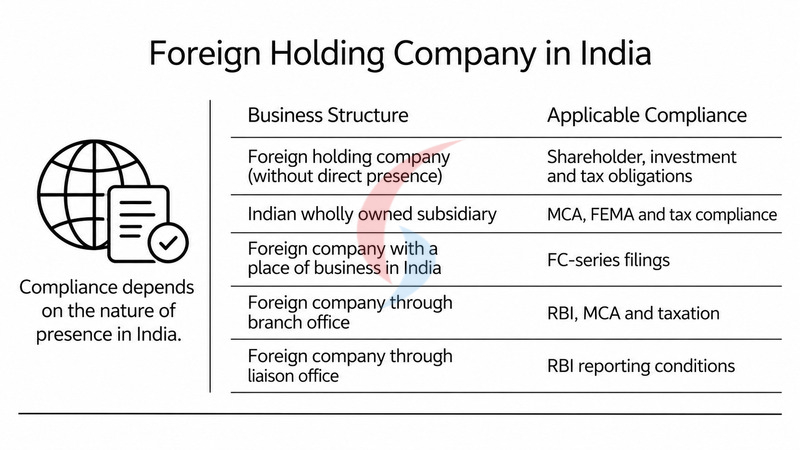
The annual compliance requirements depend on the nature of the foreign holding company's presence and business activities in India. A foreign company merely holding shares in an Indian subsidiary does not automatically become subject to all ROC filing requirements applicable to foreign companies operating directly in India.
However, where the foreign holding company independently satisfies the definition of a foreign company under Section 2(42), including the relevant place-of-business and business activity conditions, additional obligations under Chapter XXII of the Companies Act, 2013 may apply.
| Business structure | Applicable compliance |
| Foreign holding company without direct business presence in India | Applicable shareholder, investment and tax obligations |
| Indian wholly owned subsidiary | Annual MCA, FEMA and tax compliance |
| Foreign company having a place of business in India | Applicable FC-series filings and foreign company compliance |
| Foreign company operating through a branch office | RBI, MCA and applicable taxation requirements |
| Foreign company operating through a liaison office | Applicable RBI reporting and permitted activity conditions |
Foreign companies establishing subsidiaries in India must comply with incorporation and post-registration requirements. Understanding these obligations helps businesses maintain a legally compliant corporate structure. Refer to Foreign Subsidiary Company/WOS Registration in India
Legal Provisions Governing Annual Compliance
Foreign holding companies and their Indian subsidiaries must comply with multiple regulatory provisions depending on their ownership structure, business activities and financial transactions.
| Act or statutory provision | Applicability |
| Section 2(46), Companies Act, 2013 | Definition of holding company |
| Section 2(87) | Definition of subsidiary company |
| Section 92 | Filing of annual returns |
| Section 96 | Annual General Meeting |
| Section 129 | Preparation of financial statements |
| Section 134 | Financial statement and Directors' Report approval |
| Section 137 | Filing of financial statements with ROC |
| Section 149 | Board composition and resident director requirements |
| Sections 89 and 90 | Beneficial ownership disclosures |
| Section 188 | Related-party transactions |
| Sections 379–393 | Applicable foreign company compliance |
| FEMA Non-Debt Instruments Rules, 2019 | Foreign investment regulations |
| FEMA Reporting Regulations, 2019 | Foreign investment reporting |
| Income-tax Act, 2025 | Taxation and transfer pricing from 1 April 2026 |
| Rule 9B of Companies (Prospectus and Allotment of Securities) Rules, 2014 | Mandatory dematerialisation for covered private companies |
Annual ROC Compliance for Indian Subsidiaries of Foreign Holding Companies
Indian subsidiaries of foreign holding companies must complete annual ROC compliance in accordance with the Companies Act, 2013. These requirements include conducting the Annual General Meeting (AGM), preparing audited financial statements and filing applicable forms such as AOC-4 and MGT-7. Timely compliance helps companies avoid statutory penalties and maintain good corporate governance.
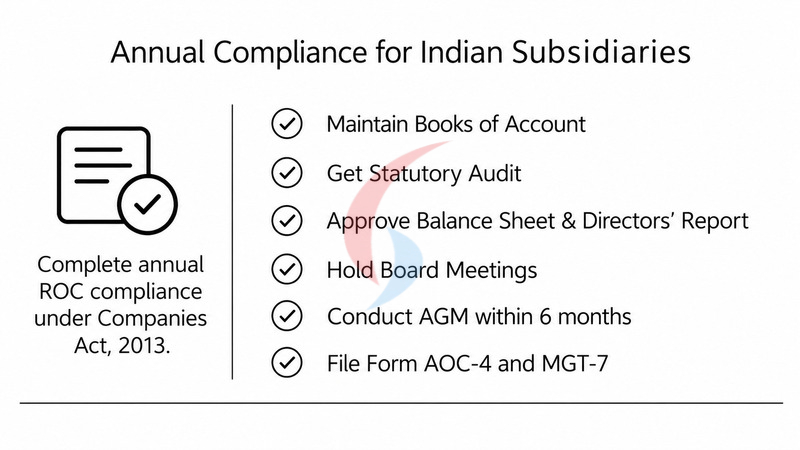
1. Maintenance of Books of Account
Under Section 128 of the Companies Act, 2013, Indian subsidiaries must maintain proper books of account reflecting their financial transactions and business activities. Transactions involving foreign holding companies, including loans, investments and management charges, must be appropriately recorded.
2. Statutory Audit of Financial Statements
Every Indian company must complete its statutory audit in accordance with applicable corporate law requirements, irrespective of turnover or profitability. The statutory auditor examines financial statements, accounting records and applicable disclosures before issuing the audit report.
3. Approval of Balance Sheet and Directors' Report
Under Section 134, the Indian subsidiary's Board of Directors must approve its annual financial statements and Directors' Report. Approval obtained from the foreign holding company's management cannot replace the statutory approval required from the Indian subsidiary's Board.
Indian subsidiaries must obtain independent Board approval for their annual financial statements and Directors' Report. Approval from the foreign holding company alone cannot replace this statutory requirement. Read more about Balance Sheet and Directors' Report Approval in Foreign Subsidiary
4. Conducting Board Meetings
Indian subsidiaries must conduct Board meetings in accordance with Section 173 and applicable Secretarial Standards. Foreign directors may participate through permitted video conferencing facilities, subject to notice, quorum and documentation requirements.
5. Conducting the Annual General Meeting
Under Section 96, companies must ordinarily conduct their AGM within six months from the financial year-end, except in the case of the first AGM. Financial statements, auditor appointments and other applicable business matters are considered during the meeting.
6. Filing Form AOC-4
Indian subsidiaries must submit their approved financial statements and supporting documents to the Registrar of Companies through Form AOC-4 or its applicable variant. The ordinary filing deadline is 30 days from the date of the AGM.
7. Filing Form MGT-7
Under Section 92, Indian subsidiaries must submit their annual returns containing information regarding shareholding, directors and corporate governance. Subsidiary companies are excluded from the small company definition and must generally file Form MGT-7 rather than MGT-7A.
Indian subsidiaries having reportable foreign investment must submit their annual FLA Returns within the prescribed timeline. Accurate financial and investment information is essential for completing this compliance. Read more about FLA Return Filing Online 2026: RBI FLAIR Guide
Annual FEMA Compliance for Foreign Holding Companies
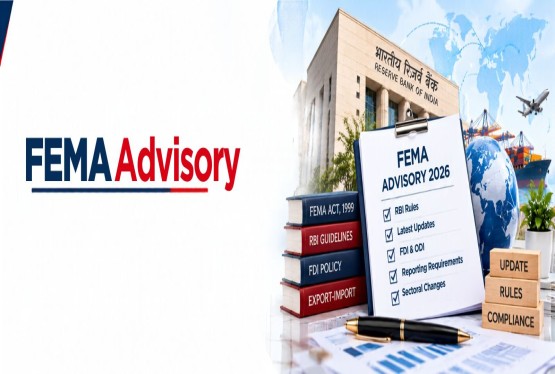
Indian subsidiaries receiving foreign investment must comply with applicable FEMA regulations and RBI reporting requirements. These obligations continue even when the foreign holding company does not make any fresh investment during the financial year.
1. FLA Return Filing
Indian subsidiaries having reportable outstanding foreign direct investment must submit their annual Foreign Liabilities and Assets (FLA) Return by 15 July every year. According to the RBI FAQs updated on 1 July 2026, this obligation applies even where no fresh investment is received during the year but reportable foreign investment remains outstanding. Companies can complete their FLA Return Compliance through the official RBI FLAIR Portal.
2. FC-GPR Filing
Whenever the Indian subsidiary issues equity instruments to its foreign holding company and the transaction constitutes FDI, Form FC-GPR must be submitted within 30 days of issuance. This is a transaction-based reporting requirement rather than an annual filing.
3. FC-TRS Filing
Where shares are transferred between residents and non-residents in transactions attracting FC-TRS reporting, the prescribed form must be submitted through the RBI FIRMS portal. Applicable pricing guidelines, documentation and reporting timelines must also be followed.
4. External Commercial Borrowing Compliance
Indian subsidiaries receiving eligible loans from their foreign holding companies must comply with applicable ECB regulations. Companies must maintain borrowing records, complete prescribed ECB reporting and comply with repayment and end-use requirements.
5. Downstream Investment Compliance
Where a foreign-owned or controlled Indian subsidiary invests in another Indian entity, the transaction may qualify as indirect foreign investment. Applicable sectoral restrictions, funding conditions and Form DI reporting requirements must be examined.
Indian subsidiaries receiving foreign investment must complete applicable RBI reporting requirements. Timely compliance helps maintain accurate records of cross-border financial transactions. Learn more about RBI Mandatory Compliances for Setting Up a WOS or Subsidiary Company in India
Significant Beneficial Ownership Compliance
Foreign holding companies often have multiple layers of ownership involving overseas corporate entities, investment funds and individual shareholders. Indian subsidiaries must examine their ultimate ownership structure under Section 90 of the Companies Act, 2013 and the Companies (Significant Beneficial Owners) Rules, 2018.
| Form or register | Purpose |
| BEN-1 | Declaration by a Significant Beneficial Owner |
| BEN-2 | Reporting SBO declarations to ROC |
| BEN-3 | Register of Significant Beneficial Owners |
| BEN-4 | Notice seeking beneficial ownership information |
| MGT-4 | Declaration by registered owner not holding beneficial interest |
| MGT-5 | Declaration by beneficial owner |
| MGT-6 | Reporting beneficial interest declarations to ROC |
These are primarily disclosure-based and event-based requirements rather than routine annual filings. However, companies should review their ownership structure annually to identify changes requiring regulatory reporting.
Foreign holding companies may appoint nominee shareholders to satisfy applicable corporate requirements. Such arrangements must comply with beneficial interest declarations under Section 89 of the Companies Act, 2013. Refer to MGT-6 Compliance for Nominees in Foreign Subsidiaries
ISIN and Dematerialisation Compliance
Indian private limited subsidiaries are excluded from the definition of small companies under Section 2(85) of the Companies Act, 2013. Therefore, they generally fall within the mandatory dematerialisation requirements prescribed under Rule 9B, subject to applicable exemptions and timelines.
Companies must obtain an ISIN, facilitate dematerialisation of existing securities and issue new securities electronically after their applicable compliance deadline. Covered subsidiaries must also submit Form PAS-6 every half-year within 60 days from the conclusion of the reporting period. Foreign holding companies should maintain suitable demat accounts for holding their Indian subsidiary's securities electronically.
Indian subsidiaries must examine mandatory dematerialisation requirements under Rule 9B. Foreign ownership does not automatically exempt companies from these statutory obligations. Read more about Mandatory Conversion of Physical Shares into Demat for WOS and Subsidiary Companies
Tax and Transfer Pricing Compliance
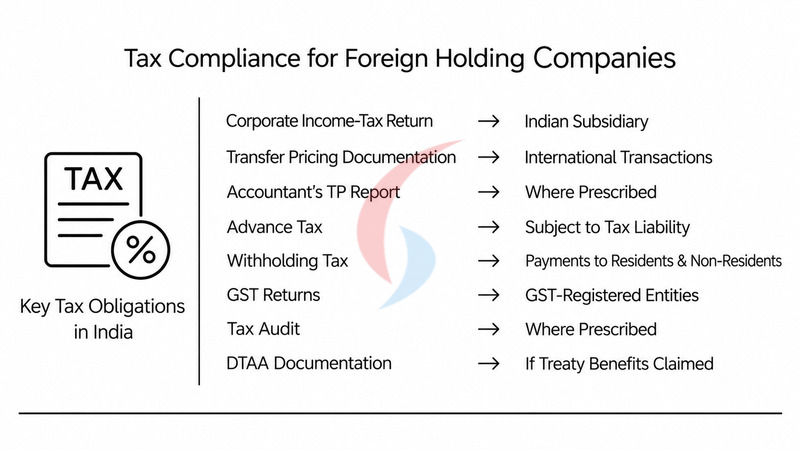
Foreign holding companies frequently enter into transactions with their Indian subsidiaries involving management services, technology licensing, loans, royalty payments and the supply of goods. Such transactions may attract international transfer pricing requirements. Indian subsidiaries must ensure that applicable international transactions are conducted at arm's length and maintain appropriate supporting documentation.
Storytelling: How a Foreign Holding Company Avoided Compliance Problems During Expansion
Consider an illustrative example of GlobalNova Technologies Pte. Ltd., a Singapore-based company that established a wholly owned subsidiary in Bengaluru. The Indian subsidiary was performing well, and the foreign management planned to invest an additional Rs 5 crore to expand its operations.
During a compliance review, the management discovered that the Indian subsidiary had not filed its previous year's FLA Return, completed its mandatory dematerialisation requirements or reviewed its beneficial ownership records. Certain management service transactions with the foreign parent also required transfer pricing documentation.
The company approached corporate and FEMA compliance professionals, who prepared a detailed compliance review, identified outstanding obligations and initiated the necessary corrective procedures. The management subsequently introduced an annual compliance calendar covering MCA, RBI and taxation requirements.
After addressing the identified discrepancies and completing the necessary share allotment formalities, the company proceeded with its expansion plans. This example demonstrates how regular compliance monitoring can prevent unexpected regulatory complications during international business expansion.
Regular FEMA due diligence helps foreign holding companies identify historical reporting errors in their Indian subsidiaries. Reviewing financial statements and regulatory filings can prevent complications during future investment transactions. Explore FEMA Due Diligence: Process, Checklist and Compliance
Annual Compliance Calendar for Foreign Holding Companies
The following calendar highlights important compliance deadlines for an Indian subsidiary having a financial year ending on 31 March.
| Compliance | Ordinary due date |
| Form MSME-1, wherever applicable | 30 April and 31 October |
| Form PAS-6 | 30 May and 29 November |
| Form DPT-3, wherever applicable | 30 June |
| FLA Return | 15 July |
| Annual General Meeting | 30 September |
| Form AOC-4 | Within 30 days of AGM |
| Form MGT-7 | Within 60 days of AGM |
| Income-tax return for AY 2026–27, without transfer pricing reporting | Ordinarily 31 October 2026 |
| Transfer pricing report for AY 2026–27 | Ordinarily 31 October 2026 |
| Income-tax return for AY 2026–27, with transfer pricing reporting | Ordinarily 30 November 2026 |
| FC-GPR | Within 30 days of issuance of equity instruments |
These are ordinary statutory timelines. Companies should check applicable extensions and fee relaxations before filing. The MCA has also listed General Circular No. 05/2026 concerning annual filing extensions and additional fee relaxation.
Corporate compliance requirements may vary according to the company's classification, financial thresholds and business activities. Indian subsidiaries must examine these conditions while preparing their annual compliance calendars. Refer to Compliance Applicability Threshold under the Companies Act, 2013
Procedure to Complete Annual Compliance for Foreign Holding Companies
Step 1: Review the Corporate Structure
Examine the foreign holding company's ownership, Indian subsidiaries and ultimate beneficial ownership details. Identify the applicable corporate, FEMA and taxation requirements based on the company's business structure.
Step 2: Prepare an Annual Compliance Calendar
Identify all applicable statutory forms, reporting obligations and filing deadlines for the financial year. Assign responsibilities to management, finance personnel and compliance professionals to ensure timely completion.
Step 3: Reconcile Financial and Investment Records
Review financial statements, foreign investment records, intercompany transactions and outstanding loans. Reconcile these details with previous ROC filings, RBI reporting and statutory registers.
Step 4: Complete Statutory Audit and Corporate Approvals
Coordinate with statutory auditors and prepare the annual financial statements and Directors' Report. Conduct the necessary Board meetings and obtain shareholder adoption of financial statements at the AGM.
Step 5: Complete ROC Annual Filings
Submit Form AOC-4, MGT-7 and other applicable statutory forms through the MCA portal. Ensure that all supporting documents, resolutions and financial disclosures are accurate and complete.
Step 6: Complete FEMA and RBI Reporting
Submit the annual FLA Return and review applicable ECB, FC-GPR, FC-TRS and downstream investment reporting obligations. Identify historical discrepancies and initiate corrective procedures wherever necessary.
Step 7: Complete Tax and Transfer Pricing Compliance
Review international transactions between the foreign holding company and its Indian subsidiary. Prepare applicable transfer pricing documentation, tax reports and income-tax returns within the prescribed timelines.
Step 8: Review Dematerialisation and Ownership Compliance
Verify ISIN registration, shareholder demat records, PAS-6 filings and beneficial ownership disclosures. Maintain updated statutory registers and supporting documents for future audits and regulatory reviews.
Fresh share allotments and certain share transfers involving foreign holding companies must comply with applicable FEMA pricing guidelines. Appropriate valuation documentation supports regulatory reporting and financial transparency. Learn more about the Need of Valuation Report under FEMA Law
Additional Compliance for Foreign Companies Having a Direct Business Presence in India
Where a foreign holding company independently operates a place of business in India and falls within Section 2(42) of the Companies Act, 2013, additional compliance under Chapter XXII may apply.
| ROC form | Purpose | Ordinary timeline |
| FC-1 | Registration of foreign company particulars | Within 30 days of establishing a place of business |
| FC-2 | Reporting changes in registered particulars | Within 30 days of alteration |
| FC-3 | Annual accounts and business locations in India | Within six months from the financial year-end |
| FC-4 | Annual return of foreign company | Within 60 days from the financial year-end |
These filings are separate from the AOC-4 and MGT-7 obligations of an Indian incorporated subsidiary. Merely holding shares in an Indian subsidiary does not automatically trigger FC-series filings.
Foreign holding companies appointing overseas executives to their Indian subsidiary's Board must comply with statutory appointment requirements. A valid DIN is essential for appointment as a director. Refer to the Process to Get DIN for Foreign Directors in India
Penalties for Non-Compliance
Failure to complete annual compliance may expose Indian subsidiaries and responsible officers to monetary penalties, additional filing fees and regulatory proceedings.
| Non-compliance | Applicable consequence |
| Failure to file annual return under Section 92 | Rs 10,000 and Rs 100 per day for continuing default, subject to statutory limits |
| Failure to file financial statements under Section 137 | Rs 10,000 and Rs 100 per day, subject to statutory limits |
| Violation of Section 134 | Rs 3 lakh for the company and Rs 50,000 for each officer in default |
| Eligible delayed FLA Return | Late Submission Fee of Rs 7,500 per return |
| Substantive FEMA contravention | Penalties under Section 13 of FEMA |
| Dematerialisation non-compliance | Applicable penalties under the Companies Act |
| Transfer pricing non-compliance | Applicable penalties under income-tax legislation |
Companies should conduct periodic compliance reviews to identify and address outstanding obligations before undertaking major corporate transactions.
Incorrect foreign investment disclosures may expose Indian subsidiaries to regulatory scrutiny and applicable FEMA penalties. Companies should verify their financial information and initiate corrective action wherever required. Read more about Penalty for Wrong Disclosures in FLA Return
Why Choose Compliance Calendar LLP?
Compliance Calendar LLP provides professional assistance to foreign holding companies and their Indian subsidiaries with annual ROC filings, WOS Compliance, FEMA reporting, financial statement approval, statutory documentation and beneficial ownership disclosures. Our professionals help international businesses understand their regulatory responsibilities and prepare structured compliance calendars based on their corporate activities.
From annual financial reporting and FLA Return Compliance to ISIN registration, ECB reporting and foreign investment compliance, Compliance Calendar LLP provides comprehensive regulatory support. Our team also assists with FEMA due diligence and historical compliance reviews.
For professional assistance, contact +91 9988424211 or email info@ccoffice.in
Frequently Asked Questions (FAQs)
Q1. Is annual compliance mandatory for foreign holding companies in India?
Ans. Foreign holding companies must comply with Indian regulations applicable to their investments and business presence. Their Indian subsidiaries must independently complete applicable annual statutory filings.
Q2. Is FLA Return filing mandatory for Indian subsidiaries?
Ans. Yes, Indian subsidiaries having reportable outstanding foreign investment must generally file an annual FLA Return. The ordinary filing deadline is 15 July every year.
Q3. Is statutory audit mandatory for foreign-owned Indian subsidiaries?
Ans. Yes, every Indian incorporated company must complete its statutory audit under applicable corporate law. Foreign ownership does not provide an exemption from this requirement.
Q4. Can an Indian subsidiary qualify as a small company?
Ans. No, subsidiary companies are excluded from the small company definition under Section 2(85). Their paid-up capital and turnover do not override this statutory exclusion.
Q5. Is transfer pricing compliance mandatory for foreign subsidiaries?
Ans. Transfer pricing compliance applies where the Indian subsidiary enters into qualifying international transactions with associated enterprises. Applicable documentation and accountant's reporting requirements must be fulfilled.
Q6. Is ISIN registration mandatory for foreign-owned subsidiaries?
Ans. Indian private limited subsidiaries are generally covered under Rule 9B. They must obtain an ISIN and facilitate dematerialisation within their applicable compliance deadline.
Q7. Are FC-3 and FC-4 mandatory for every foreign holding company?
Ans. No, these forms apply to foreign companies covered by the relevant provisions of Chapter XXII. Merely owning shares in an Indian subsidiary does not automatically create these filing obligations.
Q8. Can foreign directors participate in Board meetings remotely?
Ans. Yes, foreign directors can participate through permitted video conferencing facilities. Companies must comply with applicable notice, quorum and meeting documentation requirements.
Q9. Is FC-GPR an annual compliance requirement?
Ans. No, FC-GPR is a transaction-based reporting requirement applicable to eligible issuances of equity instruments to non-residents. It must generally be filed within 30 days of issuance.
Q10. What happens if an Indian subsidiary misses its annual compliance deadlines?
Ans. Delayed compliance may attract additional fees, statutory penalties and regulatory proceedings. Companies should complete outstanding filings and examine applicable regularisation mechanisms.
Article last updated on : 25 Nov 2026.




































































_learn_crop10_thumb.jpg)